
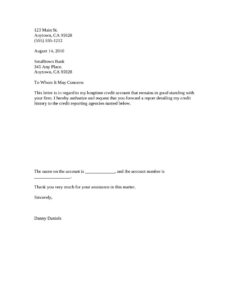
Credit Information Release Authorization
Download a free Credit Information Release Authorization template to authorize sharing your credit history with reporting agencies — free PDF and DOCX download.
DOCX
2 downloads
0
likes
Download Files
- DOCX
A Credit Information Release Authorization is a short written letter in which an account holder gives a creditor permission to forward their credit history to credit reporting agencies or other named parties. People most often use it to make sure a positive, on-time payment history is properly reported and reflected in their credit file. You can download this template free in both PDF and DOCX formats — no signup required.
What Is a Credit Information Release Authorization?
A Credit Information Release Authorization is a signed letter issued by a consumer to a bank, lender, or other creditor that requests and permits the release of credit account details to a third party — typically one or more credit reporting agencies. It identifies the account by name and account number, names where the information should be sent, and confirms that the account holder consents to the disclosure. Because credit and account information is sensitive, creditors generally require written, signed authorization before sharing it. This letter documents that consent in a simple, clear format, creating a record that the account holder asked for the information to be forwarded and to whom.
When Do You Need a Credit Information Release Authorization?
This letter is useful any time you need a creditor to share account details with someone else on your behalf. Common situations include:
- Building or repairing credit: You want a long-standing account in good standing to be reported to the major credit reporting agencies so it strengthens your file.
- Correcting a missing trade line: A loan or account you’ve paid faithfully isn’t showing up on your report, and you want the lender to forward the history.
- Applying for a mortgage or large loan: An underwriter asks for verification of a payment history directly from the original creditor.
- Switching financial institutions: A new bank wants a credit reference from your current bank before approving a product.
- Establishing a rental or service history: A landlord or utility provider requests proof of your responsible payment record.
- Authorizing a representative: You want a financial advisor or attorney to receive account information on your behalf.
What a Credit Information Release Authorization Should Have
To be clear and actionable, the letter should include your full name and current mailing address, the date, and the name and address of the creditor receiving the request. The body must clearly state that you authorize and request the release of your credit history, identify the exact account by the name on it and the account number, and name the party or agency that should receive the report. It should close with a courteous thank-you and your signature. Specificity matters: the more precisely you identify the account and the recipient, the faster the creditor can act on your request without follow-up questions.
How to Fill Out a Credit Information Release Authorization
- Add your contact block: At the top, enter your full name, street address, city, state, ZIP, and phone number — for example, 123 Main St., Anytown, CA 95928, (555) 555-1212.
- Date the letter: Write the current date below your contact details so there’s a clear record of when the request was made.
- Address the creditor: Enter the bank or lender’s name and full mailing address, such as Smalltown Bank, 345 Any Place, Anytown, CA 95928, followed by a salutation like “To Whom It May Concern.”
- State the request: Confirm that the account is in good standing and that you authorize and request that the creditor forward a report of your credit history to the agencies named.
- Fill in the account name: Complete the blank for the name on the account exactly as it appears on the creditor’s records.
- Fill in the account number: Enter the full account number in the space provided so the creditor can locate the correct account.
- Name the recipients: Identify the credit reporting agencies or other parties that should receive the report.
- Sign off: Close with “Sincerely,” and add your signature and printed name.
Sending the Letter and What Happens Next
Once completed, send the letter to the creditor by the method they prefer — many accept mail, secure upload, or in-person delivery. Keep a copy for your records along with proof of mailing if you send it by post. After the creditor receives a valid authorization, they can release the account information to the named agencies or third parties. Reporting and processing times vary by institution, so allow a reasonable window before following up. If your goal is to have a positive account reflected on your credit report, you may want to check your reports afterward to confirm the information appears as expected.
How This Differs From Pulling Your Own Credit Report
Requesting your own credit report directly from a reporting agency shows you what is already on file. A Credit Information Release Authorization works in the other direction: it asks a creditor to send your account details out to a named recipient. Use this letter when the goal is to get a specific creditor to share or report information — not when you simply want to review your existing file. The two actions complement each other, and many people use both: authorize the release, then check their report later to confirm the data was received and recorded correctly.
Common Mistakes to Avoid
- Leaving the account number blank or wrong: Without an accurate number, the creditor may be unable to locate the account.
- Using a name that doesn’t match the account: The name on the letter should match the creditor’s records exactly to avoid delays.
- Failing to name the recipient: If you don’t specify which agency or party should receive the report, the creditor can’t act.
- Forgetting to sign: An unsigned authorization is generally not valid; most creditors will not release information without a signature.
- Sending to the wrong address or department: Confirm the correct mailing address or contact for credit and records requests.
- Keeping no copy: Always retain a copy and proof of delivery in case you need to follow up.
Frequently Asked Questions
What is a Credit Information Release Authorization used for? It is a letter that authorizes a creditor to forward your credit account history to credit reporting agencies or another named party. People commonly use it to ensure a positive account is reported or to verify a payment history for a loan, rental, or new financial relationship.
How do I fill out the form? Add your name, address, and the date at the top, then the creditor’s name and address. State your request, fill in the name on the account and the account number, name the recipients who should receive the report, and sign the letter at the bottom.
Does this letter need to be notarized or witnessed? Notarization is usually not required for a basic credit information release, though some creditors may request it or may have their own authorization form. Check with the receiving institution about their specific requirements before sending.
Is this authorization legally binding? A signed authorization documents your consent to release the information, which most creditors require before disclosing account details. Requirements and how the information may be used vary by jurisdiction and by the creditor’s own policies.
How much does this template cost? Nothing — it is completely free to download from Business Forms Pro in PDF and DOCX formats, with no signup required. You can edit it to match your account and recipient details.
How long does it take for the creditor to act? Processing and reporting times vary by institution. After sending a valid, signed letter, allow a reasonable period before following up, and consider checking your credit report afterward to confirm the information was received.
This template is a general example provided for informational purposes only and is not legal, financial, or tax advice. Credit reporting rules and disclosure requirements vary by jurisdiction and by institution — consult a qualified professional or your creditor for guidance specific to your situation.
Related Forms
- Copyright Notice
- Individual RSVP Form Fancy
- Book Club Ballot
- Blank Memo
- Entry Form White
- Recipes to Try
Browse more in Miscellaneous.