
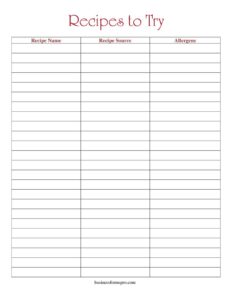
Recipes to Try
Organize your cooking wishlist with this free Recipes to Try template, tracking recipe names, sources, and allergens — free download in PDF and DOCX.
PDF
DOC
0
likes
Download Files
- DOC
A Recipes to Try form is a simple tracking sheet that helps you collect, organize, and remember the dishes you want to cook someday, recording each recipe’s name, where you found it, and any allergens to watch for. People most often use it to corral inspiration from cookbooks, websites, and friends into one tidy list instead of losing it across bookmarks and scraps of paper. It’s free to download in PDF and DOCX, with no signup required.
What Is a Recipes to Try Form?
A Recipes to Try form is a lightweight planning document used by home cooks, meal planners, and anyone who loves food but struggles to keep track of culinary ideas. Rather than documenting a recipe in full, it captures just enough detail to find and prepare a dish later: the recipe name, the recipe source, and any allergens involved. It functions as a wishlist and a quick-reference index. Families, roommates, and dinner-party hosts often share one so everyone can add ideas. Because it’s a personal organizational tool rather than a legal or financial record, there are no formal rules — the goal is simply to make sure good recipes don’t slip through the cracks.
When Do You Need a Recipes to Try Form?
This form fits dozens of everyday cooking situations. Common reasons to keep one include:
- You spotted a dish on a cooking show, social media reel, or food blog and want to remember it before you forget the name.
- A friend or relative shared a family recipe and you want to note who gave it to you so you can ask follow-up questions.
- You’re planning weekly meals and want a running pool of new ideas to draw from when you build a menu.
- You’re hosting a dinner party and need to track allergen information for guests with dietary restrictions.
- You borrowed a cookbook from the library and want to capture the recipes you didn’t have time to make.
- You’re building a personal cooking bucket list of ambitious or seasonal dishes to tackle over the year.
Types of Recipe Lists This Form Can Become
Although the template is intentionally simple, you can adapt it to several styles of cooking organization. Some people keep a single master list of everything they ever want to try. Others maintain themed lists — one for weeknight dinners, one for baking projects, one for holiday meals, and one for restaurant copycats. The allergen column makes it especially useful for households managing nut, dairy, gluten, or shellfish sensitivities, since you can scan an entire list and instantly see which dishes are safe. You can also use it as a shared family document where each member adds the recipes they’re craving, turning meal planning into a group activity.
What a Recipes to Try Form Should Have
A complete entry on your list balances brevity with enough detail to act on later. Each row should capture:
- Recipe Name — a clear, recognizable title so you know exactly what the dish is.
- Recipe Source — where it came from, whether a website, cookbook page, magazine, or the name of the person who recommended it.
- Allergens — any ingredients that could pose a problem for you or your guests, such as nuts, eggs, gluten, or dairy.
Keeping all three fields filled in turns a vague memory into something you can actually find and cook. The source field in particular saves you from the frustration of remembering a dish but not where to find the instructions.
How to Fill Out a Recipes to Try Form
Filling out this form takes only seconds per recipe, which is part of its appeal. Work through each field as follows:
- Recipe Name: Write the dish exactly as you’ll search for it later, such as “Lemon Garlic Roast Chicken” or “Thai Basil Stir-Fry.” Be specific enough to distinguish similar recipes.
- Recipe Source: Note where the recipe lives. For a website, jot the site name or a short URL; for a cookbook, include the title and page number; for a recommendation, write the person’s name and maybe the date you heard about it.
- Allergens: List any allergens the recipe contains or that you’ll need to substitute around — for example “contains peanuts and dairy” or “gluten-free, uses almond flour.” If you’re unsure, leave a note to double-check when you make it.
Repeat for each dish you want to add. Update or cross off entries as you cook them so your list stays current and motivating.
Tips for Getting the Most From Your List
To keep the form genuinely useful, review it before each grocery trip and pick one or two new recipes to attempt that week. Group entries by season or occasion so you cook with ingredients at their peak. When you finally make a dish, add a quick mental note about whether it was a keeper — and if you loved it, move it to a permanent recipe collection. Keeping the printed PDF on the fridge or the DOCX file open on your phone makes adding spontaneous ideas effortless, so inspiration never goes to waste.
Common Mistakes to Avoid
- Vague recipe names — writing just “soup” or “that pasta” makes it impossible to find the dish again later.
- Skipping the source — without it, you may remember the recipe but never track down the actual instructions.
- Leaving allergens blank — this defeats the purpose if anyone in your household has dietary restrictions, so note them even when they seem obvious.
- Letting the list grow stale — never crossing off cooked dishes turns a helpful tool into an overwhelming pile.
- Adding duplicates — scan before adding so you don’t list the same dish from two different sources.
- Being too ambitious — a list of fifty complex recipes can feel discouraging; mix in some quick, achievable dishes.
Frequently Asked Questions
What is a Recipes to Try form used for? It’s a simple organizational sheet for collecting dishes you want to cook in the future. Instead of losing inspiration across screenshots, bookmarks, and verbal recommendations, you record the recipe name, where it came from, and any allergens so you can find and prepare it later.
How do I fill out the allergens field? List any ingredients in the recipe that could cause an allergic reaction or that you’ll need to substitute, such as nuts, eggs, dairy, gluten, soy, or shellfish. This is especially helpful when cooking for guests or family members with dietary needs, and you can leave a note to verify it when you actually make the dish.
Is this form legally binding? No. A Recipes to Try form is a personal planning and organizational tool with no legal weight. It exists purely to help you keep track of cooking ideas, so you can fill it out however works best for you.
How much does the template cost? Nothing — it’s completely free to download here in both PDF and DOCX formats, with no signup or payment required. You can print it, edit it on your computer, or fill it in by hand.
Can I share one list with my whole household? Absolutely. Many families and roommates keep a shared copy where each person adds dishes they’d like to try. The DOCX version is easy to edit collaboratively, while a printed PDF on the fridge works well for jotting down ideas as they come.
Should I include the full recipe on this form? No, that’s not its purpose. This form is an index or wishlist that points you back to the original source rather than storing complete instructions. Once you’ve made a dish and want to keep it permanently, copy it into a dedicated recipe collection.
This template is provided as a general example for informational and organizational purposes only. It is not nutritional, medical, or dietary advice. Allergen information should always be verified against the original recipe and product labels, and anyone with serious food allergies should consult a qualified medical professional.
Related Forms
- Petsitting Instructions
- Premarital Counseling Questionnaire
- Correct Credit Report
- Raffle Ticket
- Goal Planner
- Gantt Chart Eight Weeks
Browse more in Miscellaneous.