
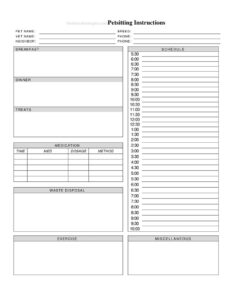
Petsitting Instructions
Download a free Pet Sitting Instructions template to give your sitter clear feeding, vet, and care details for your pets — free PDF and DOCX download.
PDF
DOCX
4 downloads
0
likes
Download Files
- DOCX
A Pet Sitting Instructions form is a simple written guide that tells your pet sitter exactly how to care for your animals while you’re away. People most often use it before a vacation, business trip, or hospital stay so the sitter knows feeding times, medications, vet contacts, and house routines without guessing. You can download it free in PDF and DOCX, with no signup required.
What Is a Pet Sitting Instructions Form?
A Pet Sitting Instructions form is a one-stop document that captures everything a temporary caregiver needs to keep your pets safe, fed, and comfortable. It is typically filled out by the pet owner and handed to a professional sitter, a friend, a neighbor, or a family member taking over care. The form documents daily schedules, dietary needs, medical information, emergency contacts, and behavioral quirks. Rather than relying on rushed verbal notes or scattered text messages, it puts the essentials in one readable place. It is not a legal contract — it is a practical care reference that reduces stress for both the sitter and the pet during an owner’s absence.
When Do You Need a Pet Sitting Instructions Form?
This form is useful any time someone other than you is responsible for your animals. Common situations include:
- Vacations and weekend getaways when a sitter stays at or visits your home to feed and walk your pets.
- Business trips where you may be unreachable for hours and need the sitter to act independently.
- Hospital stays or family emergencies that require someone to step in on short notice.
- Boarding a pet with a friend, neighbor, or kennel that benefits from written care notes.
- Hiring a new professional sitter who has never met your animals and needs a full briefing.
- Multi-pet households where each animal has different food, medication, or temperament needs that are easy to mix up.
Even when the sitter knows your pets well, having instructions in writing prevents missed medications and miscommunication.
What a Pet Sitting Instructions Form Should Have
A complete set of instructions covers both routine care and the unexpected. Strong forms include pet identification (name, breed, age, and color), feeding schedule and portions, medication details, exercise and walking routines, and house information such as where supplies are kept. They also list the veterinarian’s name and phone number, the nearest emergency animal hospital, and how to reach you while you’re away. Finally, the form should note behavioral details — whether a pet is shy, escapes through doors, dislikes other animals, or needs gentle handling. The more specific the document, the less the sitter has to improvise.
How to Fill Out a Pet Sitting Instructions Form
- Owner and pet details: Write your name, home address, and the names of each pet, along with their breed, age, and any identifying markings.
- Dates of care: Note the start and end dates so the sitter knows exactly how long they are responsible.
- Feeding schedule: List what each pet eats, the portion size, the times of day, and where the food and bowls are stored. Mention treats and any foods to avoid.
- Water and supplies: Explain where fresh water goes and where to find litter, leashes, poop bags, or cleaning items.
- Medications: Record each medicine, dose, timing, and how to administer it (with food, by mouth, etc.).
- Exercise and routine: Describe walks, playtime, and bathroom schedules.
- Vet and emergency contacts: Add your veterinarian, the nearest emergency clinic, and a backup person who can decide on care if you’re unreachable.
- Your contact info: Provide your phone number and how to reach you in an emergency.
- Notes: Add behavior warnings and house rules, then sign and date.
Tips for Writing Instructions a Sitter Will Actually Follow
Clear formatting matters as much as complete information. Break feeding and medication into time blocks — morning, midday, and evening — so the sitter can scan the day at a glance. Spell out portions in concrete terms like “one level scoop” instead of vague amounts. If a pet hides medication in food, describe the trick you use. Leave the form in an obvious spot, such as on the refrigerator or kitchen counter, and consider texting the sitter a photo of it too. For nervous animals, note the signs of stress and what calms them. A few extra minutes of detail can prevent a frantic phone call later.
Handling Emergencies and Authorizing Care
One of the most valuable parts of this form is the emergency plan. Make sure the sitter knows which veterinary clinic to use and whether that clinic has your records on file. If you want the sitter to be able to authorize urgent treatment up to a certain cost while you’re unreachable, state that clearly and name a trusted backup contact who can make decisions on your behalf. Keep a copy of vaccination records nearby in case a clinic asks for them. Being specific about what “emergency” means — and who pays — removes hesitation during a stressful moment.
Common Mistakes to Avoid
- Vague feeding amounts that lead to overfeeding or underfeeding; always give exact portions and times.
- Forgetting medications or leaving out the dose and timing, which can be dangerous for pets on a schedule.
- No emergency vet listed beyond your regular clinic, leaving the sitter stuck after hours.
- Omitting behavior warnings like door-dashing, biting when scared, or aggression toward other animals.
- Outdated contact numbers for yourself, your backup person, or the veterinarian.
- Not telling the sitter where supplies are, forcing them to search your home for food, leashes, or litter.
Frequently Asked Questions
What is a Pet Sitting Instructions form? It is a written care guide a pet owner gives to a sitter, covering feeding, medications, walks, vet contacts, and behavior notes. It keeps all the essential details in one place so the sitter can care for your animals confidently while you’re away.
How do I fill out a Pet Sitting Instructions form? Start with your contact details and each pet’s information, then list feeding times and portions, medications, exercise routines, and emergency contacts. Add behavior notes and the dates of care, then leave the completed form somewhere the sitter will easily find it.
Is this form legally binding? No, a Pet Sitting Instructions form is a care reference, not a contract. If you want a formal agreement covering payment, liability, or authorization for veterinary expenses, you would use a separate pet sitting service agreement.
Does it need to be signed or notarized? Notarization is not necessary because this is an informal care document. Signing and dating it is optional but helpful, since it confirms the instructions are current and gives the sitter a point of reference.
Should I include emergency vet authorization? Yes, if you want the sitter to act quickly when you can’t be reached, state which clinic to use and whether they may approve treatment up to a set amount. Naming a backup contact ensures someone can make care decisions on your behalf.
How much does this template cost? Nothing — you can download the Pet Sitting Instructions template for free here in both PDF and DOCX formats, with no signup required. Edit it for each trip and reuse it whenever you need a sitter.
This template is a general example provided for informational purposes only and is not legal, veterinary, or professional advice. Care arrangements and any service agreements may vary by location and situation — consult a qualified professional or your veterinarian for guidance specific to your pets.
Related Forms
- Decision Tree
- Blank Survey Template
- Business Purchase Proposal
- Gantt Chart Six Weeks
- Business Report Template
- Dressing Room Numbers
Browse more in Miscellaneous.