
Goal Planner
Use this free Goal Planner template to define, measure, and track any personal or professional goal step by step — free download in PDF and DOCX.
PDF
DOCX
0
likes
Download Files
- DOCX
A Goal Planner is a simple worksheet that helps you turn a vague intention into a clear, measurable, action-based plan. People most often use it to break a big goal into concrete steps so they actually follow through instead of losing momentum. This template is free to download in both PDF and DOCX with no signup required.
What Is a Goal Planner?
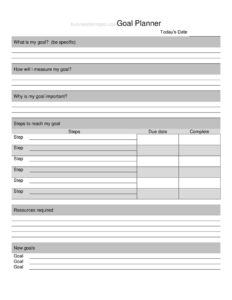
A Goal Planner is a single-page document that captures everything you need to pursue one specific objective: what the goal is, how you will measure success, why it matters to you, the steps required, and the resources you will need along the way. Anyone can use it — students mapping out study targets, professionals planning a project, entrepreneurs launching a side business, or individuals working on health, savings, or personal-growth goals. Rather than keeping intentions in your head, this form documents them in writing, which research consistently links to higher completion rates. It serves as both a planning tool at the start and a reference you can revisit to track progress and stay accountable.
When Do You Need a Goal Planner?
This worksheet is useful any time you want structure around an ambition instead of a loose wish. Common situations include:
- Starting the new year or a new quarter when you want resolutions that stick rather than fade by February.
- Launching a project at work and needing to define a clear, measurable outcome before assigning tasks.
- Saving for something specific such as a vacation, a down payment, or an emergency fund, where measuring progress matters.
- Improving a habit or skill — learning a language, running a 5K, reading more, or building a fitness routine.
- Coaching or mentoring a team member, student, or client and wanting a shared document to track agreed-upon goals.
- Reviewing the past period and setting fresh objectives, using the “New goals” section to capture what comes next.
What a Goal Planner Should Have
A complete Goal Planner moves you from intention to action. The key elements are a specific, clearly worded goal statement; a measurable definition of success so you know when you have achieved it; a personal reason that explains why the goal is important and keeps you motivated; a sequence of concrete steps that break the goal into manageable actions; and a list of the resources — time, money, tools, support, or knowledge — you will need. A space for today’s date anchors your starting point, and a section for new goals lets you plan ahead. Together these turn an abstract idea into a roadmap you can follow and review.
How to Fill Out a Goal Planner
- Today’s Date: Write the date you are creating the plan. This marks your starting point and helps you measure how long the goal takes.
- What is my goal? (be specific): State exactly what you want to achieve. Avoid vague phrasing like “get healthy” — write something precise such as “walk 8,000 steps daily for 90 days.”
- How will I measure my goal?: Define the metric or evidence of success — a number, a deadline, a finished product, or a milestone you can check off.
- Why is my goal important?: Capture your motivation in a sentence or two. This is the section you reread when your enthusiasm dips.
- Steps to reach my goal: List each action in order under the Step lines. Break large tasks into small, doable steps so progress feels achievable.
- Resources required: Note anything you need to succeed — budget, tools, time blocks, training, or help from others.
- New goals: Use this space to jot down the next objective or related goals that emerge as you plan, so nothing gets lost.
Tips for Writing Goals That Actually Get Done
The way you word a goal strongly affects whether you finish it. Make each goal specific and time-bound: “finish the first draft of my report by March 15” is far more actionable than “work on my report.” Tie your measurement to something you can observe — pages written, pounds saved, sessions completed — rather than a feeling. When you list steps, sequence them so each one builds on the last, and keep individual steps small enough to start in a single sitting. For the resources section, be honest about what the goal truly requires; underestimating time or budget is one of the most common reasons goals stall.
Reviewing and Updating Your Plan
A Goal Planner is most valuable when you return to it. Set a recurring check-in — weekly or monthly — to mark which steps are complete and adjust those that no longer fit. If circumstances change, revise the steps or the deadline rather than abandoning the goal entirely. Because the DOCX version is fully editable, you can keep a running copy on your computer and duplicate it for each new objective. Print the PDF and post it somewhere visible if you respond better to a physical reminder. Treating the planner as a living document, not a one-time exercise, is what separates goals you finish from goals you forget.
Common Mistakes to Avoid
- Writing goals too vaguely — “be more productive” gives you nothing to measure or act on.
- Skipping the measurement section so you never actually know when the goal is met.
- Listing giant steps instead of small actions, which makes starting feel overwhelming.
- Ignoring the resources line and discovering mid-way that you lack the time, money, or tools you need.
- Setting too many goals at once and spreading your focus so thin that none get finished.
- Filling it out once and never revisiting it, losing the accountability the planner is designed to create.
Frequently Asked Questions
What is a Goal Planner used for? It is used to turn a goal into a written, structured plan by defining what you want to achieve, how you will measure it, why it matters, the steps involved, and the resources required. It works for personal, academic, financial, and professional goals alike. The format keeps everything for one goal on a single page.
How do I fill out the Goal Planner? Start with today’s date, then write a specific goal and how you will measure success. Add your reason for pursuing it, break the goal into ordered steps, and list the resources you will need. Use the new goals section to capture future objectives.
Is this Goal Planner free to download? Yes. You can download it for free from Business Forms Pro in both PDF and DOCX formats with no signup or account required. Use the PDF to print and write by hand, or edit the DOCX on your computer.
Can I use one planner for multiple goals? The template is designed to focus on one goal at a time, which improves clarity and follow-through. For additional goals, simply download or duplicate another copy. The new goals field is meant for jotting down future objectives, not for tracking several active goals at once.
What makes a goal measurable? A measurable goal includes a number, deadline, or observable result you can verify — such as a dollar amount saved, a date by which a task is done, or a milestone you can check off. If you cannot tell whether you have achieved it, the goal needs a clearer measurement.
How often should I review my Goal Planner? A weekly or monthly review works well for most goals, letting you mark completed steps and adjust the plan as circumstances change. Frequent check-ins keep the goal visible and maintain momentum. Treat the planner as a living document you update rather than a one-time worksheet.
This Goal Planner template is provided as a general example for informational purposes only and does not constitute professional, financial, or career advice. Individual circumstances vary, so adapt the planner to your own needs and consult a qualified professional where appropriate.
Related Forms
- Testimonial Form
- Business Report Template
- RSVP List
- VIP Pass
- Travel Itinerary
- Restaurant Shift Schedule
Browse more in Miscellaneous.