
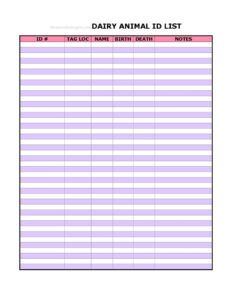
Dairy Animal ID List
Track every cow in your herd with a free Dairy Animal ID List template—record IDs, names, birth and death dates. Free PDF and DOCX download.
PDF
DOCX
4 downloads
0
likes
Download Files
- DOCX
A Dairy Animal ID List is a simple herd register used to record and track the unique identification of every cow, heifer, and calf on a dairy operation. Most farmers reach for it to keep an accurate, at-a-glance roster of every animal—tag numbers, names, and key life dates—in one organized document. It’s free to download here in both PDF and DOCX formats, with no signup required.
What Is a Dairy Animal ID List?
A Dairy Animal ID List is a working record that links each animal to its official or on-farm identification number, the location of its ear tag, its name or barn name, and important dates such as birth and death. Dairy producers, herd managers, and farmworkers use it as the central reference for the herd, tying together breeding records, health treatments, milk production logs, and culling decisions. Rather than relying on memory or scattered notes, the list creates a single source of truth so anyone working the barn can identify an animal quickly and consistently.
When Do You Need a Dairy Animal ID List?
This list is useful any time you need to know exactly which animal is which and keep that information current. Common situations include:
- Building or updating your herd inventory when you take stock of every animal currently on the farm.
- Tagging new calves so each birth is assigned an ID number and tag location right away.
- Coordinating with a veterinarian who needs to match treatments, vaccinations, or tests to specific animals.
- Recording deaths or culls so the active herd count stays accurate and removed animals are documented.
- Preparing for sales, transport, or auctions where buyers and haulers need verified IDs.
- Supporting compliance and traceability for milk programs, disease tracking, or farm certification audits.
What a Dairy Animal ID List Should Have
A complete and useful list captures enough detail to identify each animal without ambiguity while staying easy to scan. Each row should include a unique ID number that is never reused, the animal’s name or barn name, the birth date for age and breeding calculations, the death date if the animal has been removed, the physical tag location so workers know where to look for the tag, and a notes field for breed, dam, sire, health flags, or other context. Keeping these columns consistent across every entry is what makes the list reliable when you cross-reference it against other farm records.
How to Fill Out a Dairy Animal ID List
Work through the form one animal per row, completing each field in order:
- ID #: Enter the animal’s unique identification number—this can be an official program tag, an RFID number, or your own farm numbering system. Make sure no two animals share the same ID.
- Name: Record the animal’s name or barn name. Even a short, recognizable label helps staff identify the cow at a glance.
- Birth: Write the birth date. This anchors age, lactation stage, and breeding timelines, so use a consistent date format throughout.
- Tag Loc: Note where the tag is placed—for example, left ear, right ear, or neck collar—so anyone can confirm the ID quickly.
- Death: Leave blank for active animals. Fill in the date when an animal dies, is culled, or otherwise leaves the herd.
- Notes: Add useful details such as breed, dam and sire, vaccination status, calving history, or the reason for removal.
Choosing an Identification System
The value of the list depends on a consistent ID system, so decide your approach before you start entering animals. Many operations use sequential numbers tied to year of birth, while others adopt official traceability tags issued through national or regional programs. Whatever you choose, the golden rule is that an ID number is permanent and unique—once retired, it should not be assigned to another animal. The Tag Loc field matters because tags can be torn out, faded, or replaced; noting the location and being ready to record a replacement tag in the Notes column keeps your records intact even when a physical tag is lost.
Keeping the List Current and Backed Up
An ID list is only as good as its upkeep. Set a routine—update it at every calving, every cull, and every sale—so the document always reflects the live herd. The DOCX version is handy for ongoing editing and sorting on a computer or tablet, while the printed PDF works well as a clipboard reference in the barn or milking parlor. Store a backup copy off-site or in the cloud so a spilled coffee or a misplaced binder doesn’t erase years of records. If you use herd-management software, this sheet still serves as a useful paper fallback and a quick reference for hired help.
Common Mistakes to Avoid
- Reusing an old ID number for a new animal, which corrupts historical records and breeding lines.
- Leaving the Tag Loc field blank, forcing workers to hunt for a tag or guess which animal they’re handling.
- Using inconsistent date formats, which makes age and lactation calculations error-prone.
- Forgetting to record deaths or culls, leaving an inflated and inaccurate active herd count.
- Cramming too much into the Name field instead of using the Notes column for breed, parentage, and health details.
- Keeping only one copy with no backup, risking total loss if the document is damaged or lost.
Frequently Asked Questions
What is a Dairy Animal ID List used for? It is a central register that tracks each animal’s unique ID number, name, birth and death dates, tag location, and notes. Farmers use it to identify animals consistently and to link health, breeding, and production records to the correct cow.
How do I fill out the Dairy Animal ID List? Complete one row per animal, entering a unique ID number, the name, the birth date, the tag location, and notes. Leave the death date blank until the animal leaves the herd, then record the date.
What should I put in the Tag Loc field? Note where the physical tag is placed on the animal, such as the left ear, right ear, or a neck collar. This helps anyone in the barn locate and confirm the ID quickly, especially when handling many animals.
Can I reuse an ID number after an animal dies? It’s best not to. Keeping each ID permanently tied to a single animal preserves accurate historical records for breeding, health, and traceability. Assign new animals fresh numbers instead.
Is this template legally required for my farm? The template itself is a general organizational tool, not a regulatory document. However, many regions have official animal identification and traceability rules, so check your local agricultural authority’s requirements and adapt your records accordingly.
How much does the Dairy Animal ID List cost? Nothing—it’s a free download. You can get it in PDF for printing or DOCX for editing, with no signup or payment required.
This template is a general example provided for informational purposes only and does not constitute legal, veterinary, regulatory, or financial advice. Animal identification and traceability requirements vary by jurisdiction and program—consult your local agricultural authority or a qualified professional to ensure your records meet applicable rules.
Related Forms
- Farm Store Price Sheet
- Farm Inventory Record
- Field Planning Worksheet
- Field Productivity Record
- Field History Sheet
- Three Year History Form
Browse more in Agriculture.