
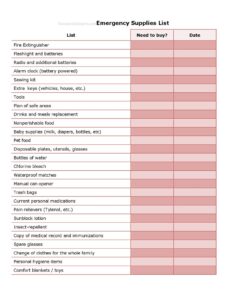
Emergency Supplies List
Use this free Emergency Supplies List template to track and stock disaster preparedness gear, food, water, and medical items — free PDF/DOCX download.
PDF
DOCX
2 downloads
0
likes
Download Files
- DOCX
An Emergency Supplies List is a simple checklist that helps you inventory and gather everything your household needs to weather a disaster, power outage, or evacuation. People most often use it to build a 72-hour kit before hurricane season, wildfire risk, or winter storms — and to track what they still need to buy. It’s free to download here in both PDF and DOCX formats, with no signup required.
What Is an Emergency Supplies List?
An Emergency Supplies List is a preparedness document that catalogs the food, water, tools, medical items, and personal essentials a family should keep on hand for an emergency. It’s typically used by homeowners, renters, parents, caregivers, and small organizations to make sure nothing critical is overlooked when stocking a survival or “go” kit. Rather than relying on memory in a stressful moment, the list lets you check each item, mark whether you still need to buy it, and note the date you assembled or last reviewed your supplies. It turns vague intentions into a concrete, trackable plan so your household is ready when the power goes out or you need to leave quickly.
When Do You Need an Emergency Supplies List?
This list is useful any time you want to prepare for disruption rather than scramble during it. Common scenarios include:
- Seasonal disaster prep — building or refreshing a kit before hurricane, wildfire, flood, or tornado season.
- Power outages — keeping flashlights, batteries, a battery-powered radio, and nonperishable food ready when the grid goes down.
- Evacuation readiness — assembling a grab-and-go bag with spare keys, copies of medical records, and a change of clothes for the whole family.
- Caring for vulnerable family members — stocking baby supplies, current medications, spare glasses, and comfort items for children.
- Pet preparedness — making sure pet food and supplies aren’t forgotten in the rush.
- Annual home review — checking expiration dates on water, food, and medications, and replacing anything used or out of date.
What an Emergency Supplies List Should Have
A complete Emergency Supplies List groups essentials into clear categories so nothing slips through the cracks. The strongest lists cover safety equipment (fire extinguisher, flashlight, radio), water and food (bottled water, nonperishable food, manual can opener), sanitation (chlorine bleach, trash bags, hygiene items), medical needs (personal medications, pain relievers, copy of medical records), and family-specific items (baby supplies, pet food, comfort blankets and toys). Each item should have a checkbox showing whether you already have it or still need to buy it, along with a date field so you know when the kit was last reviewed. A well-organized list also leaves room to add household-specific items.
How to Fill Out an Emergency Supplies List
- Enter the date you are creating or reviewing the list so you can track when supplies were last updated.
- Work down the list column item by item, checking off what you already own.
- Use the need to buy? column to flag missing items, turning the list into a shopping plan.
- Confirm safety gear: fire extinguisher, flashlight and batteries, radio and additional batteries, alarm clock (battery powered), waterproof matches, and tools.
- Stock food and water: bottles of water, nonperishable food, drinks and meal replacements, manual can opener, plus disposable plates, utensils, and glasses.
- Add sanitation items: chlorine bleach, trash bags, and personal hygiene items.
- Cover medical and personal needs: current personal medications, pain relievers, sunblock, insect repellent, spare glasses, and a copy of medical records and immunizations.
- Account for family and pets: baby supplies, pet food, a change of clothes for the whole family, comfort blankets/toys, sewing kit, and extra keys. Finally, note your plan of safe areas.
Tips for Building and Maintaining Your Kit
Storing supplies is only half the job — keeping them usable is the other half. Test your flashlight, radio, and battery-powered alarm clock periodically and rotate the batteries before they corrode or die. Check the pressure gauge on your fire extinguisher and the expiration dates on bottled water, nonperishable food, and over-the-counter pain relievers at least once a year. Keep the most time-sensitive items — like current personal medications and baby supplies — in an easy-to-grab container so you can swap them out as needs change. A common best practice is to plan for at least three days of water and food per person, plus extra for pets. Store a printed copy of this list inside or near your kit so anyone in the household can find and replenish supplies quickly.
Where to Store Your Supplies
Keep your kit in a cool, dry, accessible place that everyone in the household knows about. Many families split supplies between a stationary home kit and a lightweight “go bag” near an exit for fast evacuations. Store a copy of medical records and immunizations, extra keys, and important documents in a waterproof bag or container. Note your designated plan of safe areas — both inside the home for sheltering and outside for meeting points — so everyone responds the same way under pressure.
Common Mistakes to Avoid
- Forgetting to date the list — without the date field, you won’t know when batteries, water, or medications were last checked.
- Skipping the “need to buy” column — leaving gaps unflagged means missing items stay missing.
- Ignoring expiration dates — stocked food, water, and pain relievers do expire and need rotation.
- Overlooking family-specific needs — baby supplies, pet food, and comfort blankets/toys are easy to forget but critical.
- Storing dead batteries — a flashlight or radio is useless without working batteries; keep spares fresh.
- Hiding the kit — supplies do no good if family members can’t find them in an emergency.
Frequently Asked Questions
What is an Emergency Supplies List used for? It is a checklist for inventorying and gathering the essential items your household needs during a disaster, outage, or evacuation. It helps you see at a glance what you have, what you still need to buy, and when you last reviewed your kit. This keeps your family prepared rather than scrambling at the last minute.
How do I fill out the Emergency Supplies List? Start by entering the date, then go through each listed item and check off what you already own. Use the “need to buy?” column to flag anything missing so the list doubles as a shopping plan. Update the date each time you review or restock the kit.
How much water and food should I stock? A widely recommended minimum is a three-day supply of water and nonperishable food for each person, with extra for pets. Many emergency agencies suggest planning for at least one gallon of water per person per day. Adjust the quantities to your household size and local risk level.
Is this Emergency Supplies List free to download? Yes. You can download it free in both PDF and DOCX formats with no signup required. Print the PDF to keep with your kit, or edit the DOCX version to add items specific to your household.
How often should I review my emergency supplies? Review the list at least once or twice a year, and again before known seasonal hazards like hurricane or wildfire season. Use the date field to track each review, and rotate batteries, water, food, and medications before they expire. Replacing anything you’ve used keeps the kit ready at all times.
Can I customize the list for my family? Absolutely. The template covers core essentials, but you should add items unique to your situation — such as specific prescriptions, mobility aids, infant formula, or important documents. The DOCX version lets you insert and rename rows so the list fits your household exactly.
This Emergency Supplies List template is provided as a general example for informational purposes only and is not professional, medical, or safety advice. Emergency needs and local hazards vary by location and household — consult official emergency management resources and qualified professionals to build a plan appropriate for your circumstances.
Related Forms
- Equipment Inventory
- Conference Room Schedule
- Store Opening Procedure Checklist
- Advertisement Tracker
- Pre-Trip Vehicle Inspection Checklist
- Pest Sighting
Browse more in Log and Inventory.