
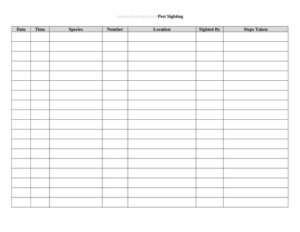
Pest Sighting
Use this free Pest Sighting log template to record pest activity, locations, and dates—download in PDF or DOCX with no signup required.
PDF
DOCX
2 downloads
0
likes
Download Files
- DOCX
A Pest Sighting log is a simple record used to document where, when, and what type of pest was observed on a property or in a facility. The most common reason people use it is to track recurring pest problems and provide evidence for pest control providers or health inspectors. This template is completely free to download in PDF and DOCX, with no signup required.
What Is a Pest Sighting Log?
A Pest Sighting log is a structured form for recording each instance of pest activity—such as rodents, insects, or other unwanted creatures—observed in a building or outdoor area. It is typically maintained by facility managers, restaurant staff, warehouse supervisors, property managers, or homeowners who want a clear, dated history of infestations. The log documents what was seen, where, when, and what action was taken in response. By keeping a consistent record, businesses can identify patterns, demonstrate compliance with sanitation standards, and give pest control technicians the detailed information they need to treat the problem effectively rather than guessing at its source.
When Do You Need a Pest Sighting Log?
A Pest Sighting log is useful any time pest activity needs to be tracked over time rather than handled as a one-off event. Common situations include:
- Food service operations — restaurants, cafes, and commercial kitchens that must demonstrate active pest monitoring for health inspectors.
- Warehouses and storage facilities — where rodents or insects can damage inventory and contaminate goods.
- Property management — landlords documenting tenant-reported sightings across multiple units in an apartment building.
- Healthcare and childcare settings — where strict hygiene standards require evidence of monitoring and prompt response.
- Manufacturing and packaging plants — where audits and certifications require documented pest control programs.
- Homeowners — tracking a stubborn infestation to share accurate details with an exterminator.
What a Pest Sighting Log Should Have
A complete Pest Sighting log captures enough detail to be genuinely useful for analysis and follow-up. At minimum, each entry should record the date and time of the sighting, the specific location within the building or grounds, and the type of pest observed. It should also note an estimate of how many pests were seen, the name of the person reporting the sighting, and any action taken—such as setting a trap, applying treatment, or notifying a pest control company. A good log also leaves space for follow-up notes so you can confirm whether the issue was resolved. Consistency across entries is what turns scattered observations into actionable patterns.
How to Fill Out a Pest Sighting Log
- Enter the date and time of the sighting as soon as possible after it occurs, so the record is accurate.
- Record the exact location—be specific, such as “kitchen storage room, lower shelf” or “loading dock, northeast corner” rather than just “warehouse.”
- Identify the type of pest observed (mouse, cockroach, ant, fly, etc.). If you are unsure, describe its appearance and size.
- Estimate the quantity seen, noting whether it was a single pest or signs of a larger population.
- Note the name of the observer or staff member who reported the sighting for accountability.
- Describe any immediate action taken, such as cleaning, sealing an entry point, setting a trap, or contacting a pest control provider.
- Add follow-up notes later to confirm whether treatment worked or the activity continued.
- Review the log regularly to spot trends by location, pest type, or time of year.
Using the Log for Inspections and Compliance
In regulated industries, a Pest Sighting log is often more than good housekeeping—it can be a required part of an integrated pest management (IPM) program. Health inspectors and auditors frequently ask to see documented evidence that a facility actively monitors for pests and responds to problems. A well-kept log demonstrates due diligence and can protect a business during inspections. When working with a licensed pest control company, sharing your log helps the technician target treatments to the right areas and measure whether their interventions are reducing activity over time. Keep completed logs on file for at least the period required by your local regulations or certification body.
Tips for Getting the Most From Your Log
Place the log somewhere accessible so staff can record sightings the moment they happen—delays lead to forgotten details. Train everyone who might encounter a pest on how to fill in an entry, and encourage them to report even minor sightings, since small problems often signal larger ones. Pair the log with a simple map of your facility so locations are recorded consistently. Periodically tally entries to identify hotspots that may need structural repairs, better sanitation, or sealed entry points.
Common Mistakes to Avoid
- Vague locations — writing “office” instead of a precise spot makes it impossible to target treatment.
- Delayed entries — logging from memory days later leads to inaccurate dates and missing details.
- Skipping the action column — without recording the response, you can’t tell what worked.
- No follow-up notes — failing to confirm resolution leaves recurring problems undocumented.
- Inconsistent reporting — when only some staff record sightings, the log understates the real problem.
- Never reviewing the data — a log that is filled in but never analyzed misses the chance to spot patterns and prevent infestations.
Frequently Asked Questions
What is a Pest Sighting log used for? It is used to document each time pest activity is observed in a building or on a property, including the date, location, pest type, and response. The record helps identify recurring problems, supports compliance with health and safety standards, and gives pest control providers the detail they need to treat infestations effectively.
How do I fill out a Pest Sighting log? Record each sighting as soon as it happens by entering the date and time, the exact location, the type and number of pests, the observer’s name, and any action taken. Add follow-up notes later to confirm whether the issue was resolved. Being specific and consistent is what makes the log useful over time.
Is a Pest Sighting log legally required? Requirements vary by industry and jurisdiction. Many food service, healthcare, and manufacturing operations are expected to maintain pest monitoring records as part of sanitation or certification programs, so check your local regulations and any audit standards that apply to your facility.
Who should fill out the log? Anyone who observes pest activity can make an entry, including staff, supervisors, property managers, or homeowners. In a workplace, it works best when all employees are trained to report sightings promptly so the record reflects the full picture rather than only what management notices.
How long should I keep completed logs? Retain completed logs for at least the period required by your local regulations, health authority, or certification body, which often spans one or more years. Keeping historical logs also helps you compare seasonal trends and demonstrate a consistent monitoring program.
Is this Pest Sighting log template really free? Yes. You can download this template for free in both PDF and DOCX formats with no signup required. The DOCX version can be edited to add your company name, additional columns, or facility-specific locations before printing.
This template is provided as a general example for informational purposes only and does not constitute legal, health, or regulatory advice. Pest management requirements vary by jurisdiction and industry—consult your local health authority or a qualified pest control professional to ensure compliance.
Related Forms
- Geocache Log
- Employee Computer Accounts Tracker
- Safe Deposit Box Inventory
- Yearly Multiple Project Timetable
- Asset List
- Inventory Control
Browse more in Log and Inventory.