
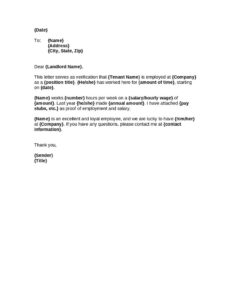
Employment Verification Letter
Free employment verification letter template in PDF & DOCX. See what to include, how to write one, and how to request it from HR — download a printable copy.
DOCX
1 downloads
0
likes
Download Files
- DOCX
An employment verification letter is a signed statement from an employer confirming that someone works (or worked) at a company, along with details like their title, dates, and pay. It’s commonly requested by landlords, lenders, and agencies. Download the free template below in PDF or DOCX. No signup or email required.
What Is an Employment Verification Letter?
An employment verification letter — also called a proof-of-employment letter or letter of employment — is written by an employer or HR to confirm a person’s job status to a third party. It typically verifies the employee’s title, how long they’ve worked there, their schedule, and their salary or wage. Because it’s an official statement that someone else will rely on, it’s usually printed on company letterhead and signed by a manager or HR representative. The goal is simple: give the requester confidence that the person’s stated job and income are real.
What the Letter Should Include
A clear, credible verification letter contains:
- The employee’s full name and job title
- The company name and contact details
- The start date and whether employment is current or past
- Hours worked and whether the role is full- or part-time
- Salary or wage, and sometimes last year’s earnings — only if requested and authorized
- The name, title, and signature of the person verifying
Keep it factual and short. The reader wants confirmation, not a performance review.
When Do You Need an Employment Verification Letter?
- Applying to rent an apartment or house, where a landlord wants proof of income
- Applying for a mortgage, car loan, or other financing
- Immigration or visa applications that require proof of employment
- Confirming employment history during a background check
- Qualifying for government benefits or services
How to Fill Out an Employment Verification Letter
- Add the date and the recipient’s name and address. If it’s for a rental, this is often the landlord.
- Open with a clear line stating the employee’s name, company, and position title.
- State how long they’ve worked there and their start date.
- List hours per week and whether they’re salaried or hourly, with the amount, and last year’s earnings if requested.
- Mention any attachments, such as pay stubs, offered as supporting proof.
- Close with your contact information, then sign with your name and title.
How to Request One From Your Employer
If you’re the employee, make it easy for HR to say yes. Send a short, polite request — email is fine — that states exactly what you need: who the letter should be addressed to, which facts to confirm (title, dates, salary), any income figures the requester wants, and the deadline. Attaching the requester’s details and a template like this one speeds things up, because HR can fill it in rather than draft it from scratch. Give a few business days’ notice where you can.
What to Leave Out
More isn’t better. Share only the information the requester actually needs and the employee has authorized. Avoid volunteering sensitive details — reasons for leaving, medical information, or disciplinary history — unless they’ve been specifically and appropriately requested. Over-sharing can create privacy problems for both the employee and the company.
Common Mistakes to Avoid
- Stating salary figures that don’t match payroll records
- Sending it without company letterhead or a signature, which weakens credibility
- Letting an unauthorized coworker sign instead of a manager or HR
- Releasing details without the employee’s consent
- Being vague about dates or title when the requester needs specifics
Third-Party and Automated Verification
Larger employers often route verification requests through HR software or a third-party verification service rather than writing a letter by hand. These services let approved requesters — lenders, landlords, or background-check companies — confirm employment and income automatically, usually with the employee’s consent and sometimes a one-time access code. If your employer uses one, a written letter may not be needed at all, so ask HR which method they prefer before drafting anything. For small employers without such a system, a signed letter on company letterhead remains the simplest and most widely accepted option.
Verifying Past Employment
You can request verification from a former employer too. Most will confirm your job title and dates of employment, though some limit what they share about salary or your reason for leaving as a matter of policy. If a former employer has closed or won’t respond, pay stubs, tax forms such as a W-2, or your original offer letter can serve as supporting proof of past employment. Keeping copies of these documents makes future requests far easier to satisfy.
Tips for a Faster Turnaround
Verification requests pile up in HR inboxes, so make yours easy to act on. Give the exact recipient details, list only the facts that need confirming, include any reference or application number the requester provided, and attach a template like this one. If there’s a deadline, say so clearly and politely, and follow up once if you haven’t heard back within a few business days.
Frequently Asked Questions
What is an employment verification letter? It’s an employer’s signed statement confirming a person’s job, title, dates of employment, and often their pay, written for a third party such as a landlord or lender.
How do I write an employment verification letter? State the employee’s name, company, title, dates, hours, and pay, mention any attached proof, and sign it on company letterhead. The template above gives you the full structure.
Who should I address it to? If you know the recipient, address them by name; if not, “To Whom It May Concern” is acceptable and widely used.
How do I request an employment verification letter from HR? Email a short request stating who it’s for, the facts to confirm, any income figures needed, and the deadline — and attach a template to make it easy.
Can an employee write their own verification letter? Usually no — it should come from an employer or HR to be credible. Employees can draft one for HR to review and sign.
How much does this template cost? It’s free to download in PDF and DOCX.
Related Forms
Proof of Employment · Salary Verification Letter · Job Offer Letter · Employment Confirmation Letter · Direct Deposit Authorization
This template is provided for general informational purposes only and is not legal advice. Verify only information you’re authorized to share, and follow your company’s HR policies.
Official resource: for the rules that apply to your situation, see the U.S. Department of Labor.
Related Forms
- Employee Benefits Sheet
- Request To Attend Training
- Employee Disciplinary Notice
- Employee Termination Notice
- Hourly Wage Chart
- Payroll Statement
Browse more in Employment.