
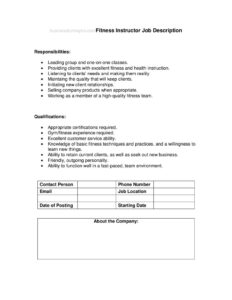
Fitness Instructor Job Description
Download a free Fitness Instructor job description template in PDF and DOCX to outline responsibilities and qualifications and attract qualified candidates fast.
PDF
DOCX
0
likes
Download Files
- DOCX
A Fitness Instructor job description is a document that outlines the responsibilities, qualifications, and expectations for an instructor who leads exercise sessions and guides clients toward their health goals. The most common reason people use it is to advertise an open role and screen applicants consistently, but it also clarifies day-to-day duties once someone is hired. This template is free to download in both PDF and DOCX, with no signup required.
What Is a Fitness Instructor Job Description?
A Fitness Instructor job description is a structured summary that defines what an instructor does and what an employer expects them to bring to the role. It is typically issued by a gym owner, studio manager, HR coordinator, or recreation department and used during recruiting, onboarding, and performance reviews. The document usually documents two core areas: the responsibilities the instructor will perform—such as planning classes, demonstrating exercises, and ensuring safety—and the qualifications they need, like certifications, experience, and physical capability. By putting these in writing, both the hiring organization and the candidate share a clear understanding of the job before any commitment is made.
When Do You Need a Fitness Instructor Job Description?
This form is useful any time you need to communicate the scope of a fitness instruction role clearly and in writing. Common situations include:
- Posting a new job opening at a gym, boutique studio, or community center and wanting qualified applicants to self-select.
- Standardizing hiring across multiple locations so every interviewer evaluates candidates against the same criteria.
- Onboarding a new instructor who needs a concrete reference for their duties and reporting expectations.
- Reclassifying or updating a role as a studio adds specialties such as spin, yoga, or strength training.
- Resolving role confusion when an instructor and manager disagree about what tasks fall within the job.
- Supporting performance reviews by tying feedback back to documented responsibilities and qualifications.
Types of Fitness Instructor Roles
Although the structure stays the same, you can adapt this description to many specialties. A group fitness instructor leads classes like aerobics, cycling, or bootcamp; a personal trainer works one-on-one with tailored programs; a specialty instructor focuses on yoga, Pilates, or barre; and an aquatic instructor runs water-based sessions. Tailoring the responsibilities and qualifications sections to the specific format keeps the posting accurate and helps the right candidates apply.
What a Fitness Instructor Job Description Should Have
A complete and effective description goes beyond a list of tasks. The strongest versions include a clear job title and the type of instruction involved, a short summary of the role’s purpose, a detailed Responsibilities section, a Qualifications section covering required and preferred credentials, and notes on work schedule, physical demands, and reporting structure. Many employers also add expected certifications (such as CPR/AED or a recognized fitness certification), the employment type, and any class or client-load expectations. Together these elements let candidates judge fit and give managers a defensible standard to evaluate applicants against.
How to Fill Out a Fitness Instructor Job Description
This template centers on two main fields—Responsibilities and Qualifications—but you should build context around them. Work through it in order:
- Add the job title and summary. At the top, name the role (for example, “Group Fitness Instructor”) and write one or two sentences describing its overall purpose.
- Complete the Responsibilities section. List the core duties as bullet points—planning and leading sessions, demonstrating proper form, monitoring participant safety, adjusting routines for fitness levels, maintaining equipment, and tracking attendance or progress.
- Complete the Qualifications section. Specify required credentials such as a recognized fitness certification, CPR/AED training, relevant experience, and physical ability to demonstrate exercises. Separate “required” from “preferred” items.
- Note logistics. Add schedule expectations, location, employment type, and who the instructor reports to.
- Review for clarity and tone. Make sure each line is specific, action-oriented, and free of jargon before publishing or sharing.
Tips for Writing a Posting That Attracts the Right Instructors
Specificity wins. Instead of “lead classes,” write “lead three to five group cycling classes per week for participants of varying fitness levels.” Quantify expectations where you can, and lead the Responsibilities list with the most important duties. In the Qualifications section, be honest about which credentials are mandatory versus nice-to-have so you do not screen out strong candidates. Highlight what makes the role appealing—flexible hours, continuing-education support, or a supportive community—and use inclusive, welcoming language. A clean, scannable layout with short bullets performs far better than dense paragraphs on most job boards.
Common Mistakes to Avoid
- Vague responsibilities that leave candidates guessing about what they will actually do day to day.
- Overloading qualifications with so many “required” credentials that qualified applicants self-select out.
- Ignoring safety and certification expectations like CPR/AED, which are central to fitness roles.
- Skipping physical demands and schedule details, leading to mismatched applicants and early turnover.
- Using copy-pasted boilerplate that doesn’t reflect your studio’s actual classes or culture.
- Forgetting to update the description when duties, class formats, or certifications change.
Frequently Asked Questions
What is a Fitness Instructor job description used for? It is used to define and communicate the duties, required credentials, and expectations of a fitness instruction role. Employers rely on it to advertise openings, screen applicants consistently, onboard new hires, and ground performance reviews in a shared standard.
What should I include in the Responsibilities section? List the concrete tasks the instructor will perform, such as planning and leading sessions, demonstrating exercises, monitoring participant safety, adapting routines for different fitness levels, and maintaining equipment. Use action verbs and order the items from most to least important so the role’s focus is clear.
What qualifications should a fitness instructor have? Common qualifications include a recognized fitness certification, current CPR/AED training, hands-on experience, and the physical ability to demonstrate exercises safely. Separate required credentials from preferred ones so you attract a wider, qualified pool of applicants.
Is a job description a legally binding contract? Generally, a job description is not an employment contract on its own—it describes a role rather than guaranteeing terms. That said, it can become a reference point in employment matters, so keep it accurate and consistent with any formal agreements; requirements vary by jurisdiction.
How do I customize this template for a specialty class? Open the DOCX version and edit the title, summary, Responsibilities, and Qualifications to match the specialty—for example, adding a yoga or Pilates certification for those roles. Keep the structure intact and adjust the duties and credentials to reflect what that particular format demands.
How much does this Fitness Instructor job description cost? It is completely free to download from Business Forms Pro in both PDF and DOCX formats, with no signup or payment required. You can use the PDF as-is or edit the DOCX to fit your studio’s exact needs.
This template is a general example provided for informational purposes only and is not legal, financial, or HR advice. Employment laws and requirements vary by jurisdiction, so consult a qualified professional before relying on this document for hiring or employment decisions.
Official resource: for the rules that apply to your situation, see the U.S. Department of Labor.
Related Forms
- Controller Job Description
- Mechanic Job Description
- Office Manager Job Description
- Home Healthcare Assistant Job Description
- Barista Job Description
- Paralegal Job Description
Browse more in Job Descriptions.