
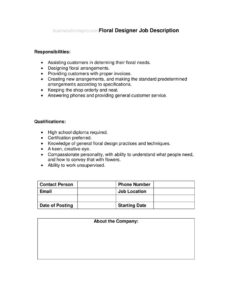
Floral Designer Job Description
Download a free Floral Designer job description template in PDF and DOCX to define responsibilities, skills, and hiring requirements for your shop.
PDF
DOCX
0
likes
Download Files
- DOCX
A Floral Designer job description is a hiring document that outlines the duties, skills, and qualifications expected of someone who creates and arranges floral displays. Florists, garden centers, event companies, and grocery floral departments use it most often when posting an open role or clarifying expectations for a current employee. It’s free to download here in PDF and DOCX, ready to edit for your own shop.
What Is a Floral Designer Job Description?
A Floral Designer job description is a written summary of what a floral designer does day to day and what an employer needs from a qualified candidate. It typically covers the role’s core responsibilities, required design skills, customer-service expectations, physical demands, and reporting structure. Issued by the hiring manager or business owner, it serves two purposes: attracting suitable applicants when published as a job advertisement, and setting clear performance expectations once someone is hired. Because the position blends artistry with retail and event work, a good description balances creative duties — building arrangements and recommending designs — with practical tasks like processing orders, maintaining inventory, and caring for fresh stock. It becomes a reference point for interviews, onboarding, and performance reviews.
When Do You Need a Floral Designer Job Description?
This document is useful any time you need to define or fill the role clearly. Common situations include:
- Hiring for a new shop or location where you’re building a floral team from scratch and need a job posting.
- Replacing a departing designer and wanting to advertise the position quickly on job boards.
- Adding seasonal staff for peak periods such as Valentine’s Day, Mother’s Day, weddings, or the holidays.
- Clarifying expectations for an existing employee whose duties have grown or changed over time.
- Standardizing roles across multiple locations so every store understands the same baseline responsibilities.
- Conducting performance reviews, where a written description provides a fair benchmark for evaluating work.
Types of Floral Designer Roles
Although the core skills overlap, floral designer positions vary by setting, and you should tailor the description accordingly. A retail floral designer in a flower shop or grocery department focuses on daily arrangements, walk-in customers, and order fulfillment. An event and wedding designer works on large-scale installations, client consultations, and on-site setup. A studio or freelance designer may handle production for subscriptions or corporate accounts. A lead or senior designer takes on mentoring, ordering, and quality control. Adjust the experience level, creative scope, and supervisory duties to match the specific role you’re filling.
What a Floral Designer Job Description Should Have
A complete description gives candidates a realistic picture of the job. Strong versions include a short company and role summary, a clearly organized Responsibilities section, required and preferred qualifications, technical and soft skills, physical requirements, work schedule and seasonal expectations, and reporting structure. Because floristry is hands-on, it should also note environmental conditions such as standing for long periods, working in cool storage areas, and handling tools, water, and fresh stems. Listing both the artistic and operational sides helps you attract candidates who fit the full scope of the position.
How to Fill Out a Floral Designer Job Description
This template centers on a Responsibilities section, which you should build out with concrete, role-specific duties. Work through it step by step:
- Add a job title and summary at the top — for example, “Floral Designer” plus one or two sentences describing the role and your business.
- Complete the Responsibilities section with action-led bullets such as designing fresh and silk arrangements, interpreting customer requests, and assembling bouquets, centerpieces, and wreaths.
- Include daily operational duties like processing and conditioning incoming flowers, maintaining cooler stock, and keeping the workspace clean and organized.
- List customer-facing tasks such as taking orders by phone and in person, recommending designs within a budget, and handling deliveries or pickups.
- Add qualifications and skills — design experience, knowledge of flower care, color and composition sense, and the ability to work under deadlines during peak seasons.
- Note physical and schedule requirements, including lifting buckets of water, standing for shifts, and availability on weekends and holidays.
- Finish with reporting and how to apply, naming the supervisor and the steps for submitting an application.
Tips for Writing an Effective Description
Lead with verbs and keep each responsibility specific so candidates know exactly what the day involves. Distinguish between must-have qualifications and nice-to-have extras to widen your applicant pool. Be honest about the seasonal intensity of floral work — long hours around major holidays are common, and stating this up front reduces early turnover. If creativity is a key part of the job, invite candidates to share a portfolio or photos of past arrangements. Finally, keep the tone welcoming; talented designers often choose roles based on the studio’s culture as much as the pay.
Common Mistakes to Avoid
- Listing vague duties like “make arrangements” without specifying the types, volume, or settings involved.
- Ignoring physical demands, then surprising new hires with heavy lifting, cold storage, and long shifts on their feet.
- Omitting seasonal expectations so candidates don’t realize weekends and holiday rushes are part of the role.
- Mixing required and preferred skills, which can scare off qualified applicants who meet most criteria.
- Forgetting customer-service and sales tasks, even though many designer roles involve direct selling and upselling.
- Leaving out reporting structure or application steps, making it unclear who the role answers to or how to apply.
Frequently Asked Questions
What does a floral designer actually do? A floral designer creates arrangements for events, gifts, and everyday sales, including bouquets, centerpieces, and wreaths. They also condition and care for fresh stock, advise customers on designs and budgets, and keep the workspace and cooler organized. The exact mix of creative and operational work depends on whether the role is retail, event-based, or studio production.
How do I fill out this job description template? Start by adding your job title and a short summary, then expand the Responsibilities section with specific, action-led duties for your shop. Add qualifications, required skills, physical and schedule expectations, and a reporting line. Edit the DOCX version freely so the final posting matches your business and the role you’re hiring for.
What skills should a floral designer have? Core skills include knowledge of flower types and care, an eye for color and composition, and the ability to work quickly and accurately under deadlines. Customer service and basic sales ability matter too, since designers often take orders and recommend products. Many employers also value reliability during high-demand seasons like Valentine’s Day and Mother’s Day.
Is a floral design certification required? Formal certification is usually not required, and many designers learn on the job or through experience. However, some employers prefer candidates with a certificate, coursework, or a strong portfolio, especially for senior or event-focused roles. You can list certification as preferred rather than required to keep your applicant pool wide.
Is this job description legally binding? A job description is generally a guideline rather than a binding contract, and it does not by itself create employment terms. Employment laws and at-will rules vary by location, so the document should not be treated as a legal agreement. If you need binding terms, use a separate offer letter or employment contract.
How much does this template cost? Nothing — it’s completely free to download from Business Forms Pro in both PDF and DOCX formats, with no signup required. You can customize it as many times as you like for different roles, locations, or seasonal hires.
This template is a general example provided for informational purposes only and is not legal, financial, or employment advice. Employment laws and hiring requirements vary by jurisdiction. Consult a qualified professional before finalizing job descriptions or employment terms.
Official resource: for the rules that apply to your situation, see the U.S. Department of Labor.
Related Forms
- Delivery Driver Job Description
- Landscaper Job Description
- Business Systems Analyst Job Description
- Home Healthcare Assistant Job Description
- Physical Therapist Job Description
- Bartender Job Description
Browse more in Job Descriptions.