
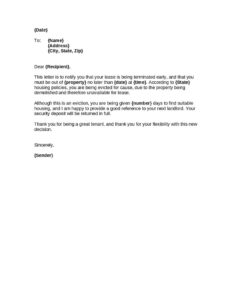
Landlord Eviction For Cause
Download a free Landlord Eviction For Cause notice template in PDF and DOCX to formally inform a tenant of a lease violation and demand action.
DOCX
1 downloads
0
likes
Download Files
- DOCX
A Landlord Eviction For Cause notice is a written document a landlord serves on a tenant to formally state that the tenant has violated the lease and to demand that they correct the problem or vacate the property. It is most commonly used when a tenant has failed to pay rent, breached a lease term, or caused damage, and the landlord needs a documented first step before pursuing formal eviction. This template is free to download in both PDF and DOCX, with no signup required.
What Is a Landlord Eviction For Cause Notice?
A Landlord Eviction For Cause notice is a formal letter issued by a landlord, property manager, or their agent to a tenant who has done something that constitutes grounds for ending the tenancy. Unlike a no-cause termination, this notice identifies a specific reason — “cause” — such as nonpayment of rent, an unauthorized occupant, illegal activity, or repeated lease violations. The notice documents the breach, references the lease provision involved, and tells the tenant what they must do and by when. It creates a paper trail that landlords typically need before a court will hear an eviction case, and it gives the tenant a clear opportunity to respond.
When Do You Need a Landlord Eviction For Cause Notice?
This notice is appropriate any time a tenant’s conduct gives the landlord a legitimate, documented reason to end or threaten to end the tenancy. Common situations include:
- Nonpayment of rent — the tenant has missed one or more rent payments and has not responded to informal reminders.
- Lease violations — keeping an unauthorized pet, subletting without permission, or exceeding occupancy limits.
- Property damage — the tenant has caused damage beyond normal wear and tear or created unsafe conditions.
- Nuisance or disturbance — repeated noise complaints, harassment of neighbors, or disruptive behavior.
- Illegal activity — using the premises for unlawful purposes or violating health and safety codes.
- Failure to maintain the unit — neglect that breaches the tenant’s obligations under the lease.
Types of For-Cause Notices
For-cause notices generally fall into a few categories depending on the violation and what the law allows. A cure-or-quit notice gives the tenant a window to fix a correctable problem, such as paying overdue rent or removing an unauthorized pet. A pay-or-quit notice specifically addresses unpaid rent. An unconditional quit notice demands that the tenant leave without an option to cure, usually reserved for serious or repeated violations where local law permits. This template can be adapted to any of these by adjusting the stated cause and the action required.
What a Landlord Eviction For Cause Notice Should Have
To be effective and to support any later legal action, the notice should clearly include the following elements:
- The full name of the tenant or tenants and the property address, including unit number.
- The date the notice is written and served.
- A specific description of the cause — the exact violation, with dates and details.
- The lease provision or rule that was breached.
- The action the tenant must take to cure, if a cure is offered.
- A firm deadline by which the tenant must comply or vacate.
- A statement of what will happen if the tenant does not respond.
- The landlord’s or agent’s name, signature, and contact information.
How to Fill Out a Landlord Eviction For Cause Notice
- Enter the current date at the top of the letter so there is a clear record of when notice was given.
- Add the tenant’s full legal name and the complete rental property address, including any unit or apartment number.
- Open with a clear statement that the letter serves as formal notice of eviction for cause.
- Describe the specific cause in detail — state exactly what happened, when it occurred, and how it violates the lease. Avoid vague language.
- Reference the lease section or rule that was breached so the tenant understands the basis of the notice.
- State the required action: what the tenant must do to cure the problem, or that they must vacate.
- Specify a clear deadline — the number of days the tenant has to comply, consistent with your local notice period.
- Explain the consequences of inaction, such as the landlord proceeding with formal eviction.
- Include the landlord or property manager’s name, signature, and contact details, and note how the notice was delivered.
Serving and Documenting the Notice
How you deliver the notice can matter as much as what it says. Many jurisdictions require notices to be served in a specific way — personal delivery, posting on the door, or certified mail — and may require proof of service. Keep a copy of the signed notice along with a record of when and how it was delivered. If you use certified mail, retain the receipt and tracking confirmation. This documentation becomes important if the matter proceeds to court, where a judge will want to see that the tenant received proper notice and was given the legally required time to respond.
Common Mistakes to Avoid
- Being vague about the cause — “you violated the lease” is not enough; courts expect specifics.
- Setting the wrong deadline — notice periods vary by location and by type of violation, so confirm the correct number of days.
- Using threatening or harassing language — keep the tone professional and factual.
- Failing to keep proof of delivery — without it, you may not be able to show the tenant was notified.
- Attempting self-help eviction — never change locks or remove belongings; only a court can order removal.
- Skipping the cure option when required — many violations legally entitle the tenant to a chance to fix the problem.
Frequently Asked Questions
What is a Landlord Eviction For Cause notice? It is a formal written notice from a landlord telling a tenant that they have violated the lease and must correct the issue or move out. It identifies a specific reason for ending the tenancy and usually serves as the required first step before filing a court eviction.
How do I fill out the notice? Add the date, the tenant’s name, and the property address, then clearly describe the violation and reference the lease term breached. State what the tenant must do, give a firm deadline, explain the consequences, and sign with your contact information.
Does this notice need to be notarized? No, an eviction for cause notice does not typically need to be notarized. What matters most is that it is properly served and that you keep proof of delivery, since requirements for service vary by jurisdiction.
Is this notice legally binding? The notice itself is a formal demand rather than a court order. It does not by itself remove a tenant, but it can be a legally required step that allows you to pursue a formal eviction if the tenant fails to comply.
How much time must I give the tenant? Notice periods depend on the type of violation and your local laws, and can range from a few days to several weeks. Check your state and municipal rules to set a deadline that will hold up if the case goes to court.
How much does this template cost? Nothing — you can download the Landlord Eviction For Cause notice for free here in PDF and DOCX formats, with no signup required. You can edit the DOCX version to fit your specific situation and local requirements.
This template is a general example provided for informational purposes only and is not legal advice. Landlord-tenant laws, notice periods, and service requirements vary by state and locality. Consult a qualified attorney or your local housing authority before serving an eviction notice or taking legal action.
Related Forms
- Payment Location Change
- Response to An Unsolicited Idea
- Notice Of Approval Of New Credit Account
- Cease and Desist Harassment
- Disputed Invoice
- Request for Disputed Invoice Information
Browse more in Business Letters.