
Response to An Unsolicited Idea
Download a free Response to an Unsolicited Idea letter template that sets clear terms for reviewing outside submissions, in PDF and DOCX for free download.
DOCX
1 downloads
0
likes
Download Files
- DOCX
A Response to an Unsolicited Idea letter is a formal reply a company sends when an outside party submits a product idea, invention, story concept, or business proposal without being asked. It is most often used to protect the company by setting clear terms before any review takes place — and it’s free to download here in both PDF and DOCX with no signup required.
What Is a Response to an Unsolicited Idea Letter?
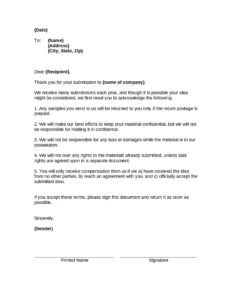
A Response to an Unsolicited Idea letter is a written acknowledgment sent by a business to a person who has voluntarily submitted an idea, sample, or concept. Rather than rejecting or accepting the idea outright, the letter establishes the conditions under which the company is willing to look at the submission. It typically addresses the return of samples, the limits of confidentiality, liability for loss or damage, ownership of rights, and the narrow circumstances in which compensation might be paid. By asking the submitter to sign and return the letter, the company creates a paper trail that helps prevent future misunderstandings and unfounded claims. Marketing departments, product teams, publishers, and legal staff commonly rely on this kind of letter to manage the steady stream of unsolicited proposals they receive.
When Do You Need a Response to an Unsolicited Idea Letter?
Companies that regularly receive outside submissions use this letter to manage expectations and reduce risk. Common situations include:
- A consumer mails or emails a product idea, invention sketch, or prototype hoping the company will develop it.
- A writer or creator submits a script, story, or concept to a media or entertainment company without a prior request.
- An entrepreneur pitches a business model, feature, or service improvement to a corporate suggestion box or innovation team.
- A vendor or inventor sends physical samples and expects them to be returned, evaluated, or held in confidence.
- Your legal or compliance team wants a documented record that the submitter agreed to specific terms before any review began.
- You want to acknowledge a submission politely while making clear that sending an idea creates no obligation, confidentiality guarantee, or ownership transfer.
What a Response to an Unsolicited Idea Letter Should Have
A complete letter balances courtesy with clear legal protection. The essential elements are the recipient’s full contact details, a polite acknowledgment of the submission, and the named company on whose behalf the letter is sent. The core of the document is the list of conditions: sample-return terms tied to prepaid postage, a confidentiality disclaimer, a liability disclaimer for loss or damage, a statement that the company gains no rights unless agreed separately, and a precise explanation of when compensation may be owed. Finally, the letter should request the submitter’s signature so their acceptance of these terms is documented before any evaluation proceeds.
How to Fill Out a Response to an Unsolicited Idea Letter
- Enter the recipient’s Name at the top so the letter is addressed to the correct individual.
- Add the recipient’s Address and their City, State, Zip beneath the name to complete the mailing block.
- In the salutation, insert the Recipient name after "Dear" to personalize the greeting.
- Fill in the name of company in the opening sentence so it’s clear which organization received the submission.
- Review the five numbered conditions: sample return only with prepaid postage, no responsibility for keeping material confidential, no liability for loss or damage, no transfer of rights without a separate agreement, and compensation only if the idea is original, agreed upon, and officially accepted.
- Confirm the terms reflect your company’s actual policy, adjusting wording only where genuinely needed.
- Sign the letter in the Sender field with your name and, where appropriate, your title.
- Send the letter and instruct the recipient to sign and return a copy as soon as possible to confirm acceptance.
Why These Terms Matter
Each clause in this letter exists to close a common legal gap. The prepaid-postage condition prevents the company from absorbing return-shipping costs for unsolicited materials. The confidentiality disclaimer protects against claims that the company was obligated to keep an idea secret when no confidentiality agreement was signed. The liability disclaimer guards against responsibility for damaged or lost samples. The rights clause makes clear that simply receiving an idea does not transfer ownership, and the compensation clause sets a high, specific bar — originality, mutual agreement, and official acceptance — before any payment is owed. Together, these terms allow a company to consider promising ideas without inadvertently agreeing to obligations it never intended.
How It Differs From a Rejection or Acceptance Letter
This letter is neither a flat rejection nor an acceptance. A rejection letter simply declines an idea; an acceptance or licensing agreement formally commits the company to using and paying for it. The Response to an Unsolicited Idea letter sits in between: it keeps the door open for review while protecting the company from premature commitments. Because it preserves optionality, it is especially useful for organizations that occasionally adopt outside ideas but cannot review every submission under binding terms.
Common Mistakes to Avoid
- Sending the letter without verifying the recipient’s name and address, which can delay delivery and the signed return.
- Promising confidentiality elsewhere in your correspondence that contradicts the disclaimer in the letter.
- Beginning to evaluate or share the idea internally before the signed acknowledgment is returned.
- Editing the numbered terms casually in a way that unintentionally weakens the company’s protections.
- Forgetting to keep a copy of the signed letter on file for future reference.
- Using vague compensation language instead of the specific three-part condition the template provides.
Frequently Asked Questions
What is a Response to an Unsolicited Idea letter? It is a formal reply a company sends to someone who submitted an idea, sample, or proposal that was not requested. The letter acknowledges the submission while setting clear terms about confidentiality, sample returns, liability, ownership, and compensation before any review takes place.
Is this letter legally binding? When the recipient signs and returns it, the letter functions as a written acknowledgment of the stated terms. However, enforceability depends on how it is used and on local contract law, so a qualified attorney should review it for your specific situation.
Do I need the submitter to sign it? Yes — the value of this letter comes from the signed return, which documents that the submitter accepted the terms. Without a signature, you have only a one-sided statement of conditions rather than a mutual acknowledgment.
Does receiving an idea mean my company has to pay for it? No. Under the terms in this template, compensation is only owed if the idea came from no other party, the company reaches an agreement with the submitter, and the company officially accepts the idea. Simply receiving a submission creates no obligation to pay.
Can I change the five conditions? You can adjust the wording to match your company’s actual policies, but do so carefully so you don’t weaken the protections. Significant changes should be reviewed by legal counsel to ensure the terms still serve their intended purpose.
How much does this template cost? It is completely free to download from Business Forms Pro in PDF and DOCX formats, with no signup or payment required. You can edit the DOCX version to add your company name, recipient details, and signature.
This template is a general example provided for informational purposes only and is not legal advice. Laws and requirements vary by jurisdiction, and the enforceability of any acknowledgment depends on the facts of your situation. Consult a qualified attorney before relying on this letter.
Related Forms
- Project Delay Letter
- Cease and Desist Trademark
- Sales Follow Up
- Follow Up Letter
- Cease and Desist Copyright
- Price Increase Announcement
Browse more in Business Letters.