
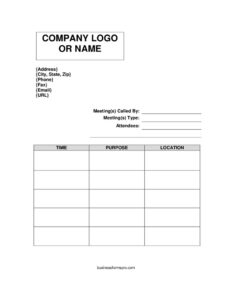
Meeting Agenda Simple
Download a free simple meeting agenda template in PDF and DOCX to organize attendees, time, purpose, and location for any meeting — free download, no signup.
PDF
DOCX
2 downloads
0
likes
Download Files
- DOCX
A simple meeting agenda is a one-page document that lists who called the meeting, who is attending, when and where it happens, and what it aims to accomplish. People reach for it most often when they need to run a focused, organized meeting without wasting time. You can download this template free in both PDF and DOCX formats — no signup required.
What Is a Simple Meeting Agenda?
A simple meeting agenda is a lightweight planning sheet that outlines the essential details of an upcoming meeting before it begins. It is typically prepared by the person calling the meeting — a manager, team lead, committee chair, or coordinator — and shared with attendees in advance. The document captures the basics: the meeting type, who is invited, the scheduled time, the location, and the purpose. Unlike a detailed agenda packed with timed discussion blocks and presenter assignments, this version keeps things minimal so it works for quick stand-ups, one-on-ones, and routine check-ins. Its job is to give everyone a shared understanding of why they are gathering and what success looks like.
When Do You Need a Simple Meeting Agenda?
This template fits any situation where a little structure prevents a meeting from drifting. Common scenarios include:
- Weekly team check-ins where you want everyone aligned on priorities without a lengthy formal program.
- Project kickoff meetings to confirm who is involved, the goal, and the logistics before work begins.
- Client or vendor calls where stating the purpose up front keeps the conversation on track.
- Committee or board meetings that need a documented record of attendees and intent.
- One-on-one reviews between a manager and a team member to set expectations for the discussion.
- Ad-hoc problem-solving sessions called on short notice where a quick agenda focuses the group.
Because the form includes a company header with address, phone, fax, email, and website fields, it also doubles as a professional, branded document you can send to external participants.
What a Simple Meeting Agenda Should Have
An effective simple agenda communicates everything a participant needs in a single glance. The key elements are a clear identification of who called the meeting, the meeting type so attendees know what to expect, a full attendee list, the time and location so no one is confused about logistics, and a concise purpose statement that explains the desired outcome. The organization’s contact details at the top lend credibility and give recipients a way to reach the organizer with questions. Keeping these fields filled out and accurate is what separates a useful agenda from a vague calendar invite.
How to Fill Out a Simple Meeting Agenda
- Add your organization details. Enter the company or department Address, City, State, Zip, Phone, Fax, Email, and URL in the header so the agenda is clearly branded and easy to respond to.
- List who called the meeting. In the meeting(s) called by field, name the person or role responsible for organizing it, such as a manager or committee chair.
- Specify the meeting type. Use the meeting(s) type field to label it — for example, weekly stand-up, project kickoff, client review, or board meeting.
- Enter the attendees. In the attendees field, list every expected participant by name or role so people know who will be present.
- Set the time. Record the start (and ideally end) time, including the date, so attendees can plan accordingly.
- Add the location. Fill the location field with the room name, building, or a video conference link for remote meetings.
- Write the purpose. In the purpose field, summarize the goal in one or two sentences so everyone arrives ready to contribute.
Tips for Running a Better Meeting
A clear agenda is only the first step. Send it to participants at least a day in advance so they can prepare and gather any materials. State the purpose in outcome terms — “decide on the Q3 budget” rather than “discuss budget” — so the group knows when the meeting is done. Invite only the people who genuinely need to attend; a focused attendee list keeps discussion efficient. During the meeting, refer back to the purpose if conversation strays, and end by confirming next steps and owners. After the meeting, you can reuse the same template for the next session, swapping in updated details.
Simple Agenda vs. Detailed Agenda
This simple format intentionally omits the timed segments, presenter columns, and discussion-item breakdowns found in a full meeting agenda. That makes it ideal for short or recurring meetings where heavy structure would feel like overkill. If your meeting has many distinct topics, multiple presenters, or strict time limits per item, consider a detailed agenda instead. For most everyday gatherings, however, the simple version provides exactly the right amount of structure — enough to keep people aligned without slowing anyone down with paperwork.
Common Mistakes to Avoid
- Leaving the purpose blank or vague. Without a clear goal, the meeting can wander and overrun its time.
- Forgetting to specify the location or video link. This leads to late arrivals and confusion, especially for hybrid teams.
- Inviting too many people. An overloaded attendee list dilutes accountability and slows decisions.
- Omitting who called the meeting. Attendees should know who owns the session and who to direct questions to.
- Not sending the agenda in advance. Distributing it minutes before the meeting defeats the purpose of preparation.
- Skipping the meeting type label. Without it, attendees may not gauge the right level of preparation or formality.
Frequently Asked Questions
What is a simple meeting agenda used for? It is used to outline the essentials of an upcoming meeting — who called it, who is attending, the time, the location, and the purpose. The goal is to give everyone a shared understanding before the meeting starts so it runs efficiently. It works well for stand-ups, check-ins, and routine sessions.
How do I fill out this template? Start by entering your organization’s contact details in the header, then complete the meeting called by, type, attendees, time, location, and purpose fields. Keep the purpose statement short and outcome-focused. The whole form should take only a couple of minutes to complete.
Is a meeting agenda a legally binding document? No, a simple meeting agenda is an organizational and planning tool, not a contract or legal record. It documents intent and logistics but does not create obligations. For meetings that require formal records, such as board meetings, you may also want to keep official minutes.
What is the difference between an agenda and meeting minutes? An agenda is created before the meeting to plan what will be discussed, while minutes are written during or after to record what was decided and who attended. The agenda sets expectations; the minutes capture outcomes. Many teams use both together.
Can I customize this agenda for my company? Yes. The DOCX version is fully editable, so you can add your logo, adjust the header fields, or insert additional sections if your meeting needs them. The PDF version is convenient for quick printing and sharing.
How much does this template cost? It is completely free to download from Business Forms Pro in both PDF and DOCX formats, with no signup or account required. You can reuse it for as many meetings as you like.
This template is a general example provided for informational purposes only and does not constitute legal, financial, or professional advice. Organizational and record-keeping requirements vary by company and jurisdiction, so consult a qualified professional if you have specific compliance or governance needs.
Official resource: for the rules that apply to your situation, see the U.S. Small Business Administration.
Related Forms
- 2024 Postal Holidays
- Fancy Gold Appointment Reminder Card
- Appointment Reminder Card
- Phone Memo
- Hotel Reservation Form
- Safety Violation Form
Browse more in Office.