
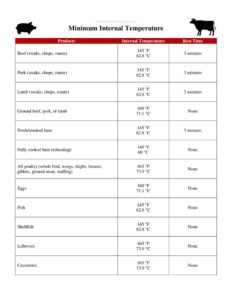
Minimum Internal Temperature Chart
Download a free Minimum Internal Temperature Chart template in PDF and DOCX to keep your kitchen food-safe and inspection-ready with one free download.
PDF
DOCX
2 downloads
0
likes
Download Files
- DOCX
A Minimum Internal Temperature Chart is a quick-reference food safety document that lists the safe cooking temperatures different foods must reach to kill harmful bacteria. Restaurants, cafes, caterers, and food trucks post it near cooking stations so staff can verify doneness with a thermometer. It’s free to download here in both PDF and DOCX formats, with no signup required.
What Is a Minimum Internal Temperature Chart?
A Minimum Internal Temperature Chart is a food safety reference tool that pairs common food categories — poultry, ground meats, whole cuts of beef and pork, seafood, eggs, and leftovers — with the lowest internal temperature each must reach to be considered safe to serve. It’s typically posted by kitchen managers and used by cooks, line staff, and food handlers during prep and service. The chart documents the science of safe cooking in a glanceable format, reminding teams to insert a calibrated thermometer into the thickest part of the food and, where required, to hold that temperature for a set rest time. It supports compliance with local health codes and HACCP plans.
When Do You Need a Minimum Internal Temperature Chart?
The chart belongs anywhere food is cooked, reheated, or held. Common situations include:
- Daily line cooking — verifying chicken, burgers, and pork chops hit safe temperatures before they leave the pass.
- Staff onboarding and training — teaching new cooks and food handlers the target temperatures for each food group.
- Health inspections — demonstrating to an inspector that your kitchen follows recognized cooking temperature standards.
- Catering and off-site events — keeping a portable reference when working in unfamiliar kitchens or temporary setups.
- Reheating leftovers and holding food — confirming reheated dishes reach the required temperature before being placed in hot holding.
- Buffets and food trucks — high-volume settings where multiple cooks need a consistent, shared standard.
What a Minimum Internal Temperature Chart Should Have
An effective chart is clear, current, and easy to read from a few feet away. The core elements include:
- A list of food categories — poultry, ground meat, fresh beef/pork/lamb, fish and seafood, eggs, and reheated leftovers.
- The minimum internal temperature for each category, in Fahrenheit (and optionally Celsius).
- Any required rest or hold time, where applicable.
- A reminder to use a calibrated food thermometer in the thickest part of the food.
- Notes on where to verify the temperature (avoiding bone, fat, and gristle).
- A title, date, and space for a manager’s name or the establishment, so the posted version stays accountable.
How to Fill Out a Minimum Internal Temperature Chart
Because this is a reference template, “filling it out” means customizing it for your kitchen and keeping it accurate. Follow these steps:
- Add your establishment details. Enter your restaurant or business name and the date the chart was posted or last reviewed at the top.
- Confirm each food category. Review the listed groups — poultry, ground meats, whole cuts, seafood, eggs, leftovers — and add any specialty items your menu uses.
- Enter the minimum temperature. Fill in the safe internal temperature for each food, following your local health code or HACCP plan.
- Note rest and hold times. Record any required rest period or hot-holding temperature beside the relevant item.
- Assign responsibility. Add the manager’s name or initials confirming the chart’s accuracy.
- Print and post. Place laminated copies at each cooking and reheating station so staff can reference them instantly.
How to Use a Thermometer Correctly
A chart is only as reliable as the thermometer used with it. Insert the probe into the thickest part of the food, away from bone, fat, and gristle, since those areas heat unevenly and can give a false reading. For thin items like burger patties, insert the probe sideways to reach the center. Wait until the temperature stabilizes before reading. Clean and sanitize the probe between foods to prevent cross-contamination, and calibrate the thermometer regularly using an ice-water or boiling-water test. Allow rested items to sit for the required time before serving, as carryover heating continues to raise the internal temperature after the food is removed from the heat source.
Keeping Your Chart Inspection-Ready
Health inspectors look for evidence that a kitchen has systems in place, not just good intentions. A posted, legible, and current Minimum Internal Temperature Chart signals professionalism and supports your overall food safety program. Review the chart whenever your menu changes or when local food code requirements are updated, and replace any copy that has become faded, grease-stained, or torn. Pair the chart with a log where cooks can record temperatures during peak service, and store calibration records nearby. Treat the chart as a living document tied to staff training rather than a one-time poster you hang and forget.
Common Mistakes to Avoid
- Guessing doneness by color. Browning is not a reliable indicator of safe temperature — always verify with a thermometer.
- Using an uncalibrated thermometer. A probe that reads several degrees off can pass undercooked food as safe.
- Probing the wrong spot. Touching bone or measuring near the surface produces inaccurate readings.
- Ignoring rest times. Pulling food too early skips the carryover cooking that finishes the job.
- Letting the chart go stale. Posting an outdated or unreadable chart undermines compliance.
- Skipping reheated foods. Leftovers and held items have their own targets that staff often overlook.
Frequently Asked Questions
What is a Minimum Internal Temperature Chart used for? It’s a quick-reference guide that tells kitchen staff the lowest safe cooking temperature for each food category. Cooks use it alongside a food thermometer to confirm that poultry, meats, seafood, eggs, and reheated dishes are cooked thoroughly enough to kill harmful bacteria before serving.
How do I fill out the chart for my kitchen? Add your establishment name and the date, confirm the food categories match your menu, and enter the minimum temperature and any rest time for each item based on your local health code. Then print, laminate, and post copies at every cooking and reheating station.
Where should the temperature chart be posted? Post it where cooks can see it while working — near the grill, range, fryer, and reheating areas. Many kitchens laminate the chart and mount it at eye level so it stays clean and readable during busy service.
Do these temperatures meet health code requirements? Food safety codes are based on widely recognized standards, but specific requirements vary by state and local jurisdiction. Always confirm the exact temperatures and hold times required by your local health department or your HACCP plan.
How often should the chart be updated? Review it whenever your menu changes, when local food code requirements are updated, or whenever a posted copy becomes faded or damaged. A quick periodic review keeps your kitchen accurate and inspection-ready.
Is this Minimum Internal Temperature Chart free to download? Yes. You can download the template free in both PDF and DOCX formats with no signup required, then customize it for your restaurant, kitchen, or catering operation.
This template is provided as a general example for informational purposes only and is not professional food safety, legal, or regulatory advice. Food safety requirements vary by jurisdiction — consult your local health department or a qualified food safety professional to confirm the standards that apply to your operation.
Related Forms
- Dinner Menu Fancy
- Sandwich Menu
- Wine List
- Food Cooling Log
- Bathrooms For Customers Sign
- Daily Sales Report
Browse more in Restaurant.