
Petsitter Daily Log
Track feedings, walks, meds, and notes with our free Petsitter Daily Log template, available as a free download in PDF and DOCX formats.
PDF
DOCX
4 downloads
0
likes
Download Files
- DOCX
A Petsitter Daily Log is a simple record used by pet sitters, dog walkers, and boarding caregivers to document everything they do for an animal during a visit or shift. The most common reason people use it is to give pet owners clear, written proof that their pet was fed, walked, medicated, and cared for while they were away. You can download this template free in both PDF and DOCX formats with no signup required.
What Is a Petsitter Daily Log?
A Petsitter Daily Log is a structured form that captures the daily care provided to a pet by a hired or volunteer caregiver. It is typically used by professional pet sitters, dog-walking businesses, boarding facilities, neighbors, or family members watching an animal while the owner travels. The log documents routine tasks such as feeding times, water refills, walks, bathroom breaks, medication doses, play sessions, and any behavioral or health observations. By recording each visit, the log creates an accurate, time-stamped account of care that protects both the sitter and the owner, supports continuity between multiple caregivers, and offers peace of mind that the pet’s routine and needs were properly met every single day.
When Do You Need a Petsitter Daily Log?
This log is valuable any time a pet is cared for by someone other than its owner. Common situations include:
- Vacation or business travel — an owner hires a sitter for several days and wants a daily account of feedings, walks, and behavior.
- Professional pet-sitting and dog-walking businesses — sitters provide written logs to owners as a service standard and proof of completed visits.
- Boarding or kennel stays — facility staff track each animal’s meals, medications, and bathroom routines across shifts.
- Pets on medication — caregivers record exact dose times so no dose is missed or doubled.
- Multiple caregivers — a morning and evening sitter use the same log to stay coordinated and avoid overfeeding.
- Senior, sick, or recovering pets — owners want detailed notes on appetite, energy, and symptoms to share with a veterinarian.
What a Petsitter Daily Log Should Have
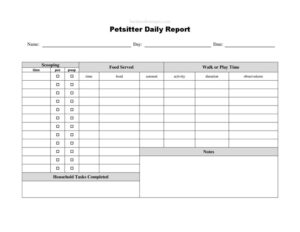
A complete and useful log includes a few core elements. First is identifying information: the pet’s name, the owner’s contact details, and the sitter’s name. Next is the date of service and entries organized by visit or time of day. The heart of the form is the care record itself — sections for feeding, water, walks or potty breaks, medications, play and exercise, and a free-text notes area for observations. Strong logs also leave room for emergency contacts and the veterinarian’s information so the sitter can act quickly if something goes wrong. Finally, a signature or initials line per visit confirms who provided care and when, turning the document into reliable proof of service.
How to Fill Out a Petsitter Daily Log
- Enter the date and pet’s name at the top so each sheet is clearly tied to one animal and one day.
- Record the sitter’s name and the start and end time of the visit or shift.
- Log feeding details — note the time fed, the food type, the amount, and whether the pet ate fully or left food.
- Check and refill water, marking the time and noting if the bowl was empty or low.
- Document walks and bathroom breaks — list each walk’s time and duration, and note urination and bowel movements, including anything unusual.
- Record medications — write the medicine name, dose, and exact time given to prevent missed or duplicate doses.
- Note play and exercise, including activities, duration, and the pet’s energy or mood.
- Add observations in the notes section — appetite, behavior, limping, vomiting, or anything the owner should know.
- Initial or sign each completed entry to confirm the care was provided.
Tips for Keeping an Effective Log
Fill in entries during or immediately after each visit rather than from memory at the end of the day — accuracy fades quickly. Keep a printed copy at the pet’s home or use a fillable DOCX on a tablet so every caregiver writes in the same place. Be specific in the notes: “ate half of breakfast, seemed sleepy” tells an owner far more than “fine.” If the pet takes medication, double-check the owner’s written instructions against each dose you record. For multi-pet households, use one log per animal so feeding amounts and medications never get confused. Snapping a quick photo of a healthy walk or playtime alongside the log is a thoughtful touch many professional sitters offer.
Sharing the Log with Owners and Vets
The completed log is more than a checklist — it is a communication tool. Owners returning from a trip can scan it to confirm their pet’s routine held steady, and any noted symptoms give an early heads-up if a vet visit is needed. If a pet falls ill during the stay, the log’s record of appetite, bathroom habits, medication timing, and behavior becomes genuinely useful clinical information for a veterinarian. Professional sitters often photograph or scan each day’s log and email it to clients, which reinforces trust, demonstrates professionalism, and reduces disputes about whether agreed-upon care was delivered.
Common Mistakes to Avoid
- Filling in times from memory — record each task as it happens to keep the log accurate.
- Vague notes — “seemed okay” helps no one; describe what you actually observed.
- Skipping medication times — always log the exact time and dose to avoid dangerous double-dosing.
- Mixing multiple pets on one sheet — use a separate log per animal to prevent feeding or medication errors.
- Forgetting emergency and vet contacts — fill these in before the owner leaves, not during a crisis.
- Leaving entries unsigned — initials confirm who provided care and when, which matters if questions arise.
Frequently Asked Questions
What is a Petsitter Daily Log used for? It is used to document the daily care a pet sitter provides, including feedings, water, walks, bathroom breaks, medications, play, and health observations. The log gives owners proof of completed visits and helps coordinate care between multiple sitters.
How do I fill out a Petsitter Daily Log? Start with the date, pet’s name, and sitter’s name, then record each task with its time as you complete it — feeding amounts, walks, medication doses, and notes. Initial each entry to confirm you provided the care, and add anything the owner should know in the notes section.
Do I need a separate log for each pet? Yes, using one log per animal is strongly recommended. It prevents confusion over feeding amounts and medication doses, especially in multi-pet households where each animal may have a different routine.
Is a Petsitter Daily Log a legal contract? No, the log itself is a care record, not a service agreement. It documents what was done during visits but does not set fees, cancellation terms, or liability — those belong in a separate pet-sitting contract.
How much does this template cost? Nothing — it is completely free to download from Business Forms Pro in both PDF and DOCX formats. There is no signup, subscription, or hidden fee.
Can I customize the log for my pet-sitting business? Absolutely. Download the DOCX version to add your business name and logo, adjust the sections to match your services, or add fields like GPS walk times or photo notes before printing.
This Petsitter Daily Log template is a general example provided for informational purposes only and does not constitute legal, veterinary, or business advice. Care requirements and recordkeeping practices vary by situation and location — consult a qualified veterinarian or professional for guidance specific to your pet and circumstances.
Related Forms
- Perpetual Inventory Form
- Work Search Log
- Safe Deposit Box Inventory
- Employee Covid Attestation Log
- Telephone Time Tracker
- Covid Disinfecting Checklist
Browse more in Log and Inventory.