
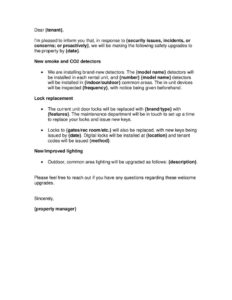
Property Safety Upgrades Tenant Notification
Download a free Property Safety Upgrades Tenant Notification template to inform tenants of safety improvements and required access in PDF or DOCX.
PDF
DOCX
0
likes
Download Files
- DOCX
A Property Safety Upgrades Tenant Notification is a written letter a landlord or property manager sends to tenants to announce upcoming safety improvements to a rental unit or building. People most often use it to give legally adequate advance notice before entering a unit or disrupting services to install items like smoke detectors, security systems, or fire-safety equipment. You can download this template free in PDF and DOCX formats, with no signup required.
What Is a Property Safety Upgrades Tenant Notification?
A Property Safety Upgrades Tenant Notification is a formal communication from a landlord, owner, or management company to one or more tenants. It documents that specific safety-related work will be performed at the property, when it will happen, and what the tenant should expect. The notice typically covers what is being installed or replaced, whether the contractor or maintenance staff needs to enter the unit, and how long the work may take. Beyond being a courtesy, it serves as a record that the landlord provided the required advance notice before entering occupied space or interrupting utilities. A clear, dated notice helps protect both parties and keeps the relationship transparent.
When Do You Need a Property Safety Upgrades Tenant Notification?
This notice is useful any time safety work affects a tenant’s home or routine. Common situations include:
- Installing or replacing smoke and carbon monoxide detectors to meet code requirements or building policy.
- Upgrading door locks, deadbolts, or a building access system that requires re-keying or temporary access changes.
- Adding or testing fire-safety equipment such as extinguishers, sprinkler heads, or alarm panels.
- Installing security cameras or improved exterior lighting in common areas or near entrances.
- Replacing electrical panels, wiring, or GFCI outlets where a brief power shutoff is needed.
- Carrying out repairs flagged by a recent inspection, such as stair railings, window locks, or balcony rails.
In each case, the notice gives the tenant enough lead time to plan, secure pets, move belongings away from work areas, and arrange to be home if access to the unit is required.
What a Property Safety Upgrades Tenant Notification Should Have
A complete notification leaves no doubt about who, what, when, and where. At a minimum, it should include the date the notice is issued, the tenant’s name and the rental address, and the name and contact details of the landlord or manager sending it. It should describe the specific safety upgrade in plain language, state the scheduled date and time window, and note whether entry into the unit is necessary. If utilities such as power or water will be interrupted, the notice should say so and estimate the duration. Finally, it should provide a way for the tenant to ask questions or request rescheduling, plus a signature or sign-off from the sender.
How to Fill Out a Property Safety Upgrades Tenant Notification
- Add the date. Enter the date you are issuing the notice so the advance-notice period is documented.
- Identify the tenant and property. Write the tenant’s full name and the complete rental address, including unit number.
- Name the sender. Fill in your name as landlord or property manager, the company name if applicable, and your phone and email.
- Describe the upgrade. State clearly what safety work will be done, such as “installation of hardwired smoke detectors in all bedrooms.”
- Set the schedule. Enter the date and the time window during which work will occur, and note the expected duration.
- Specify access needs. Indicate whether staff or a contractor must enter the unit and, if so, whether the tenant must be present.
- Note service interruptions. If power, water, or alarms will be off temporarily, say when and for how long.
- Add tenant instructions. List any steps the tenant should take, like clearing access to detectors or securing pets.
- Provide contact and sign-off. Include how to reach you with questions and sign the notice.
Delivery and Notice Periods
How and when you deliver the notice matters. Many jurisdictions require landlords to give a set amount of advance notice—often 24 to 48 hours—before entering an occupied unit, except in genuine emergencies. Acceptable delivery methods vary but commonly include personal delivery, posting on the door, mailing, or, where the lease permits, email or text. To create a reliable record, keep a copy of the notice and note the date and method of delivery. If your lease or local rules specify a particular delivery method or notice window, follow that exactly. When work is purely in common areas and does not require unit entry, a posted building-wide notice may be sufficient, but individual notices are still a good practice.
Tips for a Smooth Upgrade
Send the notice early enough that tenants can plan around the work, and avoid scheduling intrusive tasks during nights or weekends unless necessary. Group related upgrades into a single visit when possible to minimize disruption. If you expect noise, dust, or temporary loss of access, mention it so tenants are not surprised. Offering a backup date or a contact for rescheduling reduces friction, especially for tenants who work from home or have young children. Documenting completed work afterward—dates, what was installed, and any tenant sign-off—rounds out your records and supports compliance.
Common Mistakes to Avoid
- Giving too little notice. Failing to meet the required advance-notice period can make entry improper.
- Being vague about the work. “Maintenance” tells the tenant nothing—name the specific safety upgrade.
- Omitting service interruptions. Tenants need to know in advance if power or water will be shut off.
- Forgetting contact details. Without a way to respond, tenants cannot raise scheduling conflicts.
- Not keeping a copy. A delivered-but-undocumented notice is hard to prove later.
- Ignoring lease-specific rules. Your lease may set stricter notice or delivery terms than local minimums.
Frequently Asked Questions
What is a Property Safety Upgrades Tenant Notification? It is a written letter from a landlord or manager informing tenants about upcoming safety improvements to their unit or building. It states what work will be done, when, and whether access to the unit is needed. It also serves as documentation that proper advance notice was given.
How much notice do I have to give before entering the unit? Notice requirements vary by jurisdiction and lease, but many areas require 24 to 48 hours’ advance notice for non-emergency entry. Check your local landlord-tenant rules and your lease for the exact period. Always err on the side of more notice when possible.
Do tenants have to be home during the work? Not always—it depends on whether the work requires entry and your local rules. If a contractor needs access to the inside of the unit, the notice should say whether the tenant must be present or whether staff may enter with a key. Communicate this clearly to avoid confusion.
Is this notice legally binding? The notice itself is a communication and record rather than a contract, but providing it can be a legal requirement before entering an occupied unit. Following the proper notice period and delivery method helps you stay compliant. Keep a dated copy for your records.
How should I deliver the notice? Common methods include personal delivery, posting on the door, mailing, or email or text where the lease allows. Use whatever method your lease or local rules require, and document how and when you delivered it. A clear record protects both you and the tenant.
Is this template free to download? Yes. You can download the Property Safety Upgrades Tenant Notification free in PDF or DOCX with no signup required. Edit the fields to match your property, schedule, and local notice requirements before sending.
This template is a general example provided for informational purposes only and is not legal advice. Landlord-tenant notice and entry requirements vary by jurisdiction and by lease terms. Consult a qualified attorney or your local housing authority to confirm your obligations before relying on this document.
Official resource: for the rules that apply to your situation, see HUD.
Related Forms
- Unauthorized Pet Notice
- Tenant Utilities Increase Letter
- Covid Rent Relief Landlord
- Rental Unit Smoke Detector CO2 Log
- Tenant Vehicle Log
- Landlord Maintenance Request
Browse more in Landlord Documents.