
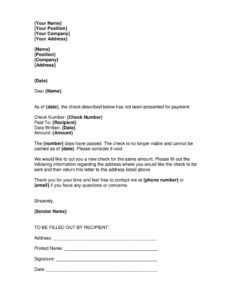
Stop Payment Check Recipient
Notify a payee that a check has expired and arrange a replacement with this free Stop Payment Check Recipient letter template — free download in PDF and DOCX.
PDF
DOCX
2 downloads
0
likes
Download Files
- DOCX
A Stop Payment Check Recipient letter is a written notice informing a payee that a check issued to them is no longer valid and cannot be cashed, while offering to send a replacement. People most often use it when a check has gone stale or uncashed and the issuer needs to void it cleanly and reissue payment. You can download this template free in PDF and DOCX with no signup required.
What Is a Stop Payment Check Recipient Letter?
A Stop Payment Check Recipient letter is a formal notification sent by the party who originally wrote a check to the person or business it was made out to. It documents that a specific check — identified by number, amount, and date written — has not been presented for payment within the allowed window and is now considered void. The letter serves two purposes: it gives the recipient clear notice that the original check should not be deposited, and it invites them to provide a current mailing address so a new check can be issued for the same amount. It creates a paper trail that protects both sides and keeps payment records accurate.
When Do You Need a Stop Payment Check Recipient Letter?
This letter is useful any time an outstanding check needs to be voided and replaced. Common situations include:
- A check you mailed was never deposited and has now passed its validity period.
- A vendor or contractor lost a check and you placed a stop payment with your bank.
- An old payroll or reimbursement check remains uncashed on your reconciliation report.
- A refund check to a customer was returned undeliverable or sent to an outdated address.
- A check has aged past the typical six-month staleness window most banks observe.
- You discovered a duplicate or erroneous check and need to formally cancel it before reissuing the correct amount.
In each case, the letter closes the loop on the original check and sets up a smooth replacement.
What a Stop Payment Letter Should Include
A complete letter clearly identifies everyone involved and the exact check in question. It should contain your name, position, company, and return address as the sender, along with the recipient’s name, position, company, and address. The body must specify the check number, who it was paid to, the date it was written, and the dollar amount. It should state the date as of which the check is void and reference the number of days that have passed. Finally, it needs a fill-in section for the recipient to confirm a current address, print their name, sign, and date — turning the notice into a usable response form.
How to Fill Out a Stop Payment Check Recipient Letter
- At the top, enter Your Name, Your Position, Your Company, and Your Address so the recipient knows who is writing and where to return the letter.
- Add the recipient’s Name, Position, Company, and Address, then the Date of the letter.
- Open the greeting with Dear {Name}.
- In the notice line, fill the date as of which the check is unpresented.
- Complete the check details: Check Number, Paid To / Recipient, Date Written, and Amount.
- State the number of days that have passed and the date the check becomes void.
- Add your phone number and email so the recipient can ask questions.
- Sign as the Sender Name.
- Leave the recipient section — Address, Printed Name, Signature, and Date — blank for them to complete and return.
Coordinating With Your Bank
Sending this letter is a courtesy and a record, but it does not by itself stop your bank from honoring the check. If the original check is still within its presentation window and you are concerned it may be deposited, place a formal stop payment order with your bank in addition to mailing this notice. Banks typically charge a fee for a stop payment and may require the check number, amount, and payee — the same details captured in this letter. Once the bank confirms the order is in place and you have sent the recipient’s address request, you can safely issue the replacement check.
Reissuing the Replacement Check
Wait until the recipient returns the completed address section before cutting the new check, especially if the original may have been lost in the mail. Reissue for the exact same amount shown in the letter, record the new check number against the voided one in your accounting system, and keep the signed return letter on file. This documentation links the void to the replacement and makes future bank reconciliations and audits far easier. For added security, consider mailing the new check with tracking or delivery confirmation.
Common Mistakes to Avoid
- Omitting the check number or amount — vague details make it hard to match the notice to the right transaction.
- Forgetting to place an actual stop payment with the bank when the check could still be cashed.
- Reissuing before confirming the address, which risks sending the replacement to a stale location.
- Leaving out your contact information, so the recipient has no way to raise questions.
- Failing to keep a copy of the signed return section for your records.
- Not recording the void and replacement in your books, leading to double-counted payments.
Frequently Asked Questions
What is a Stop Payment Check Recipient letter? It is a written notice from the issuer of a check to the payee, stating that a specific check is void and cannot be cashed, and offering to send a replacement. It captures the check number, amount, and dates so both parties have a clear record. It also includes a section for the recipient to confirm where the new check should be mailed.
How do I fill it out? Start with your contact and company details, then add the recipient’s information and the letter date. Enter the check number, payee, date written, amount, the number of days that have passed, and the date the check becomes void. Add your phone and email, sign it, and leave the bottom section for the recipient to complete and return.
Does this letter actually stop the bank from paying the check? No. The letter notifies the recipient and creates a paper trail, but you must contact your bank separately to place a formal stop payment order if the check could still be deposited. Banks usually charge a fee and require the check details to process the request.
When is a check considered too old to cash? Many banks treat personal and business checks as stale after about six months, though policies vary and some banks may still honor an older check. This is why a written notice plus a bank stop payment gives you the most protection. Check your bank’s specific rules for the most accurate timeline.
Does the recipient need to sign anything? The template includes a section for the recipient to provide their address, print their name, sign, and date before returning the letter. This confirms the correct delivery address for the replacement check and documents their acknowledgment. It is good practice to wait for this signed return before issuing a new check.
How much does this template cost? It is completely free to download from Business Forms Pro in both PDF and DOCX formats, with no signup required. You can edit the DOCX version to match your company letterhead and the specific check details. Reuse it any time you need to void and replace an outstanding check.
This template is a general example provided for informational purposes only and is not legal, financial, or banking advice. Bank policies and stop payment requirements vary by institution and jurisdiction. Consult your bank or a qualified professional for guidance on your specific situation.
Related Forms
- Letter To Notify Creditors Of Death
- Child Visitation Letter
- Stolen Identity Report To FBI
- General Notice Of Death
- Name Change Notification Letter
- Notice To Heirs And Legatees
Browse more in Notifications.