
Tenant Deposit Letter
Return a tenant's security deposit professionally with this free Tenant Deposit Letter template, available as a free download in PDF and DOCX.
PDF
DOCX
1 downloads
0
likes
Download Files
- DOCX
A Tenant Deposit Letter is a written notice a landlord sends to a departing tenant that accompanies the return of all or part of a security deposit. The most common reason people use it is to formally explain the refund amount and itemize any deductions when a lease ends. This template is free to download in PDF and DOCX, with no signup required.
What Is a Tenant Deposit Letter?
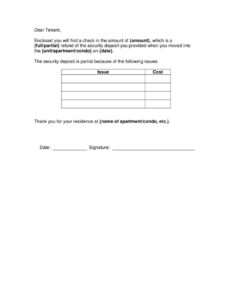
A Tenant Deposit Letter is a short, formal document issued by a landlord or property manager to a former tenant after they move out. It documents the security deposit refund, states whether the refund is full or partial, and lists any costs deducted from the original deposit, such as repairs or cleaning. The letter typically travels with the refund check itself, serving as both a courtesy and a record. By putting the accounting in writing, the landlord creates clear evidence of how the deposit was handled, which protects both parties if a dispute arises later. It also closes out the tenancy on a professional, transparent note.
When Do You Need a Tenant Deposit Letter?
This letter is useful any time a tenancy ends and a deposit must be reconciled. Common situations include:
- A tenant moves out at the end of a lease and you are returning the full deposit because the unit was left in good condition.
- You need to withhold part of the deposit to cover repairs, unpaid cleaning, or damage beyond normal wear and tear, and you must explain those charges.
- A tenant ends a month-to-month arrangement and requests an accounting of their deposit refund.
- You are a property manager handling multiple move-outs and want a consistent, professional template for each unit.
- A tenant breaks the lease early and you are returning a prorated or reduced deposit amount.
- You want a paper trail to satisfy a state’s deposit-return deadline and itemization requirements.
What a Tenant Deposit Letter Should Have
A complete letter leaves no ambiguity about the money. It should clearly state the refund amount, indicate whether that amount is a full or partial refund, and identify the rental unit and the move-in date so the deposit being discussed is unmistakable. If deductions apply, the letter must list each issue alongside its cost so the tenant can see exactly how the figure was calculated. Finally, it should include the property name, the date the letter is written, and the landlord’s signature to make it official and verifiable.
How to Fill Out a Tenant Deposit Letter
- Address the tenant by name in the salutation, replacing the generic “Dear Tenant” with their actual name where possible.
- Enter the amount of the enclosed refund check exactly as written on the check itself.
- Specify whether this is a full or partial refund by selecting the correct option.
- Identify the type of rental — unit, apartment, or condo — so it matches the property.
- Fill in the date the tenant originally moved in and provided the deposit.
- If the refund is partial, complete the Issue and Cost rows, listing each deduction (for example, “carpet cleaning” and its dollar figure) on its own line.
- Enter the name of the apartment, condo, or property in the closing thank-you line.
- Add the date you are sending the letter and sign it with your signature as the landlord or property manager.
Itemizing Deductions Fairly
The deductions section is where most deposit disputes begin, so accuracy matters. Only charge for damage that exceeds normal wear and tear — faded paint, minor scuffs, and small nail holes are generally considered ordinary use, while broken fixtures, large stains, or unauthorized alterations may justify a deduction. List each issue separately rather than lumping costs into a single vague figure, and keep receipts, invoices, and photos to support every charge. Transparent, line-item accounting makes the tenant far more likely to accept the result and gives you solid documentation if the matter is ever challenged.
Deposit-Return Deadlines and Records
Most jurisdictions set a strict deadline for returning a security deposit and providing an itemized statement after a tenant vacates — often somewhere between two and four weeks, though this varies widely. Missing that window can expose a landlord to penalties in some areas, so send the letter and check promptly. Keep a copy of the signed letter, the move-in and move-out condition records, and proof of mailing for your files. Requirements differ by location, so confirm your local deadline and any specific itemization rules before sending.
Common Mistakes to Avoid
- Failing to specify whether the refund is full or partial, which leaves the tenant guessing.
- Listing a single lump-sum deduction instead of itemizing each issue and its cost.
- Charging for normal wear and tear, which most rules do not allow.
- Forgetting to enclose the actual refund check the letter references.
- Leaving the move-in date or property name blank, making the deposit hard to identify.
- Sending the letter after your local deadline has already passed.
Frequently Asked Questions
What is a Tenant Deposit Letter used for? It is used by a landlord to formally return a security deposit and explain the refund amount to a departing tenant. The letter states whether the refund is full or partial and itemizes any deductions for repairs or cleaning. It serves as both a courtesy and a written record of how the deposit was handled.
How do I fill out a Tenant Deposit Letter? Enter the refund amount, mark whether it is a full or partial refund, identify the unit and the original move-in date, and list any deductions with their costs. Then add the property name, the date, and your signature. The completed letter should accompany the refund check itself.
Does a Tenant Deposit Letter need to be notarized? No, a Tenant Deposit Letter generally does not require notarization or witnesses. A dated signature from the landlord or property manager is normally sufficient. Keeping a copy and proof of mailing is more valuable than notarization for documentation purposes.
Can I deduct cleaning and repair costs from the deposit? You can deduct for damage beyond normal wear and tear and for cleaning needed to restore the unit, but not for ordinary use. Each deduction should be itemized in the letter with its cost and backed by receipts or photos. The exact rules on what qualifies vary by jurisdiction.
How long do I have to return the deposit? Most areas require landlords to return the deposit and provide an itemized statement within a set period after move-out, often a few weeks. The precise deadline depends on your state or local laws. Sending the letter and check promptly helps you stay compliant and avoid penalties.
Is this Tenant Deposit Letter template free? Yes, this template is completely free to download in both PDF and DOCX formats with no signup required. You can edit the DOCX version to match your property details and deduction list. Use it as many times as you need for different move-outs.
This Tenant Deposit Letter template is a general example provided for informational purposes only and is not legal, financial, or tax advice. Security deposit rules, deadlines, and allowable deductions vary by jurisdiction. Consult a qualified attorney or local housing authority to ensure your letter and practices comply with applicable laws.
Official resource: for the rules that apply to your situation, see HUD.
Related Forms
- Rental Unit HVAC Filter Log
- Request for Tenant Repairs
- Covid Eviction Moratorium Landlord
- Move In Letter
- Unauthorized Pet Notice
- Agreement On Tenant Alterations To Rental Unit
Browse more in Landlord Documents.