
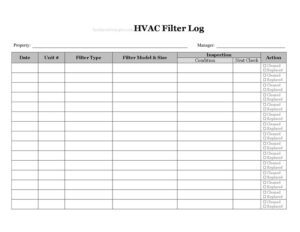
Rental Unit HVAC Filter Log
Track furnace and AC filter changes in your rental property with this free Rental Unit HVAC Filter Log template, available as a free PDF and DOCX download.
PDF
DOCX
0
likes
Download Files
- DOCX
A Rental Unit HVAC Filter Log is a simple record landlords and property managers use to document when an air filter is inspected or replaced in a rental property. The most common reason people use it is to prove routine maintenance was performed and to keep heating and cooling systems running efficiently. You can download this Rental Unit HVAC Filter Log for free in PDF and DOCX formats — no signup required.
What Is a Rental Unit HVAC Filter Log?
A Rental Unit HVAC Filter Log is a maintenance tracking document that records each time the HVAC (heating, ventilation, and air conditioning) air filter in a rental unit is checked, cleaned, or swapped out. It is typically maintained by the landlord, property manager, or a designated maintenance technician, though some leases ask tenants to log their own filter changes. The log captures the date of service, the filter size and type installed, who performed the work, and the condition of the old filter. Over time it becomes a clear paper trail showing the unit has been properly maintained, which supports warranty claims, energy efficiency, and good tenant relations.
When Do You Need a Rental Unit HVAC Filter Log?
A filter log is useful any time you want documented proof that HVAC maintenance is happening on schedule. Common situations include:
- Routine scheduled maintenance: Logging every 30, 60, or 90-day filter change so nothing slips through the cracks across multiple units.
- Tenant turnover: Recording a fresh filter installation before a new tenant moves in, alongside your move-in inspection.
- Lease enforcement: When a lease assigns filter replacement to the tenant, the log confirms whether they kept up their end.
- Warranty protection: Many furnace and AC manufacturers require proof of regular filter maintenance to honor a warranty claim.
- Tenant complaints: Documenting service when a renter reports weak airflow, dust, or uneven heating and cooling.
- Multi-property portfolios: Keeping a consistent record per unit so you can quickly see service history during audits or when selling a property.
What a Rental Unit HVAC Filter Log Should Have
A complete and useful filter log includes a few essential elements. First, identify the property and specific unit so records aren’t mixed up across a portfolio. Each entry should have a service date, the filter size (such as 16x25x1) and MERV rating or type, and the name of the person who performed the work. It helps to note the condition of the removed filter — clean, moderately dirty, or heavily clogged — because that tells you whether your replacement interval is right. Space for the next scheduled service date and a comments field for related observations rounds out a thorough log.
How to Fill Out a Rental Unit HVAC Filter Log
- Enter the property and unit details: Write the property address and the specific unit or apartment number at the top so the log is tied to one rental.
- Record the service date: Add the date the filter was inspected or replaced for each entry.
- List the filter size and type: Note the dimensions (for example 20x20x1) and the MERV rating or filter type installed.
- Describe the action taken: Indicate whether the filter was replaced, cleaned, or simply inspected.
- Note the old filter condition: Mark whether the removed filter was clean, dirty, or severely clogged to gauge airflow and timing.
- Identify who performed the work: Write the name of the landlord, technician, or tenant who completed the service.
- Set the next service date: Add the target date for the next change based on your interval.
- Add comments: Use the notes field for anything notable, such as a damaged grille or a recommended filter upgrade.
- Sign or initial: Have the person who did the work initial the entry to confirm accuracy.
How Often Should HVAC Filters Be Changed in a Rental?
There is no single rule, but most standard one-inch pleated filters are changed every 30 to 90 days. Homes with pets, smokers, or heavy dust may need monthly changes, while thicker high-efficiency filters can last several months. In rentals, it is smart to err toward more frequent changes because tenant usage habits vary and clogged filters strain the system, raise energy bills, and can lead to costly breakdowns. Use the old-filter condition you record in the log to fine-tune your schedule: if filters come out heavily clogged before the next change, shorten the interval. Consistent logging makes these adjustments easy to spot over time.
Who Is Responsible for Filter Changes — Landlord or Tenant?
Responsibility depends on the lease and local landlord-tenant rules. Some leases place routine filter replacement on the tenant and supply the filters, while others keep all HVAC maintenance with the landlord. Either way, a written log protects both parties: it documents that the work was done and by whom. If a tenant is assigned the task, attach a copy of the log to the lease addendum and ask them to record each change. If a dispute arises over a failed system, the log helps clarify whether maintenance was neglected. Keep responsibilities clearly stated in writing rather than relying on verbal agreements.
Common Mistakes to Avoid
- Forgetting to record the unit number, which makes the log useless across a multi-unit property.
- Leaving out the filter size, so the next person doesn’t know what to buy or whether the wrong size was used.
- Skipping entries when nothing seems wrong, which breaks the maintenance trail you may later need for a warranty claim.
- Not noting the old filter’s condition, losing valuable data for adjusting your replacement schedule.
- Failing to set a next-service date, which lets routine maintenance slip past its window.
- Relying on memory instead of writing it down, especially when juggling several properties.
Frequently Asked Questions
What is a Rental Unit HVAC Filter Log used for? It is used to track when air filters in a rental property are inspected or replaced. The log provides a dated record of maintenance that supports warranty claims, lease enforcement, and efficient system operation. It is especially helpful for landlords managing more than one unit.
How do I fill out an HVAC filter log? Start by entering the property address and unit number, then add a new row each time a filter is serviced. Record the date, the filter size and type, the action taken, the old filter’s condition, and who did the work. Adding a next-service date keeps you on schedule.
How often should I change the filter in a rental unit? Standard one-inch filters are typically changed every 30 to 90 days, while thicker high-efficiency filters can last longer. Units with pets, heavy use, or lots of dust may need more frequent changes. Use the old-filter condition notes in your log to fine-tune the interval.
Is the landlord or tenant responsible for changing filters? It depends on your lease and local landlord-tenant rules. Some leases assign filter replacement to the tenant, while others keep HVAC maintenance with the landlord. A written log protects both parties by documenting who performed each service and when.
Is a filter log legally required? A filter log is generally not legally required, but it is strong evidence of routine maintenance and is often needed to keep equipment warranties valid. Some manufacturers and insurers ask for maintenance records during a claim. Keeping a consistent log is simply good property management.
Is this Rental Unit HVAC Filter Log template free? Yes. You can download this template for free in both PDF and DOCX formats with no signup required. Edit the DOCX version to match your property names, unit numbers, and preferred service intervals.
This Rental Unit HVAC Filter Log template is a general example provided for informational purposes only and is not legal, financial, or professional maintenance advice. Landlord-tenant obligations and equipment requirements vary by jurisdiction and by lease, so consult a qualified professional or your local regulations before relying on this document.
Official resource: for the rules that apply to your situation, see HUD.
Related Forms
- Move-Out Inspection
- 5-Day Notice to Pay or Quit
- Agreement On Tenant Alterations To Rental Unit
- Request for Tenant Repairs
- Landlord Lead Disclosure Form
- Apartment Manager Individual Ledger
Browse more in Landlord Documents.