
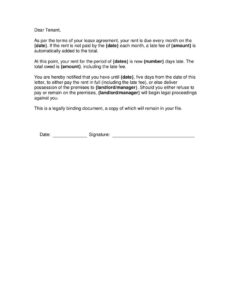
5-Day Notice to Pay or Quit
Download a free 5-Day Notice to Pay or Quit template in PDF or DOCX to formally demand overdue rent or possession from a tenant — free download, no signup.
PDF
DOCX
0
likes
Download Files
- DOCX
A 5-Day Notice to Pay or Quit is a written demand a landlord delivers to a tenant who has fallen behind on rent, giving them five days to either pay the full balance owed or surrender possession of the rental unit. It is most commonly used as the required first step before starting an eviction for nonpayment. You can download this template free in PDF or DOCX, with no signup required.
What Is a 5-Day Notice to Pay or Quit?
A 5-Day Notice to Pay or Quit is a formal letter from a landlord or property manager to a tenant who has missed a rent payment. It states exactly how much is owed, including any late fees, and sets a firm five-day deadline for the tenant to choose one of two options: pay the entire balance or move out and return possession of the premises. The notice documents that the landlord made a proper demand before pursuing legal action. Because eviction laws differ widely, the length of the notice period and the exact wording requirements vary by jurisdiction — but the core purpose is the same everywhere: to put the tenant on clear, dated, written notice.
When Do You Need a 5-Day Notice to Pay or Quit?
This notice comes into play whenever rent is past due and informal reminders have not worked. Common situations include:
- A tenant has not paid the monthly rent by the agreed due date and the grace period has lapsed.
- Rent plus an automatic late fee remains unpaid and you need a formal record of the demand.
- A tenant has a history of partial or late payments and you want to start a documented paper trail.
- You are preparing to file for eviction and your jurisdiction requires a written pay-or-quit notice first.
- A check bounced or an automatic payment failed and the balance was never made good.
- You manage multiple units and need a consistent, professional way to address nonpayment across all tenants.
In most areas, courts will not hear an eviction case for nonpayment unless the landlord can show that a proper notice like this one was served first. That makes the document both a courtesy to the tenant and protection for the landlord.
What a 5-Day Notice to Pay or Quit Should Have
A complete and effective notice should clearly identify the tenant and the property, state the rent due date and amount, itemize any late fee, give the total amount owed, set the five-day deadline, and name the landlord or manager who must receive payment or possession. It should also state that the document is legally binding and that a copy will be kept on file. Finally, it needs a date and a signature line so there is no ambiguity about when the clock started running.
How to Fill Out a 5-Day Notice to Pay or Quit
- Address the letter to the tenant by name in the salutation so there is no question who it concerns.
- Enter the monthly due date in the first blank to remind the tenant when rent is normally expected each month.
- Repeat the same due date in the late-fee sentence, then fill in the late fee amount that applies automatically once rent is late.
- State the rental period (dates) the overdue rent covers and the number of days the rent is currently late.
- Enter the total amount owed, making sure it includes both the base rent and the late fee.
- Fill in the deadline date — five days from the date of the letter — by which the tenant must pay in full or deliver possession.
- Name the landlord or manager to whom payment or possession must be delivered; this same name appears in the legal-action sentence.
- Sign and date the bottom on the Date and Signature lines, then keep a copy for the tenant’s file.
How to Count the Five Days and Serve the Notice
The five-day count is critical, and the rules for it vary by location. Some jurisdictions count calendar days while others count only business days, and many exclude the day the notice is served and include the final day. Confirm how your area counts the period before you write the deadline date so the notice is not thrown out on a technicality. Equally important is how you deliver it. Acceptable service methods often include personal delivery to the tenant, leaving it with another adult at the residence, or posting it on the door combined with mailing — but again, the permitted methods differ by jurisdiction. Whatever method you use, document the date, time, and manner of service.
Pay-or-Quit vs. Other Tenant Notices
A pay-or-quit notice deals specifically with unpaid rent and gives the tenant a chance to cure the default by paying. It is different from a cure-or-quit notice, which addresses lease violations other than rent, and from an unconditional quit notice, which demands the tenant leave with no option to fix the problem. Because this notice offers a path to keep the tenancy, it is generally viewed as the standard and fairest first step for nonpayment situations. Use it when money is the only issue and you would happily keep the tenant if they paid.
Common Mistakes to Avoid
- Miscalculating the total owed by leaving out the late fee or including charges that are not actually due.
- Writing the wrong deadline date because the five-day period was counted incorrectly for your jurisdiction.
- Failing to keep proof of how and when the notice was delivered to the tenant.
- Leaving the landlord or manager name blank, so the tenant does not know who to pay or where to return possession.
- Demanding amounts not authorized by the lease, such as utility charges or fees the agreement never mentioned.
- Forgetting to date and sign the notice, which can undermine its validity if the matter reaches court.
Frequently Asked Questions
What is a 5-Day Notice to Pay or Quit? It is a written demand from a landlord telling a tenant they have five days to pay all overdue rent or move out of the rental. It is typically the required first step before filing an eviction for nonpayment of rent.
Is a 5-Day Notice to Pay or Quit legally binding? The notice itself is a formal legal demand and the template states it is legally binding, but it does not by itself evict anyone. If the tenant neither pays nor leaves within the period, the landlord must still pursue eviction through the proper court process.
How do I count the five days? Counting rules vary by jurisdiction — some count calendar days and some count only business days, and many exclude the day of service. Check your local landlord-tenant rules so the deadline date you write is correct.
Does a 5-Day Notice need to be notarized or witnessed? Notarization and witnesses are generally not required for this type of notice. What usually matters is that it is properly completed, signed, dated, and served on the tenant using an accepted delivery method in your area.
What happens if the tenant pays within the five days? If the tenant pays the full amount owed, including the late fee, within the deadline, the default is cured and the tenancy normally continues as before. You should keep a record of the payment alongside the copy of the notice in the tenant’s file.
How much does this 5-Day Notice to Pay or Quit template cost? It is completely free to download from Business Forms Pro in both PDF and DOCX formats, with no signup required. You can fill it in on a computer or print it and complete it by hand.
This 5-Day Notice to Pay or Quit template is provided as a general example for informational purposes only and is not legal advice. Landlord-tenant laws, notice periods, and service requirements vary by jurisdiction and change over time — consult a qualified attorney or your local housing authority before relying on this document.
Official resource: for the rules that apply to your situation, see HUD.
Related Forms
- Landlord Lead Disclosure Form
- Landlord Proof of Residency
- Tenant Property Damage Letter
- Receipt And Holding Deposit Agreement
- Covid Utilities Relief Landlord
- Move-Out Inspection
Browse more in Landlord Documents.