
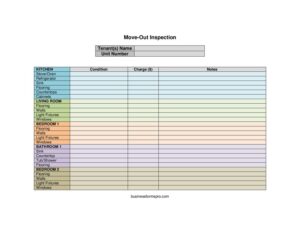
Move-Out Inspection
Download a free Move-Out Inspection form template in PDF or DOCX to document unit condition, damages, and charges when a tenant vacates — no signup.
PDF
DOCX
7 downloads
0
likes
Download Files
- DOCX
A Move-Out Inspection form is a room-by-room checklist a landlord or property manager completes when a tenant vacates a rental unit, recording the condition of each space and any damage that may justify a deduction from the security deposit. People most often use it to create a fair, documented record at lease end so deposit returns and charges are based on evidence rather than memory. You can download this template free in PDF or DOCX with no signup required.
What Is a Move-Out Inspection?
A Move-Out Inspection is a structured walkthrough document used at the end of a tenancy to assess the state of a rental property after the tenant has removed their belongings. It is typically issued by the landlord, property manager, or leasing agent, and it documents the condition of rooms and fixtures such as the kitchen, living room, bedrooms, and bathrooms. The form notes whether each item is in good shape, shows normal wear, or has damage that the tenant may be responsible for. By comparing it against the move-in condition, both parties have a clear, shared reference for determining what part of the security deposit should be returned and what charges, if any, apply.
When Do You Need a Move-Out Inspection?
This form is useful any time a tenant is preparing to leave or has already vacated a property. Common situations include:
- A lease term is ending and the tenant is moving out on schedule.
- A tenant has given notice and you want to assess condition before returning the deposit.
- You need to itemize damage beyond normal wear and tear to support a deposit deduction.
- A tenant is breaking a lease early and you want documentation of the unit’s state.
- Ownership or management is changing hands and you need a snapshot of each occupied unit.
- A dispute over the deposit is likely, and you want a signed, dated record to rely on.
Pairing the move-out inspection with a move-in inspection from the start of the tenancy is the most effective approach. Side-by-side, the two documents reveal exactly what changed during the lease and help separate tenant-caused damage from ordinary aging.
What a Move-Out Inspection Should Have
A complete move-out inspection should clearly identify the tenant and the property, then break the unit into rooms and specific items so nothing is overlooked. Key elements include the tenant’s name and unit number, individual room sections (kitchen, living room, bedrooms, bathrooms), and a fixture-level breakdown such as stove/oven, refrigerator, sink, flooring, countertops, cabinets, light fixtures, and tub/shower. Each item should have space to mark its condition, record a dollar charge if repair or cleaning is needed, and add notes describing the issue. A thorough form also leaves room for the inspection date and signatures so the record is verifiable and harder to dispute later.
How to Fill Out a Move-Out Inspection
- Enter the tenant(s) name and the unit number at the top so the report is tied to the correct person and property.
- Begin with the kitchen and inspect each listed fixture: stove/oven, refrigerator, sink, countertops, cabinets, flooring, and light fixtures.
- For every item, record the condition — for example good, fair, or damaged — and note cleanliness or function.
- If an item needs repair, replacement, or cleaning, enter the estimated charge ($) and explain it in the notes field.
- Move to the living room, checking flooring, walls, and light fixtures, then record condition, charges, and notes.
- Inspect bedroom 1 and bedroom 2, noting flooring, fixtures, closets, and any wall damage.
- Complete bathroom 1, examining the tub/shower, sink, flooring, and fixtures for leaks, mildew, or chips.
- Review the full form, total the charges, date it, and have both parties sign where possible.
Normal Wear and Tear vs. Damage
One of the most important judgments in a move-out inspection is distinguishing normal wear and tear from tenant-caused damage. Normal wear and tear is the gradual deterioration that happens with everyday living — faded paint, minor scuffs on flooring, lightly worn carpet, or loose cabinet hinges. Landlords generally cannot charge for these. Damage, by contrast, results from negligence, accidents, or misuse — a cracked countertop, a broken tub/shower fixture, large stains or burns on flooring, holes in walls, or a refrigerator left filthy. When you record a charge ($), use the notes field to explain why the issue exceeds ordinary wear, and where possible attach photos to support your assessment.
Tips for a Fair and Defensible Inspection
Conduct the inspection in good lighting and, when allowed, invite the tenant to attend so they can see findings in real time. Photograph or video every charged item with timestamps and store them alongside the form. Keep notes specific and factual — “two-inch burn on living room flooring near window” is stronger than “floor damaged.” Base charges on reasonable repair or cleaning costs rather than arbitrary amounts, and check your local deposit-return deadlines so you provide the itemized statement on time. A consistent, well-documented process protects both the landlord and the tenant.
Common Mistakes to Avoid
- Skipping rooms or fixtures and leaving condition fields blank, which weakens the record.
- Charging tenants for normal wear and tear instead of genuine damage.
- Failing to compare the move-out form against the original move-in inspection.
- Writing vague notes that don’t explain the basis for a charge.
- Forgetting to date the form or collect signatures.
- Missing your jurisdiction’s deadline to return the deposit or provide an itemized statement.
Frequently Asked Questions
What is a move-out inspection form used for? It is used to document the condition of a rental unit after a tenant moves out, room by room and fixture by fixture. The record helps landlords determine fair security deposit deductions and gives both parties evidence if a dispute arises over charges.
How do I fill out a move-out inspection? Start with the tenant’s name and unit number, then inspect each room — kitchen, living room, bedrooms, and bathroom — recording the condition of items like the stove/oven, refrigerator, sink, flooring, countertops, cabinets, light fixtures, and tub/shower. Note any charges with a clear explanation, then date and sign the form.
Does a move-out inspection need to be signed or witnessed? A signature is not always legally required, but having both the landlord and tenant sign and date the form makes it far more reliable if a deposit dispute occurs. Many landlords also invite the tenant to attend the walkthrough so findings are agreed upon in person.
Can a landlord charge for normal wear and tear? Generally no — normal wear and tear such as minor scuffs or faded paint is considered the cost of doing business and cannot be deducted. Charges should be limited to actual damage, excessive dirt, or missing items, and rules on this vary by jurisdiction.
Is a move-out inspection legally binding? The form itself is a documentation tool rather than a contract, but a completed, signed inspection can serve as important evidence regarding the unit’s condition and any charges. Local landlord-tenant laws govern how deposits and itemized statements must be handled.
How much does this move-out inspection template cost? Nothing — this template is completely free to download in PDF or DOCX with no signup required. You can use it as-is or customize the rooms and fixtures to match your specific rental property.
This Move-Out Inspection template is a general example provided for informational purposes only and is not legal, financial, or tax advice. Landlord-tenant requirements, including deposit deductions and return deadlines, vary by jurisdiction — consult a qualified professional or your local housing authority before relying on this document.
Official resource: for the rules that apply to your situation, see HUD.
Related Forms
- Landlord Checklist
- Landlord Non-Renewal Letter
- Tenant Property Damage Letter
- Covid Rent Extension Landlord
- Tenant Utilities Increase Letter
- Eviction Notice Letter
Browse more in Landlord Documents.