
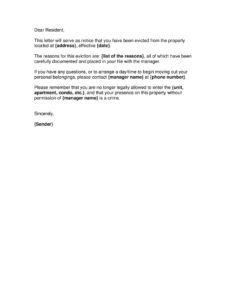
Eviction Notice Letter
Download a free Eviction Notice Letter template in PDF and DOCX to formally notify a tenant of eviction, the reasons, and move-out details — free download.
PDF
DOCX
1 downloads
0
likes
Download Files
- DOCX
An Eviction Notice Letter is a written notification from a landlord or property manager informing a tenant that their tenancy is ending and they must vacate the rental property. People most often use it to formally document the reasons for an eviction and establish a clear move-out date in writing. You can download this Eviction Notice Letter for free in PDF and DOCX formats, with no signup required.
What Is an Eviction Notice Letter?
An Eviction Notice Letter is a formal document issued by a landlord, property owner, or property manager to a resident, communicating that the tenant is being asked to leave the property. It identifies the address of the rental unit, the effective date of the eviction, and the documented reasons behind the decision. The letter also provides a point of contact so the tenant can ask questions or arrange a time to collect their belongings. While the letter itself communicates intent and creates a written record, the underlying eviction process is governed by local landlord-tenant law, which typically requires specific notice periods and, in many cases, a court order before a tenant can be legally removed.
When Do You Need an Eviction Notice Letter?
Landlords and property managers turn to an Eviction Notice Letter in a range of situations where ending a tenancy must be put in writing. Common scenarios include:
- Nonpayment of rent — when a tenant has fallen behind and informal reminders have not resolved the balance.
- Lease violations — such as unauthorized occupants, pets in violation of the lease, or repeated disturbances to neighbors.
- Property damage — when a resident has caused significant damage beyond normal wear and tear.
- Illegal activity — when conduct on the premises endangers other residents or violates the law.
- End of lease without renewal — when the landlord chooses not to renew and the tenant has not vacated.
- Holdover tenancy — when a tenant remains in the unit after the agreed-upon term has expired.
In each case, the letter creates a dated, written record that the tenant was notified and informed of the specific grounds for the eviction.
What an Eviction Notice Letter Should Have
A complete and effective Eviction Notice Letter contains several essential elements. It should clearly identify the property address so there is no confusion about which unit is involved. It must state the effective date of the eviction and list the specific reasons for it. The letter should reference that the reasons have been documented and kept on file, name a point of contact with a phone number, and explain the consequences of remaining on the property without permission. Finally, it should be signed by the sender to confirm authenticity. Clear, factual language is critical — vague accusations or emotional statements weaken the document and can complicate any later legal proceedings.
How to Fill Out an Eviction Notice Letter
Use the template’s fields to produce a clear, professional notice:
- Begin with the salutation to the resident, then enter the property address where indicated so the unit being vacated is unmistakable.
- Fill in the effective date on which the eviction takes effect, making sure it aligns with the notice period required in your area.
- In the reasons field, list each specific ground for the eviction — for example, unpaid rent for particular months, a named lease clause violation, or documented property damage.
- Note that the reasons have been documented and placed in the resident’s file with the manager, which reinforces the written record.
- Enter the manager name and a working phone number the tenant can call with questions or to schedule a time to remove belongings.
- Specify the type of dwelling — unit, apartment, condo, or similar — in the statement about no longer being legally allowed to enter the premises.
- Repeat the manager’s name where the letter explains that entering without permission is prohibited.
- Add the sender’s name in the signature line, sign, and keep a dated copy for your records.
Delivery and Documentation
How you deliver the letter can be as important as its content. Many jurisdictions specify acceptable delivery methods, such as personal hand-delivery, posting on the door, or sending by certified mail with a return receipt. Always keep a copy of the signed letter and proof of how and when it was delivered. If the eviction later proceeds to court, this paper trail demonstrates that the tenant received proper notice. Photographs, payment ledgers, and prior written warnings referenced in the file with the manager all strengthen the documentation supporting the stated reasons.
How It Differs From a Court Eviction Order
It is important to understand that an Eviction Notice Letter is not the same as a court-ordered eviction. The letter notifies the tenant and starts the process, but in most places a landlord cannot physically remove a tenant or their belongings without a court judgment and the involvement of law enforcement. So-called “self-help” evictions — changing locks, shutting off utilities, or removing possessions — are illegal in many jurisdictions and can expose the landlord to liability. Treat this letter as the formal first step, not the final authority to remove someone.
Common Mistakes to Avoid
- Using a noncompliant notice period — failing to give the number of days required by local law can invalidate the notice.
- Vague reasons — listing general complaints instead of specific, documented grounds weakens the letter.
- Skipping documentation — referencing a file but having no actual records to back up the claims.
- Attempting self-help removal — locking out a tenant or removing belongings before obtaining a court order.
- Improper delivery — handing the letter to the wrong person or using a method not recognized in your area.
- Failing to keep a copy — not retaining a signed, dated version and proof of delivery for your records.
Frequently Asked Questions
What is an Eviction Notice Letter? It is a written notice from a landlord or property manager telling a tenant they must vacate a rental property. It states the address, the effective date, and the documented reasons for the eviction, and it names a contact person for questions or move-out arrangements.
How do I fill out an Eviction Notice Letter? Enter the property address, the effective eviction date, and a clear list of the specific reasons. Then add the manager’s name and phone number, identify the type of dwelling, and sign as the sender. Keep a dated copy and proof of delivery for your records.
Is an Eviction Notice Letter legally binding? The letter formally notifies the tenant and creates a written record, but it does not by itself authorize physical removal. In most jurisdictions, a court order is required before a tenant can be legally evicted, so the letter is the first step rather than the final one.
Does an Eviction Notice Letter need to be notarized? Notarization is generally not required for an eviction notice. What matters most is that the letter is delivered in a manner recognized by your local landlord-tenant law and that you keep proof of delivery. Requirements vary, so check the rules in your area.
How much does this Eviction Notice Letter template cost? Nothing — it is completely free to download here in both PDF and DOCX formats, with no signup or account required. You can edit the DOCX version to match your situation and the requirements of your jurisdiction.
How much notice do I have to give a tenant? Notice periods are set by local law and depend on the reason for the eviction, the type of tenancy, and where the property is located. Always confirm the required number of days before setting the effective date, since an incorrect period can render the notice ineffective.
This Eviction Notice Letter template is provided as a general example for informational purposes only and is not legal advice. Landlord-tenant laws and eviction requirements vary by jurisdiction, and improper procedures can carry legal consequences. Consult a qualified attorney or your local housing authority before acting on an eviction.
Official resource: for the rules that apply to your situation, see HUD.
Related Forms
- Landlord Warning
- Landlord Lease Renewal
- Noise Complaint Letter
- Room Rental Agreement
- Receipt And Holding Deposit Agreement
- Move-In Letter
Browse more in Landlord Documents.