
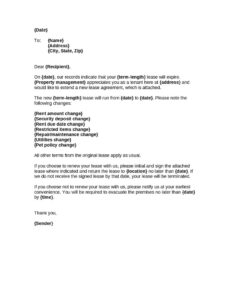
Landlord Lease Renewal
Download a free Landlord Lease Renewal letter template in PDF and DOCX to offer tenants a new lease term and outline any changes — free download.
DOCX
0
likes
Download Files
- DOCX
A Landlord Lease Renewal letter is a written notice from a landlord or property manager offering an existing tenant a new lease term before their current agreement expires. People most often use it to keep a reliable tenant in place while clearly stating any changes to rent or terms. You can download this form free in PDF and DOCX, with no signup required.
What Is a Landlord Lease Renewal?
A Landlord Lease Renewal is a formal letter that a landlord or property management company sends to a tenant whose lease is nearing its end. It confirms that the lease is expiring on a specific date, expresses interest in continuing the tenancy, and presents a new lease agreement for a fresh term. The letter typically highlights any updates — such as a rent adjustment or a revised pet policy — while confirming that all other original terms still apply. It also sets a deadline by which the tenant must sign and return the new lease, and explains what happens if they decline. In short, it documents the offer to renew and the conditions attached to it.
When Do You Need a Landlord Lease Renewal?
This letter is useful any time a fixed-term lease is approaching its expiration and you want to retain the tenant. Common situations include:
- A 12-month lease is ending and you want to offer another year on similar terms.
- You plan to raise the rent and need to communicate the new amount in writing before the renewal period begins.
- You are updating policies — for example, adding a pet fee, changing utility responsibilities, or revising restricted items.
- Your jurisdiction or original lease requires advance written notice before a lease can roll over or terminate.
- You manage multiple units and want a consistent, professional way to handle every upcoming renewal.
- A month-to-month arrangement has begun and you prefer to lock the tenant into a new fixed term.
What a Lease Renewal Letter Should Have
To be clear and effective, a renewal letter should identify the tenant and the property by full address, state the exact expiration date of the current lease, and specify the new term with start and end dates. It should list every change to the existing agreement so there are no surprises, confirm that unchanged terms remain in force, and give a firm deadline for signing and returning the attached lease. Finally, it should explain the consequences of not renewing, including any move-out date and time, and be signed by the landlord or an authorized representative.
How to Fill Out a Landlord Lease Renewal
- Enter the date you are sending the letter at the top.
- Fill in the tenant’s name, address, and city, state, and ZIP in the recipient block, then add the recipient greeting line.
- State the date the current lease expires and the existing term length.
- Add the property management or landlord name and confirm the rental address.
- Specify the new term length and the new lease’s start and end dates.
- List each change clearly: rent amount change, security deposit change, rent due date change, restricted items change, repair/maintenance change, utilities change, and pet policy change. Leave a line blank or note “no change” where nothing has changed.
- Enter the location where the signed lease should be returned and the deadline date for returning it.
- Provide the move-out date and time that apply if the tenant declines.
- Sign as the sender and attach the new lease for the tenant to initial and sign.
Communicating Changes Clearly
The most sensitive part of any renewal is the list of changes. Tenants are far more likely to renew quickly when adjustments are spelled out in plain language rather than buried in fine print. If you are increasing rent, state the old amount and the new amount so the difference is obvious. If you are changing the rent due date, utilities responsibility, or pet policy, describe exactly what is new and when it takes effect. For sections with no change, it is perfectly fine to leave them out or write “no change” — the letter’s stock language already confirms that all other original terms continue to apply. Clear, itemized changes reduce back-and-forth questions and help avoid disputes later in the term.
How It Differs From a New Lease
A renewal letter is not the lease itself — it is the cover notice that introduces the attached new lease and explains the offer. The letter sets the deadline, summarizes changes, and prompts the tenant to act. The attached lease is the binding contract the tenant initials and signs. Some landlords prefer a short renewal addendum that simply extends the existing lease with noted changes, while others issue a brand-new lease document. This letter works with either approach, since it directs the tenant to sign the attached agreement and return it by the stated date.
Common Mistakes to Avoid
- Sending the letter too close to the expiration date and not allowing enough notice under your lease or local rules.
- Leaving the new term’s start and end dates blank or vague, which creates confusion about coverage.
- Listing a rent increase without stating the new amount or its effective date.
- Forgetting to set a clear return deadline, so the tenant has no firm date to act by.
- Failing to specify the move-out date and time for tenants who decline, leaving expectations unclear.
- Not keeping a dated copy of the letter and the signed lease for your records.
Frequently Asked Questions
What is a Landlord Lease Renewal letter? It is a written notice a landlord sends to an existing tenant offering a new lease term before the current one expires. It states the expiration date, the new term, any changes to the agreement, and a deadline to sign and return the attached lease. It serves as both a courtesy and a documented offer.
How much advance notice should I give? Notice requirements vary by state, city, and the terms of your original lease — some areas require 30, 60, or 90 days for renewals or rent increases. Send the letter early enough to satisfy the longest applicable requirement and to give the tenant time to decide. When in doubt, more notice is safer than less.
Is this renewal letter legally binding? The letter itself is an offer, not the binding contract. The renewal becomes binding once the tenant initials and signs the attached lease and returns it by the stated deadline, and once you accept it. Keep signed copies to document the agreement.
Do I have to send a renewal letter at all? Not always, but a written notice is strongly recommended and may be required by your lease or local law, especially when you are raising rent or changing terms. A clear letter prevents misunderstandings and creates a paper trail. Many landlords send one as standard practice for every expiring lease.
Can I raise the rent in a renewal letter? Yes, you can propose a rent increase as part of the renewal, provided you follow any notice and rent-control rules that apply in your area. State the new amount and effective date clearly in the changes section. The tenant accepts the new rent by signing the attached lease.
Is this template really free? Yes. You can download the Landlord Lease Renewal template free in both PDF and DOCX formats with no signup required. Edit it to match your property, term, and any changes before sending it to your tenant.
This template is a general example provided for informational purposes only and is not legal, financial, or tax advice. Landlord-tenant rules, notice periods, and renewal requirements vary by jurisdiction. Consult a qualified attorney or local housing authority to ensure your lease renewal complies with applicable law.
Official resource: for the rules that apply to your situation, see HUD.
Related Forms
- Covid Rent Relief Landlord
- Notice of Lease Termination
- Agreement To Terminate Lease
- Tenant Deposit Letter
- Landlord Proof of Residency
- Tenant Complaint Log
Browse more in Landlord Documents.