
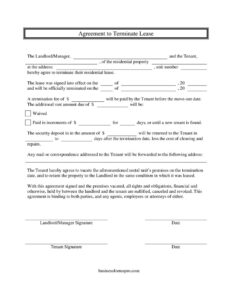
Agreement To Terminate Lease
Download a free Agreement to Terminate Lease template in PDF and DOCX to end a rental early, settle deposits, and release both parties cleanly.
PDF
DOCX
4 downloads
0
likes
Download Files
- DOCX
An Agreement to Terminate Lease is a short written contract that a landlord and tenant sign to end a residential lease before its natural expiration date. The most common reason people use it is to mutually walk away from a rental early — by agreeing on a move-out date, a termination fee, and how the security deposit is handled — without anyone breaking the original lease. You can download this Agreement to Terminate Lease free in PDF and DOCX, with no signup required.
What Is an Agreement to Terminate Lease?
An Agreement to Terminate Lease is a mutual document signed by both the landlord (or property manager) and the tenant to formally cancel an existing residential lease. Rather than one party giving notice or claiming a breach, both sides voluntarily agree to release each other from the remaining term. The document records the original lease date, the new termination date, any fee or outstanding rent, and how the deposit will be returned. Once it is signed and the premises are vacated, all rights and obligations between the parties are nullified. It functions as proof that the lease ended by agreement and protects both landlord and tenant from later claims about unpaid rent or unfulfilled obligations.
When Do You Need an Agreement to Terminate Lease?
- A tenant needs to relocate for a new job, family situation, or health reason before the lease ends, and the landlord is willing to let them go.
- A landlord wants to sell, renovate, or repurpose the property and reaches a buyout arrangement with the tenant.
- Both parties simply want to part ways early and document a clean, mutual end to the tenancy.
- A roommate or co-tenant situation changes and the existing lease no longer reflects the living arrangement.
- A tenant offers to pay a termination fee or continue paying rent until a replacement tenant is found, and the landlord accepts.
- Either side wants written confirmation that no further rent, penalties, or obligations are owed after move-out.
What an Agreement to Terminate Lease Should Have
A complete agreement clearly identifies the landlord or manager, the tenant, and the exact rental property, including the unit number. It should reference the date the original lease was signed and state the official termination date so there is no ambiguity about when the tenancy ends. The financial terms are essential: any termination fee, how outstanding rent will be treated (waived or paid in increments), and the security deposit amount with a timeframe for its return. It should also address mail forwarding, the tenant’s duty to vacate and return the unit in its leased condition, and a release clause confirming that all obligations are canceled once signed. Finally, dated signature lines for both parties make the agreement binding.
How to Fill Out an Agreement to Terminate Lease
- Enter the full name of the Landlord/Manager and the full name of the Tenant in the opening line.
- Write the complete address of the residential property and the unit number being vacated.
- Record the day, month, and year the original lease was signed, then the day, month, and year the lease will be officially terminated.
- Fill in the termination fee amount the tenant will pay before the move-out date.
- Specify the additional rent due and check whether it is waived or paid in increments; if increments, enter the amount, the number of days, or note it continues until a new tenant is found.
- State the security deposit amount and the number of days (from-to) after termination within which it will be returned, less cleaning and repair costs.
- Provide the forwarding address for any mail or correspondence addressed to the tenant.
- Both the landlord/manager and tenant sign and date the agreement to make it binding.
Handling the Termination Fee and Deposit
The financial terms are where most disputes arise, so spell them out precisely. The termination fee compensates the landlord for the cost of finding a new tenant and is usually due before the move-out date. The “additional rent” line gives flexibility: a landlord may waive remaining rent, or allow the tenant to keep paying in set increments until a replacement is found. For the security deposit, agree on a clear return window and acknowledge that legitimate cleaning and repair costs may be deducted. Document the unit’s condition with dated photos at move-out so both sides have a record. Many jurisdictions set legal limits on how long a landlord has to return a deposit and what may be deducted, so confirm your local rules before finalizing figures.
How This Differs From a Lease Notice or Eviction
An Agreement to Terminate Lease is mutual and voluntary, which sets it apart from a notice to vacate or an eviction. A notice is a one-sided communication, while an eviction is a court-driven process used when a tenant breaches the lease. Because this agreement is signed by both parties, it avoids the conflict and legal expense of those alternatives. It is essentially a negotiated exit: each side gives something up — the tenant may pay a fee, the landlord may release the remaining term — in exchange for a clean break with no lingering obligations.
Common Mistakes to Avoid
- Leaving the termination date vague or contradicting the move-out date, which can create disputes over the final rent owed.
- Failing to specify whether remaining rent is waived or payable, leading to confusion after move-out.
- Not stating a clear timeframe for returning the security deposit or what deductions are allowed.
- Forgetting the forwarding address, so the deposit and important correspondence cannot reach the tenant.
- Skipping a final walkthrough or photos that document the unit’s condition at move-out.
- Having only one party sign — both the landlord/manager and tenant must sign and date for the release to be binding.
Frequently Asked Questions
What is an Agreement to Terminate Lease? It is a written contract in which a landlord and tenant mutually agree to end a residential lease before its scheduled end date. It records the termination date, any fees, and how the deposit is handled, then releases both parties from further obligations once signed.
Is an Agreement to Terminate Lease legally binding? Yes. When both the landlord (or manager) and the tenant sign and date the document, it becomes a binding contract that cancels the original lease. It also binds any agents, employees, or attorneys of either party.
Does this agreement need to be notarized or witnessed? Most residential lease terminations do not require notarization or witnesses to be enforceable, since the signatures of both parties establish mutual consent. However, requirements vary by state and locality, so check your local rules if you want added formality.
Can the landlord keep the security deposit? The agreement provides for the deposit to be returned within a set number of days, less legitimate cleaning and repair costs. A landlord generally cannot keep the full deposit without justification, and many jurisdictions limit allowable deductions and return timeframes.
Do I have to pay a termination fee? Only if both parties agree to one. The fee is a negotiated term, not a legal requirement — some landlords waive remaining rent entirely, while others request a fee or continued payments until a new tenant is found.
How much does this template cost? Nothing. You can download the Agreement to Terminate Lease for free in both PDF and DOCX formats, with no signup or account required, and fill it in to fit your situation.
This template is a general example provided for informational purposes only and is not legal advice. Landlord-tenant laws, deposit rules, and termination requirements vary by jurisdiction. Consult a qualified attorney or local housing authority before signing or relying on this document.
Official resource: for the rules that apply to your situation, see HUD.
Related Forms
- Apartment Manager Ledger
- Landlord Lead Disclosure Form
- Rent Demand Letter
- Landlord Notice To Enter Premises
- Move In Letter
- Landlord Maintenance Request
Browse more in Landlord Documents.