
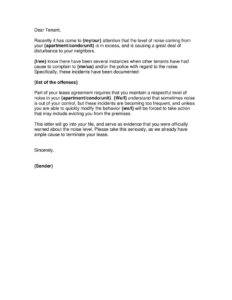
Noise Complaint Letter
Download a free Noise Complaint Letter template to formally warn a tenant about excessive noise and document the issue in PDF or DOCX, free download.
PDF
DOCX
0
likes
Download Files
- DOCX
A Noise Complaint Letter is a formal written notice a landlord or property manager sends to a tenant whose excessive noise is disturbing neighbors. Its most common purpose is to put a tenant on official notice that the behavior violates the lease and must stop before further action — including eviction — is considered. You can download this Noise Complaint Letter free in both PDF and DOCX formats, with no signup required.
What Is a Noise Complaint Letter?
A Noise Complaint Letter is a document issued by a landlord, property manager, or homeowners’ association to a tenant or resident who has generated noise beyond an acceptable level. It documents the specific incidents that have occurred, reminds the recipient of the noise clause in their lease agreement, and states the consequences of continued violations. Unlike a casual conversation or text message, this letter creates a paper trail that can be placed in the tenant’s file. That written record matters: if the problem continues and you eventually pursue lease termination or eviction, the letter serves as evidence that the tenant was warned formally and given a fair opportunity to correct the behavior.
When Do You Need a Noise Complaint Letter?
Landlords typically send this letter once verbal reminders have failed or when multiple neighbors have raised the same concern. Common situations include:
- Repeated late-night parties, loud music, or shouting that disturbs other tenants in the building.
- Other residents have complained directly to you, or the police have been called to the unit.
- A tenant’s barking dog, slamming doors, or heavy foot traffic creates ongoing disturbances.
- Loud television, gaming, or sound systems that carry through shared walls late into the night.
- Frequent guests or gatherings that violate the quiet-hours clause in the lease.
- You need a documented warning on file before considering lease termination for a chronic offender.
Because this is a written warning rather than a final eviction notice, it is best used as an intermediate step — firm enough to be taken seriously, but still offering the tenant a chance to fix the problem.
What a Noise Complaint Letter Should Have
An effective Noise Complaint Letter is specific, professional, and unmistakably clear. It should identify the tenant and the unit, reference the lease provision being violated, and list the documented incidents with as much detail as possible. The letter should state plainly that the behavior must change and explain the possible consequences, such as eviction. It should also note that the letter will be kept in the tenant’s file as a formal record. Finally, it must be signed and dated by the sender so there is no dispute about when notice was given. Keeping the tone firm but respectful helps preserve the landlord-tenant relationship while still protecting your legal position.
How to Fill Out a Noise Complaint Letter
- Address the letter to the tenant by name where it reads “Dear Tenant,” so the recipient is clearly identified.
- Choose the correct voice throughout — select my/our and I/we depending on whether you are an individual owner or part of a management company.
- Specify the dwelling type by selecting apartment, condo, or unit so the letter matches the property.
- Complete the list of the offenses section — this is the most important part. Document each incident with the date, approximate time, type of noise, and who reported it.
- Reaffirm the lease requirement to maintain a respectful noise level, reminding the tenant the obligation is contractual.
- Review the warning language about possible action, including eviction, so the consequences are clear.
- Confirm the statement that the letter will go into the tenant’s file and serve as evidence of an official warning.
- Sign off as the Sender with your name, title, and the date, and keep a copy for your records.
Documenting Incidents the Right Way
The strength of a Noise Complaint Letter rests almost entirely on the quality of your incident log. Vague phrases like “too much noise” carry little weight; precise entries do. For each event, record the calendar date, the time it began and ended, the type of disturbance, and the source of the complaint — whether it was a neighbor, a security report, or a police visit. If officers responded, note the date and any report or case number if one was provided. Keeping this log running before you send the letter makes the document credible and far harder to dispute. It also helps you decide whether the problem rises to the level requiring formal notice or is an isolated, excusable event.
How This Differs From an Eviction Notice
A Noise Complaint Letter is not an eviction notice. It is a warning that signals a violation and offers the tenant a chance to correct it. An eviction notice — sometimes called a notice to cure or quit — is a formal legal step with specific statutory requirements that vary widely by jurisdiction. Many areas require landlords to demonstrate prior warnings before a court will support an eviction for nuisance or lease violation, which is exactly why this letter is valuable. Think of it as building the record that justifies stronger action later if the behavior does not improve. Sending and retaining a copy of this letter strengthens your position if escalation becomes necessary.
Common Mistakes to Avoid
- Leaving the incident list vague — always include dates, times, and the nature of each disturbance.
- Forgetting to date and sign the letter, which weakens its value as evidence.
- Using a hostile or threatening tone instead of a firm, professional one.
- Failing to keep a copy for the tenant’s file and your own records.
- Citing the lease’s noise clause incorrectly, or ignoring it altogether.
- Skipping straight to eviction language without first giving a documented warning, which can backfire legally.
Frequently Asked Questions
What is a Noise Complaint Letter? It is a formal written warning a landlord sends to a tenant whose excessive noise disturbs neighbors. It documents the specific incidents, references the lease’s noise provision, and explains the consequences of continued violations. The letter is typically placed in the tenant’s file as a record.
How do I fill out a Noise Complaint Letter? Address it to the tenant, select the correct voice and dwelling type, and list each documented incident with the date, time, and type of noise. Then reaffirm the lease requirement, state the possible consequences, and sign and date the letter. Keep a copy for your records before delivering it.
Is a Noise Complaint Letter legally binding? The letter itself is a warning, not a binding contract or court order. However, it can become important legal evidence showing that you formally notified the tenant of a lease violation. Eviction and lease-termination rules vary by jurisdiction, so the letter usually supports — rather than replaces — those formal processes.
Do I need to send this before evicting a tenant for noise? Many jurisdictions require landlords to give documented warnings before pursuing eviction for nuisance or lease violations. Sending this letter first helps establish that the tenant was notified and given a chance to correct the behavior. Always check your local landlord-tenant laws for the exact requirements.
How should I deliver the letter to the tenant? Delivery methods vary, but landlords often use certified mail, hand delivery with a witness, or another method that creates proof of receipt. Keeping evidence that the tenant received the notice is just as important as the letter itself. Review your lease and local rules for any required delivery method.
How much does this template cost? This Noise Complaint Letter template is completely free to download from Business Forms Pro in both PDF and DOCX formats. There is no signup or payment required. You can customize the fields to fit your property and your specific situation.
This template is a general example provided for informational purposes only and is not legal advice. Landlord-tenant laws, notice requirements, and eviction procedures vary by jurisdiction. Consult a qualified attorney or local housing authority to ensure your letter and process comply with applicable laws.
Official resource: for the rules that apply to your situation, see HUD.
Related Forms
- Request for Landlord Repairs
- Landlord Change of Ownership
- Landlord Checklist
- Pre-Rental Comparison Checklist
- Notice Of Denial To Rent Apartment
- Landlord Welcome
Browse more in Landlord Documents.