
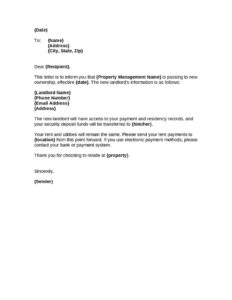
Landlord Change of Ownership
Download a free Landlord Change of Ownership letter template to notify tenants when a rental property transfers to a new owner, free download in PDF and DOCX.
DOCX
1 downloads
0
likes
Download Files
- DOCX
A Landlord Change of Ownership letter is a written notice that tells current tenants their rental property is being transferred to a new owner. Landlords and property managers most often use it to formally introduce the new landlord, confirm where rent should be sent, and reassure tenants that their lease terms remain the same. You can download this template free in PDF and DOCX with no signup required.
What Is a Landlord Change of Ownership Letter?
A Landlord Change of Ownership letter is a formal notification issued by an outgoing landlord, property management company, or seller to inform tenants that the property they live in is changing hands. It documents the effective date of the transfer, identifies the new owner, and explains how the change affects rent payments, security deposits, and existing lease arrangements. The letter serves both a practical and a courtesy purpose: it keeps residents informed so payments are not disrupted, and it creates a paper trail confirming that tenants were properly notified. While it is not a legal contract, it is an important communication that helps the transition go smoothly for everyone involved.
When Do You Need a Landlord Change of Ownership Letter?
This letter is appropriate any time the ownership or management of an occupied rental property is shifting. Common situations include:
- Selling a rental property with tenants still living in the units under active leases.
- Transferring ownership to a family member, business partner, or estate beneficiary.
- Switching property management companies or moving from a manager to direct ownership.
- Restructuring a business entity, such as moving a property into an LLC or trust.
- Buying a tenant-occupied building and needing to introduce yourself as the new landlord.
- Refinancing or reorganizing a portfolio where the payee for rent changes.
In each case, the goal is the same: give tenants clear, written direction so rent continues to flow to the right party and no one is confused about who is now responsible for the property.
What a Change of Ownership Letter Should Have
A complete and effective letter includes the date it is written, the tenant’s name and address, and a clear statement that ownership is transferring. It should name the property management company or current owner, the effective date of the change, and full contact details for the new landlord. Critically, it must tell tenants where to send future rent payments and confirm whether their rent, utilities, lease terms, and security deposit arrangements remain unchanged. A polite closing and the sender’s signature finish the document. Clarity and accuracy matter more than length—tenants should be able to read it once and know exactly what to do next.
How to Fill Out a Landlord Change of Ownership Letter
- Enter the Date you are writing the letter at the top.
- Add the tenant’s Name, Address, and City, State, Zip in the recipient block.
- Open with a greeting using the Recipient name (for example, “Dear Ms. Lopez”).
- In the first line, insert the Property Management Name (or current owner) and the effective date the ownership change takes place.
- Fill in the new landlord’s details: Landlord Name, Phone Number, Email Address, and Address.
- Confirm the security deposit transfer by selecting the correct pronoun (him/her) or the new owner’s name.
- Reassure the tenant that rent and utilities stay the same, then specify the new payment location or address where rent should be sent going forward.
- Note the reminder for tenants using electronic payments to contact their bank or payment system.
- Close by thanking the tenant for residing at the property, then sign as the Sender.
Review every field before sending—an incorrect payment address is the single most common cause of missed or misdirected rent during a transition.
Security Deposits and Lease Continuity
One of the most sensitive topics in any ownership change is the tenant’s security deposit. This template states that deposit funds will be transferred to the new landlord, which is the most common arrangement. Many jurisdictions require that the deposit be transferred to or properly accounted for by the new owner, and some require written notice to the tenant about where the deposit is held. Existing leases generally remain in force after a sale—the new owner steps into the shoes of the old landlord and inherits the obligations of the lease. Because rules on deposit handling, interest, and notice timelines vary widely by location, confirm your local requirements before finalizing the transfer so both parties are protected.
Tips for a Smooth Transition
- Send the letter well before the effective date so tenants have time to update their payment methods.
- Deliver it in a way you can document—certified mail, email with read receipt, or hand delivery with a signed acknowledgment.
- Keep a copy in each tenant’s file for your records.
- Encourage the new landlord to follow up with a short welcome note and a way to report maintenance issues.
- Double-check the new payment address and any online portal details so the first rent cycle goes through cleanly.
Common Mistakes to Avoid
- Leaving out the effective date, which leaves tenants unsure when the change actually takes place.
- Providing incomplete new landlord contact information, so tenants cannot reach the right person.
- Failing to specify the new rent payment location, causing late or misdirected payments.
- Not addressing the security deposit, which is one of tenants’ biggest concerns during a sale.
- Sending the notice too late, leaving no time to update autopay or banking details.
- Forgetting to keep proof of delivery, which can matter if a dispute arises later.
Frequently Asked Questions
What is a Landlord Change of Ownership letter? It is a written notice that informs tenants their rental property is transferring to a new owner. The letter introduces the new landlord, confirms the effective date, and explains where to send rent and how the deposit is handled. It keeps the transition organized and documented for both sides.
Do tenants have to sign this letter? A signature is not always required, but it is good practice to obtain written acknowledgment that the tenant received and understood the notice. You can include a line for the tenant to sign and date, or simply keep proof of delivery such as a certified mail receipt. This protects you if there is later confusion about whether notice was given.
Does a change of ownership cancel the existing lease? Generally no—the new owner inherits the existing lease and must honor its terms until it expires. Rent, duration, and other conditions usually remain the same, which is why this template reassures tenants that their rent and utilities will not change. Always verify the lease terms and local landlord-tenant law before assuming anything changes.
What happens to the security deposit? In most cases the deposit is transferred to the new owner, who then becomes responsible for returning it at the end of the tenancy. Some areas require written notice to the tenant about where the deposit is held. Confirm your local rules so the transfer is handled correctly and the tenant’s funds are protected.
How much notice should I give tenants? Give as much advance notice as your local laws require and as is practical—several weeks is common so tenants can update payment methods. Sending it before the effective date prevents missed rent and reduces confusion. Check your state or local requirements, since notice periods vary.
Is this template free to download? Yes. You can download the Landlord Change of Ownership letter free in both PDF and DOCX formats with no signup required. Edit the fields to match your property, tenants, and new owner, then print or send it electronically.
This template is a general example provided for informational purposes only and is not legal, financial, or tax advice. Landlord-tenant laws, notice requirements, and security deposit rules vary by jurisdiction. Consult a qualified attorney or professional to ensure your notice meets the requirements that apply to your property.
Official resource: for the rules that apply to your situation, see HUD.
Related Forms
- Landlord Maintenance Request
- Tenant Late Rent Log
- Apartment Manager Ledger
- Rental Appliance Condition Record
- Landlord Lead Disclosure Form
- Landlord Checklist
Browse more in Landlord Documents.