
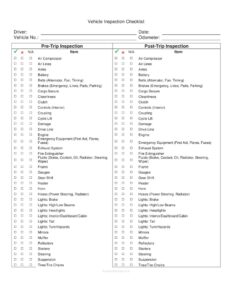
Trip Vehicle Inspection Checklist
Download a free Trip Vehicle Inspection Checklist template in PDF and DOCX to log pre-trip and post-trip vehicle safety checks quickly and accurately.
PDF
DOC
0
likes
Download Files
- DOC
A Trip Vehicle Inspection Checklist is a structured form used to record the condition of a vehicle before and after a journey, documenting that key safety systems were checked and any defects were noted. Drivers, fleet operators, and rental companies rely on it most often to catch mechanical problems early and create a clear paper trail of vehicle condition. You can download it free in PDF and DOCX with no signup required.
What Is a Trip Vehicle Inspection Checklist?
A Trip Vehicle Inspection Checklist is a single-page log that walks a driver through the most important components of a vehicle — tires, brakes, lights, fluids, mirrors, and safety equipment — and provides a place to mark each item as satisfactory or in need of attention. It is typically completed by the driver who will operate the vehicle, and sometimes countersigned by a supervisor or maintenance lead. The form documents the vehicle’s condition at a specific point in time, supports preventive maintenance, and protects both the driver and the organization by showing that a reasonable safety check was performed before the trip began.
When Do You Need a Trip Vehicle Inspection Checklist?
Almost any time a vehicle is about to be driven for work or shared use, a quick documented inspection is worth the few minutes it takes. Common situations include:
- Commercial driving: Truck, van, and bus operators complete pre-trip and post-trip inspections as part of daily routine and regulatory compliance.
- Fleet management: Companies with company cars or service vehicles use the checklist to track condition across multiple drivers and shifts.
- Vehicle rentals and car sharing: Documenting condition at pickup and return helps resolve disputes over pre-existing damage.
- Long-distance road trips: Families or tour groups verify tires, fluids, and lights before setting out on extended drives.
- Construction and field crews: Work trucks hauling equipment or trailers get inspected to prevent breakdowns on remote job sites.
- Driver handoffs: When a vehicle changes hands between employees, a fresh inspection records who reported what and when.
What a Trip Vehicle Inspection Checklist Should Have
A complete checklist captures both identifying details and the condition of every critical system. At minimum it should include the vehicle identification (make, model, license plate or unit number, and odometer reading), the driver’s name, and the date and time of inspection. The body of the form lists inspection points grouped logically — exterior, tires and wheels, lights and signals, under the hood, interior controls, and safety equipment — each with a way to mark its status. A defects or remarks section lets the inspector describe any problems, and signature lines for the driver and a reviewer confirm the inspection was completed and reviewed.
How to Fill Out a Trip Vehicle Inspection Checklist
- Enter vehicle details: Record the make, model, year, license plate or fleet unit number, and the current odometer reading so the log ties to a specific vehicle and mileage point.
- Add the date and time: Note when the inspection occurred and whether it is a pre-trip or post-trip check.
- Identify the inspector: Write the driver’s full name and, if applicable, employee or license number.
- Check exterior items: Inspect body damage, mirrors, windshield, and wipers, marking each as OK or noting an issue.
- Inspect tires and wheels: Verify tread, pressure, and lug nuts; flag any low or worn tires.
- Test lights and signals: Confirm headlights, brake lights, turn signals, and hazards all function.
- Open the hood: Check oil, coolant, brake fluid, washer fluid, and belts.
- Review the interior: Test brakes, horn, seatbelts, gauges, and the parking brake.
- Confirm safety gear: Verify the spare tire, jack, first aid kit, fire extinguisher, and reflective triangles are present.
- Record defects and sign: Describe any problems in the remarks area, then sign and have a supervisor review where required.
Pre-Trip vs. Post-Trip Inspections
A pre-trip inspection focuses on confirming the vehicle is safe and roadworthy before departure: it emphasizes tires, brakes, fluids, lights, and steering. A post-trip inspection, done at the end of a route or shift, focuses on identifying any new damage or problems that developed during use so they can be repaired before the next driver takes the vehicle. Using the same checklist for both, with a box or note indicating which type it is, keeps your records consistent. Many fleets file post-trip forms so that maintenance teams can act on reported defects overnight, reducing downtime and keeping vehicles in service.
Tips for Getting the Most From Your Checklist
Keep blank copies in the glovebox or cab so an inspection is always within reach. Walk the vehicle in the same order every time — front to back, or clockwise around the body — so nothing gets skipped. Be specific in the remarks section: “left rear tire reads 28 psi, should be 35” is far more useful to a mechanic than “tire low.” Store completed forms together, whether in a binder or scanned into a folder, so you can track recurring problems on a particular vehicle over time. Finally, treat any flagged defect as a decision point: minor issues can be logged for later, but anything affecting brakes, steering, or tires should be resolved before the trip.
Common Mistakes to Avoid
- Skipping items to save time: A rushed inspection that checks boxes without looking defeats the purpose and creates false records.
- Leaving the odometer blank: Mileage anchors the inspection to a point in the vehicle’s service life and is essential for maintenance scheduling.
- Vague defect notes: “Something feels off” gives a mechanic nothing to work with; describe the symptom, location, and severity.
- No signature: An unsigned form does not establish who performed the inspection or that anyone reviewed it.
- Failing to report and follow up: Noting a problem but never passing it to maintenance means the defect rolls into the next trip.
- Reusing one form for weeks: Each trip or shift deserves its own dated record rather than overwriting an old sheet.
Frequently Asked Questions
What is a Trip Vehicle Inspection Checklist used for? It is used to document that a driver checked a vehicle’s key safety systems before or after a trip. The completed form creates a record of the vehicle’s condition, flags any defects for repair, and supports both safety compliance and preventive maintenance.
How do I fill out the checklist? Start by entering the vehicle details, odometer, date, and your name, then work through each inspection point — tires, lights, fluids, brakes, and safety gear — marking each as satisfactory or noting a problem. Describe any defects clearly in the remarks section and sign the form when finished.
Is a trip inspection legally required? Requirements vary by jurisdiction and vehicle type. Many commercial and heavy-vehicle operations are required to perform and document daily inspections, while personal vehicles generally are not — check the rules that apply to your operation and region.
Does the checklist need to be signed by a supervisor? Not always. The driver’s signature is the most important, but many fleets require a supervisor or maintenance reviewer to countersign so reported defects are acknowledged and addressed. Use the review line if your organization’s policy calls for it.
What’s the difference between a pre-trip and post-trip inspection? A pre-trip check confirms the vehicle is safe to drive before departure, while a post-trip check identifies any new problems that developed during the trip. The same template works for both — just indicate which type each completed form represents.
Is this template free to download? Yes. The Trip Vehicle Inspection Checklist is free to download in both PDF and DOCX formats with no signup required, so you can print copies for the vehicle or edit the fields to match your fleet’s needs.
This template is a general example provided for informational purposes only and does not constitute legal, safety, or regulatory advice. Inspection requirements vary by jurisdiction, industry, and vehicle type — consult the applicable regulations and a qualified professional to ensure your inspection practices meet all requirements.
Related Forms
- Store Closing Procedure Checklist
- Large-Print Packing List
- Long Distance Phone Call Log
- Photo Log
- Store Opening Procedure Checklist
- Coin Collector Log
Browse more in Log and Inventory.