
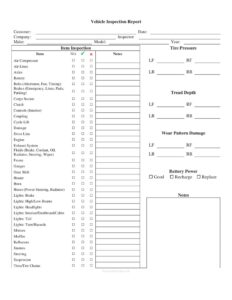
Vehicle Inspection Report
Download a free Vehicle Inspection Report template in PDF or DOCX to document a car's condition before a sale, rental, or fleet check — free download.
PDF
DOC
15 downloads
0
likes
Download Files
- DOC
A Vehicle Inspection Report is a structured checklist used to record the mechanical, safety, and cosmetic condition of a car, truck, or van at a specific point in time. People most often use it to document a vehicle’s condition before buying, selling, renting, or handing off a fleet vehicle, creating a clear written record both parties can rely on. You can download this Vehicle Inspection Report free in PDF or DOCX, with no signup required.
What Is a Vehicle Inspection Report?
A Vehicle Inspection Report is a document that captures the observed condition of a vehicle across its major systems and surfaces. It is typically completed by a buyer, seller, mechanic, rental agent, or fleet manager who physically walks around and tests the vehicle. The report records identifying details, mileage, the state of components such as tires, brakes, lights, and fluids, and any existing damage. Its purpose is to create an objective, dated snapshot that reduces disputes over who is responsible for a defect or a scratch. Whether attached to a bill of sale, a rental agreement, or a maintenance log, the report serves as evidence of how the vehicle looked and performed on the inspection date.
When Do You Need a Vehicle Inspection Report?
This report is useful any time a vehicle’s condition needs to be documented before responsibility changes hands or a decision is made. Common situations include:
- Buying a used car: A buyer documents existing dents, worn tires, or warning lights before committing to the purchase price.
- Selling a vehicle privately: A seller records the as-is condition to protect against later claims that a problem was hidden.
- Renting or leasing a vehicle: Rental agents note the condition at pickup and return so customers are charged only for new damage.
- Managing a fleet: Companies inspect delivery vans or service trucks on a schedule to catch maintenance issues early.
- Pre-trip and post-trip checks: Drivers confirm tires, lights, and brakes are safe before a long haul.
- Trade-ins and dealership intake: Dealers assess a vehicle to set a fair trade-in value and flag needed reconditioning.
What a Vehicle Inspection Report Should Have
A complete report should leave no ambiguity about which vehicle was inspected, when, by whom, and in what condition. Strong reports include vehicle identification (make, model, year, VIN, license plate), the current odometer reading, and the inspection date and location. The body of the form should cover exterior condition, interior condition, tires and wheels, lights and signals, brakes, engine and fluids, and any dashboard warning indicators. A space for notes lets the inspector describe specific defects in plain language, and a diagram or damage map helps mark scratches and dents by location. Finally, signature lines for the inspector and any second party confirm that both agree on what was recorded.
How to Fill Out a Vehicle Inspection Report
- Enter vehicle details: Record the make, model, year, color, VIN, and license plate so the report is tied to one specific vehicle.
- Note the mileage: Write the exact odometer reading at the time of inspection.
- Add date and location: Log when and where the inspection took place and who performed it.
- Inspect the exterior: Walk around the vehicle and mark the condition of the body, glass, mirrors, and paint, noting dents and scratches.
- Check tires and wheels: Record tread depth, pressure, and any visible damage on each tire.
- Test lights and signals: Confirm headlights, brake lights, turn signals, and hazards all work.
- Review the interior: Note seat condition, upholstery, dashboard, controls, and any odors or stains.
- Examine mechanical systems: Check fluid levels, the battery, belts, brakes, and listen for unusual engine noise.
- Document warning lights: List any dashboard indicators that stay on after startup.
- Write notes and sign: Summarize defects in the notes field, then have the inspector and second party sign and date.
Types of Vehicle Inspections
Not every inspection serves the same goal, and the depth of the report should match the purpose. A pre-purchase inspection is the most thorough, often performed by a mechanic to uncover hidden mechanical problems before money changes hands. A rental check-in/check-out inspection focuses heavily on cosmetic condition so the customer is not billed for pre-existing damage. A routine fleet inspection repeats on a fixed schedule and emphasizes safety items like brakes, tires, and lights. A roadworthiness or safety inspection targets the components required to legally and safely operate the vehicle. Choosing the right scope keeps the report relevant and avoids wasting time on details that do not matter for that transaction.
Tips for an Accurate Inspection
Inspect in good daylight whenever possible, since shade and overhead lights hide scratches and paint imperfections. Photograph each damaged area and reference the photo in the notes so the written record and images line up. Test-drive the vehicle if circumstances allow, paying attention to braking, steering pull, and unusual vibration. Be specific in the notes — “two-inch scratch on rear left door” is far more useful than “some damage.” Finally, complete the inspection while both parties are present so any disagreement about condition can be resolved on the spot rather than later.
Common Mistakes to Avoid
- Leaving the VIN or plate blank: Without identifying details, the report cannot be tied to a specific vehicle.
- Recording mileage incorrectly: A wrong odometer reading undermines the report’s credibility and can cause disputes.
- Vague damage descriptions: “Scratches” without location or size is hard to verify later.
- Skipping the test of lights and brakes: Safety items are easy to overlook but critical to the vehicle’s roadworthiness.
- Forgetting signatures: An unsigned report carries far less weight if a dispute arises.
- Inspecting in poor light: Dim conditions hide cosmetic damage that surfaces only after the handoff.
Frequently Asked Questions
What is a Vehicle Inspection Report used for? It documents the condition of a vehicle at a specific date and time, covering mechanical, safety, and cosmetic items. People use it before buying, selling, renting, or servicing a vehicle so there is a clear record of any existing issues. This helps prevent later disputes about who caused a defect or damage.
How do I fill out a Vehicle Inspection Report? Start with the vehicle’s identifying details and mileage, then work systematically through the exterior, interior, tires, lights, and mechanical systems. Describe any defects clearly in the notes field, mark damage locations on the diagram, and have both parties sign. Working from front to back in the same order each time helps you avoid missing anything.
Does a Vehicle Inspection Report need to be notarized? No, a vehicle inspection report does not normally require notarization. It is a condition record rather than a legal transfer document, so signatures from the inspector and the other party are usually sufficient. Some commercial or regulatory inspections may have their own certification rules, so check the requirements that apply to your situation.
Is a Vehicle Inspection Report legally binding? The report itself is primarily a record of observed condition rather than a contract. However, when both parties sign it and attach it to a bill of sale or rental agreement, it can serve as supporting evidence if a dispute arises. Its value comes from being accurate, dated, and signed by everyone involved.
Who should complete the inspection? Anyone with a clear interest in the vehicle’s condition can complete it — a buyer, seller, rental agent, or fleet manager. For a pre-purchase inspection, having a qualified mechanic perform it gives the most reliable assessment of hidden mechanical problems. Either way, the inspector should sign to confirm the findings.
How much does this template cost? This Vehicle Inspection Report template is completely free to download from Business Forms Pro in both PDF and DOCX formats. There is no signup, subscription, or payment required. You can edit the DOCX version to add your own logo, fields, or inspection categories before use.
This Vehicle Inspection Report template is provided as a general example for informational purposes only and does not constitute legal, financial, or professional advice. Inspection requirements and consumer protection rules vary by jurisdiction. For mechanical certainty or regulatory compliance, consult a qualified mechanic or appropriate professional.
Official resource: for the rules that apply to your situation, see your state DMV.
Related Forms
- Vehicle Invoice
- Odometer Statement
- Vehicle Registration Tracker
- Vehicle Deal Jacket
- Vehicle Loan Payment Calculator
- Used Car Mechanic Checklist
Browse more in Auto Sales.