
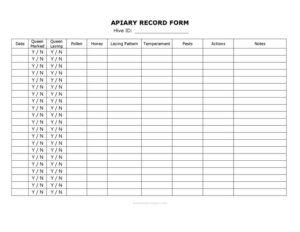
Apiary Record Form
Track hive health, queen status, and honey stores with our free Apiary Record Form template — download in PDF or DOCX for free, no signup.
PDF
DOC
6 downloads
0
likes
Download Files
- DOC
An Apiary Record Form is a simple inspection log beekeepers use to document the condition of each hive during a visit. The most common reason people use it is to track queen health, brood patterns, honey stores, and pest pressure over time so problems are caught early. You can download this Apiary Record Form free in PDF or DOCX, with no signup required.
What Is an Apiary Record Form?
An Apiary Record Form is a structured document that captures what a beekeeper observes and does during a hive inspection. It is used by hobbyist beekeepers, sideliners, and commercial operations to record per-hive details such as the date of the visit, the queen’s status, the colony’s temperament, and the presence of honey, pollen, or pests. Rather than relying on memory between inspections, the form creates a written history for each colony. That history helps you compare hives, spot declining health, plan feeding or treatments, and make decisions about splits, requeening, or harvest. Kept consistently, these records become one of the most valuable management tools in any apiary.
When Do You Need an Apiary Record Form?
Any time you open a hive, there is something worth writing down. Common situations where this form is essential include:
- Routine inspections during the active season, when you check brood, stores, and queen status every week or two.
- After installing a package or nuc, to confirm the queen is laying and the colony is building up.
- When monitoring pests and disease such as Varroa mites, wax moths, or hive beetles, and tracking treatment results.
- Before and after a honey flow, to note how much honey is being stored and decide when to add or pull supers.
- When requeening or marking a queen, so future inspections reference the correct queen age and marking color.
- Going into and out of winter, to assess whether each colony has enough stores and a healthy population to survive.
What an Apiary Record Form Should Have
A complete hive log balances enough detail to be useful with enough simplicity to fill out at the hive. The core elements are a clear hive identifier, the inspection date, and observations covering the three pillars of colony health: the queen, the brood, and the stores. It should capture queen presence and laying status, the quality of the brood pattern, food reserves of honey and pollen, the colony’s temperament, and any pest or disease signs. Finally, an actions field records what you did or plan to do, and a notes field captures anything that doesn’t fit a checkbox. Consistent fields across every visit make the records comparable.
How to Fill Out an Apiary Record Form
Complete the form at the hive or immediately after, using the actual fields on the template:
- Date: Enter the inspection date so you can track intervals between visits and seasonal changes.
- Hive ID: Record the unique identifier for the colony (a number, color, or location tag) so the record ties to the right hive.
- Queen Laying: Note whether the queen is actively laying — yes, no, or unsure — based on eggs and young larvae you observe.
- Laying Pattern: Describe the brood pattern, such as solid, spotty, or scattered, which signals queen quality and colony health.
- Queen Marked: Indicate whether the queen carries a paint mark, and note the color if your operation uses the marking system.
- Honey: Estimate honey stores — frames or supers full — to judge whether to harvest, feed, or leave reserves.
- Pollen: Record the amount of stored pollen, an indicator of forage availability and brood-rearing capacity.
- Pests: List any pests or disease signs observed, such as mites, beetles, moths, or chalkbrood.
- Temperament: Rate how calm or defensive the colony was, which helps you compare genetics across hives.
- Actions: Document what you did or plan to do — added a super, treated for mites, fed syrup, or scheduled a split.
- Notes: Add free-form observations like weather, swarm cells, or follow-up reminders.
Reading Your Records Over Time
The real power of an Apiary Record Form appears after several inspections, when patterns emerge across the dates. A queen who was laying solid in spring but shows a spotty pattern weeks later may be failing and need replacing. Steadily declining honey stores during a dearth tell you when to begin feeding. Rising pest counts across consecutive visits justify a treatment, while a hive that is consistently defensive may be a candidate for requeening with calmer stock. Because each entry is tied to a specific Hive ID and date, you can flip through one colony’s history at a glance, compare it against your other hives, and make confident, evidence-based decisions instead of guessing.
Tips for Accurate Hive Records
Use the same Hive ID labeling system across your whole apiary, and keep it consistent year to year. Fill the form out in the field or right after closing up, while observations are fresh — details fade quickly. Be honest and specific: “spotty pattern, 3 mites on sticky board” is far more useful than a vague “looks okay.” If you mark queens, follow the international color code for the year so a glance at the mark tells you the queen’s age. Photograph anything unusual and reference it in the Notes field.
Common Mistakes to Avoid
- Skipping the Hive ID, which makes a record useless when you have multiple colonies.
- Leaving the date blank, so you lose the ability to track intervals and seasonal trends.
- Vague pest entries — note what you saw and roughly how much, not just “some pests.”
- Ignoring temperament, then forgetting which hives are aggressive when you plan future work.
- Forgetting to log actions, leaving you unsure whether a treatment or feeding was already done.
- Inconsistent recording — sporadic entries break the timeline that makes the log valuable.
Frequently Asked Questions
What is an Apiary Record Form used for? It is used to log what you observe during each hive inspection, including queen status, brood pattern, honey and pollen stores, pests, and temperament. Over time it builds a per-hive history that guides feeding, treatment, harvesting, and requeening decisions.
How often should I fill it out? Complete a new entry every time you open a hive — typically every one to two weeks during the active season and less often in winter. The more consistently you record, the more useful the trends become.
What does the Laying Pattern field mean? It describes how the queen’s brood is distributed across the comb. A solid, compact pattern usually indicates a healthy queen, while a spotty or scattered pattern can signal disease, a failing queen, or inbreeding.
Why does Queen Marked matter? A marked queen is easier to find during inspections, and the international color code tells you which year she was introduced. This helps you track her age and plan requeening before she declines.
Can I use this form for multiple hives? Yes. Use one form per hive per inspection and rely on the Hive ID field to keep records separated. This lets you compare colonies side by side and review any single hive’s full history.
Is this Apiary Record Form free to download? Yes. You can download it free in PDF or DOCX with no signup required, fill it out by hand or on a computer, and print copies for every hive in your apiary.
This Apiary Record Form template is a general example provided for informational purposes only and is not legal, veterinary, or agricultural advice. Beekeeping regulations, registration requirements, and disease-reporting rules vary by jurisdiction — consult your local beekeeping association or agricultural authority for guidance specific to your area.
Related Forms
- Field Planning Worksheet
- Animal Profile Record
- Field History Sheet
- Monthly Farm Expenses Form
- Farm Equipment Record
- Farm Store Order Form
Browse more in Agriculture.