
Welcome to a New Employee
Download a free New Employee Welcome Letter template to greet new hires warmly and professionally — free download in PDF and DOCX, no signup.
DOCX
1 downloads
1
likes
Download Files
- DOCX
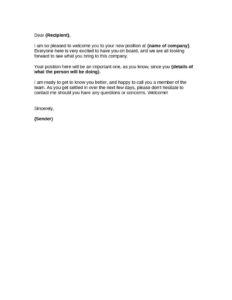
A New Employee Welcome Letter is a short, warm note sent to a person who has just joined your organization, letting them know their team is glad to have them and pointing them to a contact for early questions. The most common reason people use it is to make a new hire feel valued on or before their first day while reinforcing a positive first impression of the company. You can download this welcome letter free in both PDF and DOCX formats, with no signup required.
What Is a New Employee Welcome Letter?
A New Employee Welcome Letter is a brief business letter, usually written by a manager, supervisor, team lead, or HR representative, that greets a newly hired person and expresses enthusiasm about them joining the company. It documents a friendly, professional first communication and sets the tone for the working relationship. Rather than covering payroll, benefits, or detailed onboarding logistics, this letter focuses on the human side: making the new employee feel expected, welcomed, and supported. It typically names the recipient, the company, the role they are stepping into, and offers an open invitation to reach out with questions. It is signed by the sender, giving the new hire a clear point of contact from day one.
When Do You Need a New Employee Welcome Letter?
This letter fits many moments around the start of a new role. Common scenarios include:
- Sending a warm greeting to a candidate who has just accepted an offer, ahead of their start date.
- Handing or emailing a welcome note on the employee’s first morning so they feel expected and at ease.
- Introducing yourself as the new hire’s direct manager when you weren’t part of the interview process.
- Welcoming a transfer or internal promotion into a new department or team.
- Greeting a remote or hybrid worker who won’t meet colleagues in person right away and needs a personal touch.
- Setting a positive tone alongside a more formal onboarding packet from HR.
What a New Employee Welcome Letter Should Have
An effective welcome letter is short and sincere. The essential elements include a personal salutation that uses the recipient’s name, a clear statement of welcome and enthusiasm, a mention of the company by name, and a sentence acknowledging the employee’s specific role and why it matters. It should reassure the new hire that questions are welcome and identify who they can turn to. Finally, it closes with a warm sign-off and the sender’s name and title. The tone should be friendly and genuine without being overly formal, and the message brief enough to read in under a minute.
How to Fill Out a New Employee Welcome Letter
Follow these steps to complete the template using the fields provided:
- Address the recipient: Replace {Recipient} with the new employee’s name. Use the form they prefer — a first name keeps it warm, while a full name reads more formal.
- Name the company: Fill in {name of company} so the welcome clearly identifies the organization the person is joining.
- Describe the role: Complete the {details of what the person will be doing} field with a specific, encouraging description of their responsibilities, such as leading the customer support team or managing the new product launch.
- Reinforce the open-door message: Keep the line inviting the employee to contact you with questions, and adjust it to mention email, phone, or your office if helpful.
- Sign off: Replace {Sender} with your name. Add your job title and contact details beneath your name so the new hire knows exactly who is reaching out.
Tips for Writing a Memorable Welcome
A welcome letter works best when it feels personal rather than generic. Reference something specific from the hiring process — a strength the candidate showed in interviews, or a project they will contribute to — so the note reads as written for them alone. Keep the message positive and forward-looking, and avoid loading it with policies, forms, or deadlines that belong in the official onboarding packet. If you are sending it before the start date, consider including a single practical detail such as where to report and at what time. A short, sincere letter almost always lands better than a long one.
How This Differs From an Offer Letter or Onboarding Packet
A welcome letter is not the same as an offer letter or an onboarding document. An offer letter is a formal, often legally significant document that states the position, compensation, start date, and conditions of employment, and it usually requires the candidate’s signature. An onboarding packet covers benefits enrollment, tax forms, policies, and procedural steps. The welcome letter, by contrast, carries no contractual weight — it exists purely to make the new hire feel valued and supported. Many companies send all three: the offer letter to formalize the hire, the onboarding packet to handle logistics, and the welcome letter to add a warm human touch on or near day one.
Common Mistakes to Avoid
- Leaving placeholder text like {Recipient} or {name of company} in the final version — always proofread before sending.
- Making the letter too long or stuffing it with policy details that belong in onboarding materials.
- Being so generic that the note could apply to anyone, which undermines the personal welcome.
- Forgetting to identify yourself clearly, leaving the new hire unsure who to contact.
- Misspelling the employee’s name or the company name — small errors hurt a first impression.
- Sending it too late, so it arrives well after the employee has already started and the moment has passed.
Frequently Asked Questions
What is a New Employee Welcome Letter? It is a brief, friendly business letter that greets a newly hired person, expresses excitement about them joining, and offers a point of contact for questions. Its purpose is to make the new employee feel valued and expected during their first days.
Who should send the welcome letter? It is typically sent by the new hire’s direct manager, supervisor, team lead, or an HR representative. Choose whoever the employee will work with most closely, since that person becomes a natural early point of contact.
When should I send it? You can send it shortly after the offer is accepted, the day before the start date, or on the employee’s first morning. Sending it before or right at the start gives the warmest impression and helps the new hire feel prepared.
Is a welcome letter legally binding? No. A welcome letter is a courtesy message and carries no contractual force. The terms of employment are governed by the offer letter, employment agreement, or company policies, not by the welcome note.
How long should the letter be? Short — usually a single paragraph or two that takes under a minute to read. The goal is a sincere, personal greeting, not a detailed rundown of duties or policies, which belong in onboarding materials.
How much does this template cost? Nothing. You can download this New Employee Welcome Letter template free in PDF and DOCX formats with no signup required, then customize the recipient, company, role, and signature for your own use.
This template is a general example provided for informational purposes only and does not constitute legal, HR, or professional advice. Employment practices and requirements vary by jurisdiction and organization, so consult a qualified professional for guidance specific to your situation.
Related Forms
- Out Of Stock Notice
- Employee Termination For Gross Misconduct
- 30 Days Past Due Letter
- Notice of Product Defect
- New Employee Introduction
- New Sale Announcement
Browse more in Business Letters.