
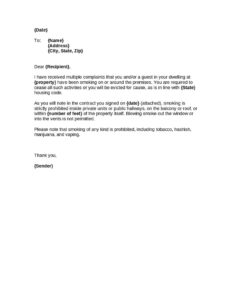
Landlord Smoking Warning
Download a free Landlord Smoking Warning letter template in PDF and DOCX to formally notify tenants of a smoking lease violation — free download, no signup.
DOCX
2 downloads
0
likes
Download Files
- DOCX
A Landlord Smoking Warning is a formal letter a property owner or manager sends to a tenant who has violated a no-smoking provision in their lease. The most common reason people use it is to create a documented, written record that a smoking violation occurred and that the tenant was given a chance to correct it. You can download this template free in PDF and DOCX, with no signup required.
What Is a Landlord Smoking Warning?
A Landlord Smoking Warning is a written notice that informs a tenant they have breached a smoking-related clause in their rental agreement. It is typically issued by a landlord, property manager, or leasing agent and is delivered to the tenant after smoking is observed or reported inside a unit, on a balcony, or in a designated smoke-free common area. The letter documents the specific violation, references the relevant lease term, and states what the tenant must do to remain in compliance. Although it is not a court document, a clear, dated warning often becomes an important piece of evidence if the situation escalates to lease termination or eviction proceedings later on.
When Do You Need a Landlord Smoking Warning?
This letter is useful any time a smoke-free policy is in place and a tenant appears to have crossed the line. Common situations include:
- A neighbor complains about cigarette or cigar smoke drifting into their unit or hallway.
- Staff or maintenance workers notice the smell of tobacco or cannabis inside a designated non-smoking unit.
- Cigarette butts, ash, or burn marks are found on a balcony, patio, or in common areas.
- Smoke detectors or building sensors are triggered by smoking activity.
- A tenant smokes in a designated smoke-free zone such as a lobby, stairwell, or pool deck.
- You need a formal first warning before pursuing fines, lease termination, or other remedies allowed under the agreement.
Types of Smoking Violations a Warning Can Cover
Not every smoking warning addresses the same conduct, and tailoring the letter helps it hold up. Some warnings concern indoor smoking that risks fire damage and lingering odor in carpets and walls. Others address vaping or e-cigarettes, which many modern leases treat the same as combustible tobacco. A growing number relate to cannabis use, which may be legal to possess in a jurisdiction yet still prohibited by the lease. Finally, some warnings deal with guests of the tenant smoking on the property. Identifying which type of violation occurred lets you reference the correct lease clause and set realistic expectations for the tenant.
What a Landlord Smoking Warning Should Have
A complete and effective warning letter generally includes the following elements:
- The date the letter is written and the date of the observed violation.
- The tenant’s name and the full rental property address, including unit number.
- The landlord or property manager’s name and contact information.
- A clear description of the violation and where it occurred.
- A reference to the specific no-smoking clause in the lease.
- A statement of what the tenant must do to comply going forward.
- The potential consequences of continued violations, such as fines or termination.
- A signature line for the landlord and, where used, an acknowledgment line for the tenant.
How to Fill Out a Landlord Smoking Warning
Follow these steps to complete the template accurately:
- Enter the current date at the top of the letter so the warning is properly time-stamped.
- Fill in the tenant’s full name exactly as it appears on the lease, followed by the complete property address and unit number.
- Add the landlord or property management company name and a reliable return address or contact method.
- In the body, describe the smoking violation in factual terms — what was observed, when, and where (for example, the date a complaint was logged or smoke was detected).
- Reference the exact lease section or addendum that prohibits smoking, quoting the clause number if you have it.
- State clearly that smoking must stop and explain what the tenant needs to do to remain compliant.
- Spell out the consequences of repeated violations, such as fees, loss of deposit, or termination, consistent with the lease.
- Sign and date the letter, and include a tenant acknowledgment line if you want a signed copy returned for your records.
Delivering and Documenting the Warning
How you deliver the letter matters almost as much as what it says. Many landlords send the warning by certified mail with return receipt, hand-deliver it with a witness present, or use a delivery method specified in the lease. Keep a copy of the signed letter, the mailing receipt, and any supporting evidence such as photos of cigarette butts, dated complaint logs, or maintenance reports. This paper trail demonstrates that you gave the tenant fair, written notice and an opportunity to correct the behavior — a key factor if you later need to enforce the lease. Avoid relying solely on verbal warnings, which are easy to dispute.
How It Differs From a Notice to Quit
A smoking warning is not the same as a formal eviction notice. A warning is an early, corrective communication that tells the tenant to stop a behavior and continue the tenancy. A notice to quit or notice to cure is a legally regulated document that begins the formal process of ending a tenancy and is governed by strict timelines in your jurisdiction. Many leases and local rules expect a landlord to provide a reasonable warning before escalating, which is exactly the role this letter plays. Treat it as the first documented step, not the final one.
Common Mistakes to Avoid
- Being vague about the violation — always include specific dates, locations, and observations.
- Failing to cite the actual no-smoking clause, which weakens your enforcement position.
- Using aggressive or threatening language instead of a professional, factual tone.
- Forgetting to keep a dated copy and proof of delivery for your records.
- Promising consequences the lease doesn’t actually authorize, such as fines that were never agreed to.
- Skipping the warning step entirely and jumping straight to termination, which can backfire legally.
Frequently Asked Questions
What is a Landlord Smoking Warning? It is a formal letter notifying a tenant that they have violated a no-smoking clause in their lease. It documents the violation, references the relevant lease term, and asks the tenant to stop smoking on the property to avoid further consequences.
How do I fill out the smoking warning letter? Add the date, the tenant’s name, and the property address, then describe the violation factually and reference the lease clause it breaches. Finish by stating the required corrective action and the potential consequences, then sign and date the letter.
Does a smoking warning need to be notarized? No, a smoking warning generally does not require notarization. It is an informal but documented communication; what matters most is that it is dated, specific, and delivered in a way you can prove, such as certified mail or hand delivery with a witness.
Is a smoking warning legally binding? The warning itself is not a contract, but it relies on the binding no-smoking terms already in the signed lease. A properly documented warning can serve as important evidence that you gave the tenant notice before pursuing fines or termination under the lease.
How much does this template cost? Nothing — this Landlord Smoking Warning template is completely free to download in both PDF and DOCX formats, with no signup or payment required. You can edit the DOCX version to match your property details and lease language.
What should I do if the tenant keeps smoking after the warning? Document each subsequent incident and review your lease and local rules for the next available remedies, which may include fines, a notice to cure, or termination. Many landlords issue a second written warning before escalating to formal proceedings.
This template is a general example provided for informational purposes only and is not legal advice. Landlord-tenant rules, notice requirements, and smoking regulations vary by jurisdiction, so consult a qualified attorney or your local housing authority before acting on a lease violation.
Related Forms
- Partial Shipment Notification
- Offer To Settle Disputed Account
- Quote Invitation
- Cease and Desist Copyright
- Missed Appointment Letter
- Notice of Product Defect
Browse more in Business Letters.