
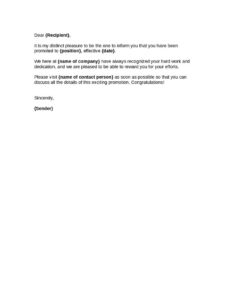
Promotion Letter
Use this free Promotion Letter template to officially notify an employee of their new role, effective date, and next steps—free download in PDF and DOCX.
DOCX
0
likes
Download Files
- DOCX
A promotion letter is a formal written notice from an employer telling an employee that they have been advanced to a new position. The most common reason people use one is to officially confirm a promotion in writing—stating the new title, effective date, and who to contact about details—so there is a clear, dated record for both the employee and HR. This template is free to download in PDF and DOCX, with no signup required.
What Is a Promotion Letter?
A promotion letter is a short, congratulatory business letter issued by a manager, supervisor, or HR representative to an employee who has earned a higher role within the organization. It documents the key facts of the promotion—the recipient’s name, the new position, the effective date, and the company name—while warmly recognizing the person’s hard work. Unlike a casual verbal announcement, the letter creates a tangible record that the employee can keep and reference. It typically directs the employee to a named contact person to discuss compensation, responsibilities, reporting structure, and start logistics. In short, it bridges the gap between the decision to promote and the formal onboarding into the new role.
When Do You Need a Promotion Letter?
A promotion letter is appropriate any time an employee’s role is being formally elevated. Common situations include:
- An internal promotion to a higher title, such as moving from associate to manager or from specialist to team lead.
- A merit-based advancement following a strong performance review, where you want to put the recognition in writing.
- A restructuring or reorganization in which an existing employee steps into expanded responsibilities.
- Filling a vacancy from within, when a current team member is selected over external candidates.
- Confirming a probationary-to-permanent transition that comes with a new role or expanded duties.
- A planned succession step, where an employee is being groomed for leadership and formally moves up a tier.
In each case, the letter sets a celebratory yet professional tone and points the employee toward the next steps for finalizing the change.
What a Promotion Letter Should Have
To be clear and useful, a promotion letter should include a personalized greeting to the employee, a direct statement of the new position, and the effective date the change takes hold. It should name the company so the document is unambiguous, and it should acknowledge the employee’s contributions to make the recognition feel genuine. Crucially, it should tell the employee who to speak with about the finer points—pay, benefits, and reporting lines—and provide a clear way to reach that person. Finally, it should close with congratulations and the sender’s name and title, signaling that the message comes from someone with the authority to deliver it.
How to Fill Out a Promotion Letter
This template uses simple placeholders. Work through them in order:
- {Recipient}: Replace with the employee’s name in the greeting, e.g., “Dear Maria Lopez.” Use the name they go by professionally.
- {position}: Enter the exact new job title the employee is being promoted into, such as “Senior Marketing Manager,” so there is no confusion about the role.
- {date}: Specify the effective date the promotion begins. Use a full, unambiguous date (e.g., “June 1, 2025”) rather than “next month.”
- {name of company}: Insert your organization’s official name where the letter recognizes the employee’s hard work.
- {name of contact person}: Name the individual—often an HR partner or the employee’s manager—who will walk through compensation and logistics.
- {Sender}: Sign off with your own name. Add your job title beneath it so the employee knows the letter is authorized.
Review the final letter to confirm every placeholder is replaced, then print it on company letterhead or send it as a PDF.
Tips for a Stronger Promotion Letter
While the template is intentionally concise, a few touches make it land better. Mention something specific the employee did to earn the promotion—a successful project or a measurable result—to make the recognition feel sincere rather than generic. Keep the tone warm but professional; this is a celebration, but it is also an official document. If pay and benefits are changing, avoid stating exact figures in the letter itself and instead route the employee to the contact person so the numbers are confirmed in a dedicated conversation or compensation summary. Where appropriate, copy HR or the employee’s file so the promotion is properly recorded.
Promotion Letter vs. Offer Letter
A promotion letter and a job offer letter overlap but serve different audiences. An offer letter goes to a candidate who does not yet work for you and lays out the full terms of employment from scratch. A promotion letter goes to an existing employee and confirms an elevation within a relationship that already exists, which is why it can be shorter and warmer. If your promotion involves substantial changes to terms—new compensation, relocation, or a different reporting structure—you may pair this letter with a more detailed compensation memo or revised employment agreement handled through HR.
Common Mistakes to Avoid
- Leaving placeholders unfilled, such as sending a letter that still reads “{position}” or “{date}.”
- Being vague about the effective date, which can create confusion about when new duties and pay begin.
- Stating salary details prematurely in the letter when those should be confirmed with the contact person.
- Forgetting to name a contact person, leaving the employee unsure who to follow up with.
- Omitting the sender’s title, which can make the letter feel unofficial or unauthorized.
- Skipping a copy for the employee’s file, so there is no internal record of the change.
Frequently Asked Questions
What is a promotion letter used for? It is used to formally notify an employee that they have been advanced to a new position. The letter records the new title, the effective date, and the company name, and it directs the employee to a contact person to discuss the details of the change.
How do I fill out this promotion letter template? Replace each placeholder with your information: the recipient’s name, the new position, the effective date, your company name, the contact person, and your own name as the sender. Once every field is completed, review the letter for accuracy and send it on company letterhead.
Does a promotion letter need to be signed or notarized? It should be signed by the person issuing it—typically a manager or HR representative—so the employee knows it is authorized. Notarization is generally not required for an internal promotion letter, though specific company policies and local requirements can vary.
Is a promotion letter legally binding? A promotion letter documents the company’s decision and can carry weight as a record of the new role and effective date. Whether it creates binding obligations depends on its wording and the terms of any existing employment agreement, so review it carefully and consult HR or counsel if the change is significant.
Should the letter include the new salary? Many employers keep the letter focused on the title and effective date and handle compensation details separately through the contact person or a dedicated pay summary. This template follows that approach, which keeps the announcement clean and routes sensitive figures to a private conversation.
Is this promotion letter template free to download? Yes. You can download this promotion letter template free in both PDF and DOCX formats with no signup required, then customize it to match your company’s voice and policies.
This promotion letter template is provided as a general example for informational purposes only and is not legal, financial, or HR advice. Employment requirements and best practices vary by jurisdiction and by company policy—consult a qualified professional or your HR department before relying on this document.
Related Forms
- New Employee Introduction
- Employee Termination For Drug Use
- Payment Location Change
- Notice of Breach of Option
- Landlord Smoking Warning
- 90 Days Past Due Letter
Browse more in Business Letters.