
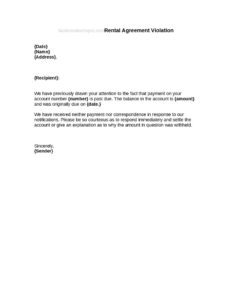
Past-Due Account
Download a free Past-Due Account letter template to remind customers of overdue balances and request payment, available as a free PDF and DOCX download.
DOCX
1 downloads
0
likes
Download Files
- DOCX
A Past-Due Account letter is a written notice a business sends to a customer or client whose payment is overdue, formally requesting that they settle the outstanding balance or explain the delay. It is one of the most common tools in accounts receivable, used when earlier reminders have gone unanswered. This template is free to download in both PDF and DOCX formats, with no signup required.
What Is a Past-Due Account Letter?
A Past-Due Account letter is a polite but firm collection notice issued by a creditor, vendor, or service provider to a customer who has missed a payment deadline. It documents the specific account number, the amount owed, and the original due date, and it places the recipient on notice that payment has not been received. Unlike a casual phone reminder, a written letter creates a dated paper trail that can support later collection steps if the debt remains unpaid. Businesses use it to prompt prompt payment while keeping the customer relationship intact, and the tone is professional rather than threatening, inviting either payment or an explanation.
When Do You Need a Past-Due Account Letter?
This letter is appropriate any time an invoice or account balance has passed its due date and informal nudges have not resolved the matter. Common situations include:
- A customer’s invoice is now 30, 60, or 90 days overdue and earlier reminders went unanswered.
- A subscription, retainer, or service account has lapsed without payment.
- You need a formal, dated record of your attempt to collect before escalating.
- A client has stopped responding to emails or calls about an outstanding balance.
- You want to give the customer a fair chance to explain a dispute or payment problem.
- Your internal collections process requires a written notice before the account moves to a third party.
Many businesses send a sequence of these letters with escalating firmness — a first reminder, a second notice, and a final demand. This template fits the middle stage well: it acknowledges that you have already reached out and asks the recipient to act immediately.
What a Past-Due Account Letter Should Have
To be effective and easy to act on, the letter should clearly identify the account, the exact amount owed, and the date it was originally due. It should reference prior contact, state that no payment or response has been received, and ask the recipient to either pay or provide an explanation. A courteous closing and the sender’s name keep the tone professional. Including a clear call to action — settle the account immediately — leaves no ambiguity about what you expect.
How to Fill Out a Past-Due Account Letter
Work through the template field by field so the finished letter is accurate and complete:
- Enter the {Date} the letter is being sent at the top, so the notice is properly timestamped.
- Fill in the {Name} and {Address} of the customer or business that owes the balance.
- In the salutation, address the {Recipient} directly — use the contact person or company name on the account.
- Insert the account number in the {number} field so the customer can locate the correct account.
- State the outstanding balance in the {amount} field, matching it exactly to your records.
- Provide the original {date} the payment was due, reinforcing that the deadline has passed.
- Sign off with your name in the {Sender} field, including your title or company if helpful.
Before sending, double-check the amount and account number against your ledger, and keep a copy of the letter and proof of delivery for your records.
Tips for a More Effective Collection Letter
While the template gives you a solid base, a few practical touches improve your chances of getting paid. Keep the tone respectful — many overdue accounts are simple oversights, and an aggressive letter can damage a good customer relationship. State a specific deadline for response, such as ten days, rather than a vague “immediately.” Offer a clear, easy way to pay, like an online portal, a phone number, or a mailing address. If you suspect the customer is facing genuine hardship, the invitation to “give an explanation” opens the door to a payment plan that recovers the debt without litigation.
How It Differs From a Final Demand
A Past-Due Account letter is a reminder and request, not a final ultimatum. A final demand letter typically warns of specific consequences — referral to a collection agency, suspension of service, or legal action — if payment is not made by a stated date. This template stays at the reminder stage, which is why it asks for either payment or an explanation rather than threatening enforcement. If this letter goes unanswered, a stronger final notice is usually the next step before escalating further.
Common Mistakes to Avoid
- Wrong figures: An incorrect balance or account number undermines your credibility and gives the customer a reason to dispute the notice.
- No record of delivery: Sending without a copy or proof of mailing leaves you without evidence that you tried to collect.
- Harsh or threatening language: An overly aggressive tone at the reminder stage can alienate an otherwise good customer.
- Forgetting prior context: Failing to reference earlier contact makes the letter seem like a first notice rather than a follow-up.
- No clear deadline or payment method: If the customer is not told how and by when to pay, the letter loses its urgency.
- Ignoring disputes: Not allowing room for an explanation can escalate a simple billing error into a conflict.
Frequently Asked Questions
What is a Past-Due Account letter? It is a written notice from a business to a customer whose payment is overdue, reminding them of the unpaid balance and asking them to settle the account or explain the delay. It documents the account number, the amount owed, and the original due date so there is a clear record of the collection attempt.
How do I fill out the Past-Due Account letter? Enter the current date, the customer’s name and address, the account number, the outstanding amount, and the original due date, then sign with your name. Verify every figure against your accounting records before sending so the notice is accurate and hard to dispute.
Is a Past-Due Account letter legally binding? The letter itself is a notice and request, not a contract, so it does not create a new obligation by itself. However, it can serve as documentation of your effort to collect a debt, which may be useful if the matter later proceeds to a collection agency or court.
Does it need to be notarized or witnessed? No, a Past-Due Account letter does not require notarization or witnesses. It simply needs to be accurate, signed by the sender, and delivered to the customer, ideally with a record of when and how it was sent.
How much does this template cost? It is completely free to download from Business Forms Pro in both PDF and DOCX formats, with no signup or payment required. You can edit the DOCX version to match your business letterhead, tone, and payment instructions.
What should I do if the letter is ignored? If the customer does not respond by your stated deadline, you can send a stronger final demand notice, offer a payment plan, or escalate the account to a collection agency or legal counsel. Keep copies of every letter and any responses to support whatever next step you choose.
This template is provided as a general example for informational purposes only and does not constitute legal, financial, or debt-collection advice. Rules governing debt collection and creditor notices vary by jurisdiction. Consult a qualified attorney or professional before relying on this letter for your specific situation.
Related Forms
- Disputed Invoice
- Copyrighted Material Request
- Construction Delay Letter
- Wrongful Delivery Refusal
- Internal Promotion Announcement
- Merger Announcement Letter
Browse more in Business Letters.