
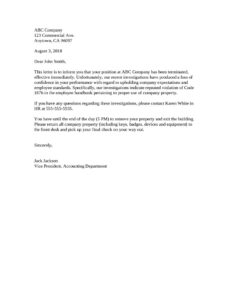
Employee Termination For Theft
Download a free Employee Termination for Theft letter template in PDF and DOCX to document the dismissal clearly, professionally, and on the record.
DOCX
1 downloads
0
likes
Download Files
- DOCX
An Employee Termination for Theft letter is a formal written notice an employer issues to end an employee’s job after a confirmed incident of stealing company property, money, merchandise, or information. It is most often used to create a clear, dated record of the dismissal and the reason behind it. You can download this template free in both PDF and DOCX formats — no signup required.
What Is an Employee Termination for Theft Letter?
An Employee Termination for Theft letter is a document delivered by an employer, HR representative, or business owner to inform an employee that their employment is being ended because of theft or misappropriation. It documents who is being terminated, the effective date, a factual summary of the misconduct, and the practical details that follow separation — final pay, return of company property, and benefits status. Because theft is a serious allegation, this letter functions as both a communication tool and a written record that can be referenced if the matter is later disputed, reviewed by unemployment authorities, or examined during an internal audit. Keeping the tone factual and professional is essential.
When Do You Need an Employee Termination for Theft Letter?
Employers reach for this letter when an internal investigation has substantiated dishonest conduct and the decision to dismiss has already been made. Common situations include:
- An employee is caught on camera or by a witness removing cash, products, or supplies without authorization.
- An inventory or cash-drawer reconciliation reveals consistent shortages traced to one individual.
- A worker submits falsified expense reports, fraudulent reimbursements, or padded time records.
- Confidential data, customer lists, or proprietary files are taken or copied for personal gain.
- Company equipment such as tools, laptops, or vehicles is found to have been stolen or sold.
- An employee admits to theft during an investigatory meeting and termination follows.
In each case, the letter is issued only after the facts have been gathered, so the decision rests on documented findings rather than suspicion alone.
What an Employee Termination for Theft Letter Should Have
A complete and defensible letter is short, factual, and unambiguous. It should clearly identify the employee and their position, state the effective date of termination, and reference theft as the stated cause without exaggeration or emotional language. It should summarize the relevant findings or policy violated, address final compensation and any accrued benefits, and instruct the employee to return company property. Including a contact person for follow-up questions and a signature line for the issuing manager rounds out the document. Avoid speculation, accusations beyond what the investigation supports, or commentary on the employee’s character — stick strictly to the conduct and the consequence.
How to Fill Out an Employee Termination for Theft Letter
- Add your company name, address, and the date at the top so the letter is properly identified and time-stamped.
- Enter the employee’s full name, job title, and address in the recipient block to confirm exactly who is being notified.
- Open with a direct statement that employment is terminated effective a specific date.
- State the reason plainly — theft of company property or funds — and briefly reference the incident or findings (for example, the date of the event or the policy violated).
- Note the outcome of any investigation or meeting that supported the decision, keeping the description factual.
- Explain final pay arrangements, including the last paycheck and any accrued amounts owed.
- Address benefits and insurance, noting end dates and continuation options where applicable.
- List the company property that must be returned, such as keys, badges, devices, or uniforms, and a deadline.
- Provide a contact name and phone or email for questions about the separation process.
- Close with a professional sign-off, then add the signature, printed name, and title of the manager or HR representative issuing the letter.
Delivering the Letter and Keeping Records
How you deliver this letter matters almost as much as what it says. Many employers hand it to the employee in person during a brief, private meeting, often with a second manager or HR witness present. Hand the employee a copy, retain a signed copy for the personnel file, and document the date and method of delivery. If the employee refuses to sign an acknowledgment, note that fact rather than forcing a signature — the signature confirms receipt, not agreement. Where in-person delivery isn’t possible, send the letter by a trackable method so you have proof it was received. Store the letter and all supporting investigation notes securely, since theft-related dismissals are among the most likely to be challenged later.
Handling the Theft Allegation Responsibly
Theft is a sensitive and potentially defamatory subject, so the letter should describe only what the investigation actually established. Resist labeling the conduct as a crime unless charges have been filed, and avoid sharing details with coworkers or outside parties beyond what is operationally necessary. Whether to involve law enforcement is a separate business decision that should be made carefully and consistently with how similar incidents have been handled. Treating every termination with the same documented process helps protect the company from claims of unfair or discriminatory treatment.
Common Mistakes to Avoid
- Acting before investigating. Issuing the letter on suspicion alone, without documented findings, weakens the company’s position.
- Using emotional or accusatory language. Stick to facts; inflammatory wording can expose the business to defamation claims.
- Omitting the effective date. An unclear termination date creates confusion over final pay and benefits.
- Forgetting final-pay rules. Many jurisdictions require final wages within a set time — failing to address this can trigger penalties.
- Neglecting property return. Not listing keys, devices, and access credentials leaves security gaps after the employee departs.
- Keeping no copy. Failing to retain a signed file copy undermines the letter’s value as a record.
Frequently Asked Questions
What is an Employee Termination for Theft letter? It is a formal notice from an employer that ends an employee’s job because of confirmed theft or misappropriation. It records the effective date, the reason, and the next steps for final pay and property return, serving as an official document for the personnel file.
How do I fill out the termination letter? Add your company details and the date, identify the employee, state the termination is effective on a specific date, and briefly describe the substantiated theft. Then cover final pay, benefits, property to be returned, and a contact, and sign as the issuing manager.
Does the letter need to be notarized or witnessed? Notarization is not required for a termination letter. Many employers do, however, have an HR representative or second manager present as a witness during delivery, and they note that person’s name to document the handoff.
Is an Employee Termination for Theft letter legally binding? The letter itself documents an employment decision rather than creating a contract. Its effect depends on your employment agreements, company policy, and local labor law, so the strength of the dismissal rests on a fair, documented process behind it.
Can I state theft as the reason, or could that cause legal trouble? You can state theft as the reason as long as it is supported by your investigation and described factually. Avoid exaggeration, criminal labels not yet proven, or sharing details widely, since unsupported accusations can lead to defamation or wrongful-termination claims.
How much does this template cost? Nothing. Business Forms Pro offers the Employee Termination for Theft letter as a free download in both PDF and DOCX formats, with no account or signup needed, so you can edit it to fit your situation right away.
This template is provided as a general example for informational purposes only and is not legal, financial, or HR advice. Employment laws and termination requirements vary by jurisdiction and by individual circumstances. Consult a qualified employment attorney or HR professional before acting on a theft-related dismissal.
Related Forms
- Wrongful Delivery Refusal
- Pandemic Employee Letter
- Notice Of Approval Of New Credit Account
- Notification of Canceled Contract
- Payment Location Change
- Cease and Desist Libel
Browse more in Business Letters.