
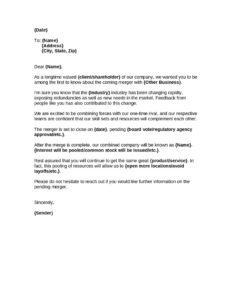
Merger Announcement Letter
Announce your company merger professionally with this free Merger Announcement Letter template, free download in PDF and DOCX to inform clients and staff.
DOCX
4 downloads
0
likes
Download Files
- DOCX
A Merger Announcement Letter is a formal written notice a company uses to inform clients, employees, partners, or vendors that it has merged with or acquired another business. The most common reason people use one is to communicate the news clearly and reassure stakeholders before rumors or confusion spread. You can download this template free in PDF and DOCX formats — no signup required.
What Is a Merger Announcement Letter?
A Merger Announcement Letter is a business communication issued by a company’s leadership — often the CEO, owner, or executive team — to formally disclose that two organizations have combined into one. It documents the names of the merging entities, the effective date, and how the change affects the reader. Companies send it to customers to maintain trust, to employees to address job and culture concerns, and to suppliers and partners to clarify ongoing relationships. Unlike a press release, which targets the public and media, this letter speaks directly to a specific audience with a personal, reassuring tone. Its core purpose is to control the narrative and set expectations during a period of significant organizational change.
When Do You Need a Merger Announcement Letter?
This letter becomes essential whenever a corporate combination will touch the people who depend on your business. Common situations include:
- Notifying loyal customers that their familiar company is joining forces with another and explaining what stays the same.
- Informing employees of a merger so they hear the news internally before reading about it elsewhere.
- Updating vendors and suppliers about new ordering, billing, or contact procedures after the combination.
- Reassuring business partners that existing contracts, service levels, and points of contact will be honored.
- Announcing a rebrand or name change that results from the merger so stakeholders recognize the new identity.
- Communicating with shareholders or investors about the strategic rationale and expected benefits of the deal.
Types of Merger Announcement Letters
Although the structure is similar, the message changes depending on who receives it. A customer-facing letter emphasizes continuity of products, pricing, and support. An employee letter addresses leadership structure, job security, and cultural integration. A vendor or partner letter focuses on operational details like new account numbers, payment terms, or revised contacts. Tailoring the tone and content to each audience makes the announcement far more effective than sending one generic version to everyone.
What a Merger Announcement Letter Should Have
A complete and credible letter typically includes the following elements:
- Company letterhead with logo and contact information.
- The date the letter is sent.
- A clear opening that states the merger or acquisition has occurred.
- The legal names of both companies involved and the new combined name, if applicable.
- The effective date of the merger.
- A short explanation of why the merger happened and its benefits.
- Reassurance about what will remain unchanged for the reader.
- Any actions the recipient needs to take, plus updated contact details.
- A warm closing and the signature, name, and title of a senior leader.
How to Fill Out a Merger Announcement Letter
Because this template is a flexible business letter, fill it out by adapting each section to your specific deal:
- Add your letterhead: Insert your company name, logo, address, phone, and email at the top.
- Enter the date: Write the full date the letter will be sent or distributed.
- Address the recipient: Use a personalized salutation such as “Dear Valued Customer” or the contact’s name where possible.
- State the announcement: Open with a direct sentence naming both companies and confirming the merger or acquisition.
- Provide the effective date: Specify when the merger officially takes or took effect.
- Explain the rationale: Briefly describe why the companies combined and the advantages for the reader.
- Reassure the reader: Clarify what stays the same — products, pricing, account managers, or service.
- List any required actions: Note new logins, payment details, or contacts if the reader must update anything.
- Close warmly and sign: Thank the reader, then add the signer’s name, title, and signature.
Tips for Writing an Effective Announcement
Keep the tone confident and positive — a merger is an opportunity, and your wording should reflect optimism while remaining honest. Lead with the most important news in the first paragraph so busy readers grasp it immediately. Anticipate the questions your audience will have and answer them proactively; customers worry about price and service, while employees worry about jobs and leadership. Avoid corporate jargon and legalese that can sound cold or evasive. Finally, coordinate the timing of your letters so internal staff are informed before external audiences, preserving trust and morale.
Common Mistakes to Avoid
- Burying the news: Don’t make readers hunt for the announcement — state it in the opening lines.
- Using one generic version: Failing to tailor the letter to customers, staff, and vendors weakens its impact.
- Leaving out the effective date: Omitting when the merger takes effect creates confusion about timing.
- Ignoring concerns: Not addressing what changes — or stays the same — leaves readers anxious and speculating.
- Forgetting contact updates: If account numbers or contacts change, failing to include the new details frustrates recipients.
- Releasing externally before internally: Letting employees learn of the merger from outsiders damages morale and trust.
Frequently Asked Questions
What is a Merger Announcement Letter? It is a formal letter a company sends to inform customers, employees, partners, or vendors that it has merged with or acquired another business. The letter explains the change, its effective date, and how it affects the reader. It is designed to communicate clearly and maintain trust during a transition.
How do I write a Merger Announcement Letter? Start with your letterhead and the date, then open with a direct statement of the merger naming both companies. Explain why the merger happened, reassure the reader about what stays the same, and note any actions they need to take. Close warmly with the name and title of a senior leader, and download our free template to use as your starting point.
Does a Merger Announcement Letter need to be notarized? No, a merger announcement letter is a business communication and does not require notarization or witnesses. It is informational rather than a binding legal contract. The legal documents that actually complete a merger are separate and handled by attorneys and corporate filings.
Who should sign the letter? A senior leader such as the CEO, president, owner, or an executive involved in the merger should sign it. A signature from leadership adds credibility and signals that the announcement comes from the top. For internal letters, the relevant department head or HR leader may also co-sign.
When should I send the announcement? Send it as close as possible to the effective date of the merger, and inform internal employees before external audiences. Timing matters because you want stakeholders to hear the news directly from you rather than through rumors or media. Coordinating the rollout protects morale and your company’s reputation.
Is this Merger Announcement Letter template free? Yes, you can download this template completely free in both PDF and DOCX formats with no signup required. You can edit the DOCX version to match your company’s branding, audience, and specific deal details. Reuse it as often as you need for different stakeholder groups.
This Merger Announcement Letter template is a general example provided for informational purposes only and does not constitute legal, financial, or tax advice. Merger and disclosure requirements vary by jurisdiction and circumstance — consult a qualified attorney or advisor before finalizing any corporate communication.
Related Forms
- Request For Goods On Approval
- Cease and Desist Harassment
- Speaker Invitation
- Follow Up Letter
- Internal Promotion Announcement
- Very Late Reply to Customer
Browse more in Business Letters.