
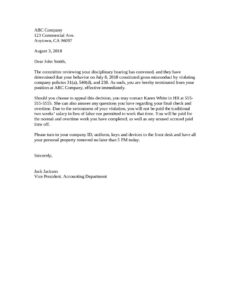
Employee Termination For Gross Misconduct
Free Employee Termination for Gross Misconduct letter template to document an immediate dismissal clearly and lawfully — free download in PDF and DOCX.
DOCX
1 downloads
0
likes
Download Files
- DOCX
An Employee Termination for Gross Misconduct letter is a formal written notice an employer gives to an employee to confirm that their employment is ending immediately because of serious misconduct. It is most often used when an investigation has concluded that a worker committed an act so severe — such as theft, violence, or a major safety breach — that continued employment is untenable. This template is free to download in both PDF and DOCX, with no signup required.
What Is an Employee Termination for Gross Misconduct Letter?
An Employee Termination for Gross Misconduct letter is a document issued by an employer, HR department, or manager to formally end someone’s employment due to a serious breach of conduct or policy. Unlike a layoff or a performance-based dismissal, gross misconduct termination typically means the employer treats the offense as grounds for immediate or summary dismissal. The letter documents the reason for termination, references the investigation or findings that led to the decision, states the effective date, and outlines final pay and the return of company property. It serves as the official record of the employer’s decision and protects both parties by putting the rationale in writing.
When Do You Need an Employee Termination for Gross Misconduct Letter?
This letter is appropriate after a fair process has confirmed that an employee committed a serious offense. Common scenarios include:
- Theft or fraud — stealing money, inventory, or falsifying records, expense reports, or timesheets.
- Violence or threats — physical assault, fighting, or threatening behavior toward coworkers, customers, or supervisors.
- Serious safety violations — ignoring critical safety rules in a way that endangers others, or being intoxicated on the job.
- Gross insubordination — a deliberate, serious refusal to follow lawful and reasonable instructions.
- Breach of trust or confidentiality — leaking confidential data, trade secrets, or seriously misusing company systems.
- Harassment or discrimination — substantiated serious misconduct toward colleagues that violates policy and law.
In each case, the letter should follow — not replace — a documented investigation and any disciplinary procedure your organization and jurisdiction require.
What an Employee Termination for Gross Misconduct Letter Should Have
A complete and defensible letter generally includes the following elements:
- Company name, address, and the date the letter is issued.
- The employee’s full name, job title, and address.
- A clear statement that employment is being terminated for gross misconduct.
- A factual description of the specific conduct that led to the decision.
- Reference to the investigation, any meetings held, and the policies breached.
- The effective date of termination.
- Details of final pay, accrued benefits, and the return of company property.
- Information about any right to appeal, where applicable.
- The signature, name, and title of the person authorized to issue the letter.
How to Fill Out an Employee Termination for Gross Misconduct Letter
- Add your company header. Enter the company name, address, and the date the letter is being written and delivered.
- Address the employee. Insert the employee’s full legal name, job title, and home address so the record is unambiguous.
- State the decision. Open with a direct sentence confirming that employment is terminated for gross misconduct, effective on the stated date.
- Describe the conduct. Write a factual, specific account of what happened — dates, what was observed, and the policy or rule violated. Avoid opinion or inflammatory language.
- Reference the process. Note the investigation, any disciplinary meeting, and the employee’s opportunity to respond.
- Set out final arrangements. Explain final pay, accrued vacation, benefits continuation, and the deadline to return company property such as keys, laptops, or ID badges.
- Explain appeal rights. If your policy allows an appeal, state how and by when the employee may request one.
- Sign and deliver. Have an authorized manager or HR representative sign, print their name and title, and deliver the letter through a traceable method, keeping a copy for the file.
Following a Fair Process Before You Send It
Gross misconduct dismissals carry higher legal risk than ordinary terminations, so the letter should be the final step in a careful process rather than a first reaction. In most situations, employers conduct an investigation, suspend the employee on pay if needed, hold a meeting where the employee can hear the allegations and respond, and only then reach a decision. Keep contemporaneous notes, witness statements, and copies of any evidence. The letter then summarizes that process. Even where employment is at-will, documenting a clear reason and consistent treatment helps defend against claims of wrongful or discriminatory dismissal. Apply your disciplinary policy the same way for every employee in similar circumstances.
Tips for Writing a Professional Termination Letter
Keep the tone factual and respectful, even when the conduct was serious. Stick to what can be evidenced and avoid emotional or accusatory phrasing that could be quoted back to you later. Be specific about dates and events but concise — a clear two- to three-paragraph explanation is usually stronger than a long narrative. Have a second person, ideally in HR or legal, review the letter before it is signed. Finally, deliver the letter promptly after the decision so the effective date and the communication line up, and store the signed copy securely in the employee’s confidential file.
Common Mistakes to Avoid
- Skipping the investigation — terminating before gathering facts or hearing the employee’s side invites legal challenge.
- Being vague about the conduct — “poor attitude” is not gross misconduct; describe the specific act and policy breached.
- Inconsistent treatment — punishing one employee harshly while overlooking similar behavior by others looks discriminatory.
- Forgetting final pay and property — omitting wage, benefit, and equipment details creates disputes and possible wage-law violations.
- Emotional language — insults or speculation weaken the letter and your position.
- No signature or copy retained — an unsigned or undelivered letter is hard to enforce or prove later.
Frequently Asked Questions
What counts as gross misconduct? Gross misconduct generally means a serious act that fundamentally breaks the employment relationship, such as theft, fraud, violence, serious safety breaches, or major dishonesty. The exact definition often depends on your company policies and local employment law. List clear examples in your handbook so expectations are known in advance.
Can I terminate immediately for gross misconduct? In many cases gross misconduct allows summary dismissal without notice or pay in lieu of notice, but you should still follow a fair investigation and give the employee a chance to respond. Rules differ widely by jurisdiction and by employment contract. Confirm your obligations before acting to reduce the risk of a wrongful termination claim.
Do I need to give a reason in the letter? Stating a clear, factual reason is strongly recommended because it documents your rationale and shows the decision was based on conduct, not a protected characteristic. A specific account of the incident and the policy breached is far more defensible than a vague statement. Keep the description objective and evidence-based.
Does this letter need to be signed or witnessed? The letter should be signed by an authorized manager or HR representative to confirm it is official. Witnesses are not usually required for the letter itself, though notes from any disciplinary meeting should record who attended. Always retain a signed copy in the employee’s file.
Is a termination letter legally binding? The letter is a formal record of your decision and creates obligations such as final pay and property return, but it does not override employment laws or a valid contract. Its strength depends on the fairness of the underlying process. If a dismissal is later found unfair, the letter alone will not protect the employer.
How much does this template cost? This Employee Termination for Gross Misconduct letter template is completely free to download from Business Forms Pro in PDF and DOCX formats, with no signup required. You can edit the DOCX version to match your company’s policies and the specific situation. Customize it carefully and have it reviewed before sending.
This template is a general example provided for informational purposes only and is not legal, financial, or HR advice. Employment laws and dismissal requirements vary by country, state, and jurisdiction. Consult a qualified employment lawyer or HR professional before terminating any employee.
Related Forms
- Cease and Desist Slander
- Customer Service Alteration Letter
- Follow Up
- Merger Announcement Letter
- Past-Due Account
- Internal Promotion Announcement
Browse more in Business Letters.