
Follow Up
Reconnect with contacts using this free follow up letter template — a polite, ready-to-edit format you can download free as PDF or DOCX in minutes.
DOCX
1 downloads
0
likes
Download Files
- DOCX
A follow up letter is a short, courteous note you send after an earlier message to confirm it arrived, repeat key information, and invite the recipient to respond. People most often use it to gently re-engage a customer, client, or contact who hasn’t replied to a first letter. You can download this follow up letter template free in both PDF and DOCX formats, with no signup required.
What Is a Follow Up Letter?
A follow up letter is a written communication that references a previous letter and prompts a reply or next step. It is typically issued by a salesperson, business owner, account manager, or any professional who has reached out once and wants to keep the conversation moving. The letter documents that you made a second attempt to connect, restates the original information in case it was missed, and offers an easy way for the recipient to learn more. Because it is polite and low-pressure, a follow up letter helps maintain goodwill while keeping your message in front of the reader. It is brief by design — usually a few short paragraphs that respect the recipient’s time and end with a clear, friendly call to action.
When Do You Need a Follow Up Letter?
This template fits any situation where a first message deserves a gentle nudge. Common scenarios include:
- No response to an initial letter: You sent information weeks ago and haven’t heard back, so you want to confirm it was received.
- Sales and lead nurturing: A prospect requested details about a product or service and you’d like to reopen the conversation.
- After a proposal or quote: You want to check whether the recipient has questions before they make a decision.
- Re-sending lost mail: A letter may have gone missing, so you include the same information again as a courtesy.
- Membership or donation appeals: Nonprofits and clubs use it to remind contacts about an earlier request.
- Post-meeting outreach: You followed up an in-person conversation with a letter and want to confirm interest.
Types of Follow Up Letters
While the structure stays similar, follow up letters vary by purpose. A sales follow up emphasizes benefits and invites a call. A customer service follow up confirms an issue was addressed. A networking follow up keeps a professional relationship warm. A collections-adjacent follow up politely reminds someone of outstanding information. This template is intentionally flexible: by adjusting the contents description and tone, you can adapt it to almost any business context.
What a Follow Up Letter Should Have
A complete follow up letter is clear, concise, and easy to act on. It should include:
- The date the letter is sent, for an accurate record.
- The recipient’s full name and mailing address so it reaches the right person.
- A professional greeting that addresses the reader by name.
- A reference to the original letter and its subject matter.
- A restatement of the key information in case the first letter was not received.
- A clear invitation to respond, such as a phone call, with reassurance that you’re available.
- A polite closing and your name as the sender.
How to Fill Out a Follow Up Letter
This template uses simple placeholders you can replace in minutes:
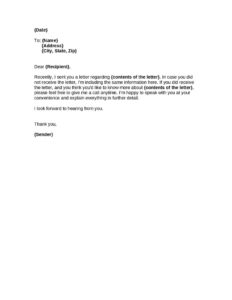
- Enter the {Date} at the top — use the day you actually send the letter.
- In the To block, add the recipient’s {Name}, {Address}, and {City, State, Zip} so the mailing details are accurate and complete.
- Write the greeting using {Recipient} — typically the same person named above, formatted as “Dear Ms. Lee” or “Dear John.”
- In the first sentence, fill in {contents of the letter} to name the subject of your earlier message, such as “our new pricing plan” or “your membership renewal.”
- Confirm the next sentences make sense: you offer to resend the same information and invite questions about that same {contents of the letter} topic — keep both references consistent.
- Leave the friendly line about being happy to speak by phone, and consider adding your direct number nearby.
- Close with Thank you and sign your name in the {Sender} field, adding your title or company if helpful.
Tips for an Effective Follow Up
Keep the tone warm and never accusatory — assume the best, such as the recipient simply being busy or the mail being delayed. Send the follow up after a reasonable interval, often one to three weeks after the original. Make responding effortless by giving a specific contact method and the times you’re available. If you’re emailing instead of mailing, you can paste the same wording and shorten the address block. A single, well-timed follow up usually works better than several rapid-fire reminders.
Common Mistakes to Avoid
- Leaving placeholders unfilled: Sending a letter that still says “{contents of the letter}” looks careless and damages credibility.
- Being too pushy: A demanding tone can sour the relationship; keep it inviting and respectful.
- Forgetting the original reference: Without naming the earlier letter, the recipient may not know what you’re following up on.
- Omitting a clear next step: Always tell the reader exactly how and when to reach you.
- Wrong recipient details: Double-check the name, address, and spelling so the letter arrives and feels personal.
- Following up too soon or too often: Give people time to respond before sending another note.
Frequently Asked Questions
What is a follow up letter used for? It is used to reconnect with someone after a first letter, confirm the message was received, and encourage a reply. Businesses use it for sales leads, proposals, service confirmations, and general professional outreach. The goal is to keep the conversation moving without pressure.
How do I fill out this follow up letter template? Replace each placeholder with your own details: the date, the recipient’s name and address, the greeting, the subject of your previous letter, and your name as the sender. Make sure the two references to “{contents of the letter}” both describe the same topic so the letter reads naturally. Then review it once for tone and accuracy before sending.
Is a follow up letter legally binding? No, a standard follow up letter is a courtesy communication, not a contract, so it generally creates no legal obligation on its own. If your message involves binding terms or deadlines, those would come from the underlying agreement rather than the follow up itself. When the content carries legal weight, have it reviewed by a qualified professional.
How long should a follow up letter be? Short is best — a few sentences across two or three brief paragraphs, as this template demonstrates. The reader should be able to understand your purpose in under a minute. Brevity signals respect for their time and increases the chance of a response.
When should I send a follow up letter? Send it after a reasonable waiting period following your first contact, commonly one to three weeks depending on the situation. This gives the recipient time to respond while keeping your message fresh in their mind. Avoid sending multiple follow ups in quick succession.
How much does this follow up letter template cost? It is completely free to download here in both PDF and DOCX formats, with no signup or payment required. You can edit it as many times as you need and reuse it for different contacts. Simply customize the placeholders and send.
This follow up letter template is provided as a general example for informational purposes only and does not constitute legal, financial, or professional advice. Communication norms and any related obligations vary by situation and jurisdiction, so consult a qualified professional if your letter involves binding or sensitive matters.
Related Forms
- Notice of Breach of Option
- Authorization to Return Items
- Past-Due Account
- Employee Termination For Poor Performance
- Unpaid Invoice
- Customer Survey Request
Browse more in Business Letters.