
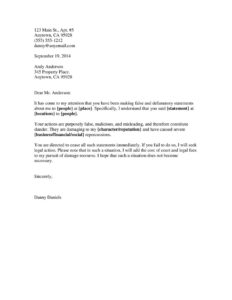
Cease and Desist Slander
Download a free Cease and Desist Slander letter template to demand someone stop making false, defamatory spoken statements about you — free PDF and DOCX download.
PDF
DOCX
4 downloads
0
likes
Download Files
- DOCX
A Cease and Desist Slander letter is a formal written demand telling someone to immediately stop making false, spoken statements that damage your reputation. People most often use it as a firm first step — before involving a lawyer or court — to put a defamer on notice and create a paper trail. You can download this template free in PDF and DOCX, with no signup required.
What Is a Cease and Desist Slander Letter?
A Cease and Desist Slander letter is a notice sent by the person being defamed (or their representative) to the individual making damaging verbal statements. Slander refers specifically to spoken defamation — false claims said aloud to others, as opposed to written defamation, which is called libel. The letter identifies the false statements, explains the harm they have caused, and formally demands that the recipient stop making them. It also warns that continued conduct may result in legal action and recovery of damages, court costs, and legal fees. While not a court order, it serves as documented evidence that the recipient was clearly informed their behavior was unlawful and unwelcome.
When Do You Need a Cease and Desist Slander Letter?
This letter is useful any time someone is verbally spreading falsehoods that injure your name, livelihood, or relationships. Common situations include:
- A former business partner or competitor telling clients that you are dishonest or financially unstable.
- A neighbor or acquaintance repeating untrue accusations about your conduct to others in your community.
- An ex-employee badmouthing you to industry contacts, costing you referrals or contracts.
- A disgruntled customer making false verbal claims about your services to other customers or at public gatherings.
- A family member or social contact circulating damaging lies that harm your social standing.
- Anyone whose spoken statements have caused measurable business, financial, or social repercussions for you.
What a Cease and Desist Slander Letter Should Have
To be effective, the letter must be clear, specific, and professional. Vague accusations are easy to ignore or dispute. A complete letter should include your full name and contact details, the recipient’s name and address, and the date. It should describe the exact false statements made, where and when they were said, and to whom. It must explain that these statements are false and damaging, and that they constitute slander. Finally, it should include a firm demand to stop, a stated consequence for non-compliance, and your signature. Keeping copies and proof of delivery is just as important as the content itself.
How to Fill Out a Cease and Desist Slander Letter
- Your contact block: At the top, enter your street address, apartment or unit number, city, state, ZIP code, phone number, and email — replacing the sample details (123 Main St., Anytown, CA).
- Date: Insert the date you are sending the letter, not a future or backdated one.
- Recipient information: Add the full name and mailing address of the person making the statements, then a formal salutation such as “Dear Mr. Anderson.”
- Identify the audience: In the {people} and {place} fields, name the individuals or groups the statements were made to and where this occurred.
- State the exact words: In the {statement} field, write the specific false claim as closely as you can recall it. Fill {locations} and {people} with the precise settings and listeners.
- Describe the harm: Complete the {character/reputation} and {business/financial/social} fields to explain how the slander damaged you.
- Sign: Replace “Danny Daniels” with your name and add your handwritten signature above it.
How to Deliver the Letter and Keep Records
How you send the letter matters almost as much as what it says. Sending it by certified mail with a return receipt gives you proof that the recipient received it and the date they did. Many people send a copy by both certified mail and email so there is a clear record. Keep a signed copy for your own files, along with the mailing receipt and any delivery confirmation. If the slander continues after delivery, this documentation demonstrates that the recipient was formally warned — which can strengthen a later legal claim. Avoid sending the letter in anger or including threats beyond a measured statement of lawful consequences.
Slander vs. Libel: Know the Difference
Defamation comes in two forms, and using the right term keeps your letter accurate. Slander is spoken defamation — false statements said aloud, such as during a conversation, meeting, or phone call. Libel is written or published defamation, including emails, social media posts, reviews, and printed material. Because this template addresses spoken statements, it should describe what was said and to whom it was said. If the same person is also publishing false claims in writing, you may need to address that separately or with a broader defamation notice. Proving slander generally requires showing the statement was false, was communicated to others, and caused harm.
Common Mistakes to Avoid
- Being vague: Failing to quote the actual statement or name the audience makes the letter weak and easy to dismiss.
- Exaggerating or threatening: Empty or inflammatory threats can undermine your credibility and even backfire legally.
- Targeting true statements: If a statement is factually true, it generally is not slander — focus only on demonstrably false claims.
- No proof of delivery: Sending without certified mail or a receipt leaves you unable to prove the recipient was notified.
- Keeping no copy: Always retain a signed copy and your delivery records for your files.
- Confusing slander with libel: Describing written posts in a slander letter weakens its accuracy.
Frequently Asked Questions
What is a Cease and Desist Slander letter? It is a formal written demand asking someone to stop making false, spoken statements that damage your reputation. The letter identifies the slanderous statements, explains the harm, and warns of possible legal action if the behavior continues. It is often the first step before pursuing a lawsuit.
Is a Cease and Desist Slander letter legally binding? The letter itself is not a court order and does not compel the recipient to obey. However, it serves as formal notice that the person has been informed their statements are unlawful, which can support a later defamation claim. Its strength comes from clear documentation and proof of delivery.
Do I need a lawyer to send one? No, you can send the letter yourself, and many people do as an initial step. That said, if the slander is severe, ongoing, or causing significant financial harm, consulting an attorney can make the letter more persuasive and ensure your claims are well founded.
Does the letter need to be notarized? No, a Cease and Desist Slander letter does not require notarization or witnesses to be valid. What matters most is that it clearly identifies the false statements and that you can prove it was delivered, typically through certified mail with a return receipt.
How much does this form cost? This template is completely free to download from Business Forms Pro in both PDF and DOCX formats, with no signup required. You can edit the DOCX version to insert your specific details before printing and signing it.
What if the slander continues after I send it? If the false statements persist, your delivered letter and delivery records become valuable evidence that the person was warned. At that point you may wish to consult a qualified attorney about pursuing a defamation claim and seeking damages, court costs, and legal fees.
This template is provided as a general example for informational purposes only and is not legal advice. Defamation laws and the requirements for proving slander vary by jurisdiction, so consult a qualified attorney about your specific situation before taking action.
Related Forms
- Very Late Reply to Customer
- Business Credit Line Information
- New Product Announcement
- Employee Termination For Job Abandonment
- Notice of Breach of Option
- Pandemic Employee Letter
Browse more in Business Letters.