
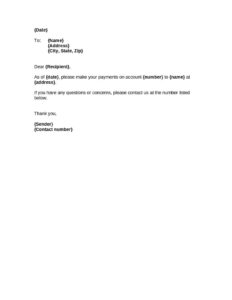
Payment Location Change
Notify customers or payers where to send future payments with this free Payment Location Change letter template — free download in PDF and DOCX.
DOCX
1 downloads
0
likes
Download Files
- DOCX
A Payment Location Change letter is a short business notice that tells a customer, tenant, or borrower where to send their payments going forward. People most often use it when a company relocates, switches banks or payment processors, or consolidates accounts and needs every payer to update their records. You can download this Payment Location Change template free in both PDF and DOCX with no signup required.
What Is a Payment Location Change Letter?
A Payment Location Change letter is a formal written notification issued by a business, landlord, lender, or service provider to inform a payer that the address or recipient for their payments has changed. It documents the new payment destination, the account it applies to, and the date the change takes effect. The letter serves two purposes: it gives the payer clear instructions so payments are not misdirected, and it creates a written record showing the business communicated the change. Because misrouted payments can lead to missed deadlines, late fees, or disputes, this simple letter protects both sides. It is typically signed by the sender and includes a contact number for questions.
When Do You Need a Payment Location Change?
This letter is useful any time the place or party receiving payment changes. Common situations include:
- Your business moves to a new office, suite, or mailing address and remittances must follow.
- You switch banks or lockbox providers and need checks sent to a new payment center.
- An account or loan is transferred, sold, or assigned to a new servicer or company.
- A landlord changes the address where rent should be mailed or hands collection to a property manager.
- A vendor consolidates accounts receivable into a single regional or corporate office.
- A practice, franchise, or branch reorganizes and routes payments to a central billing department.
What a Payment Location Change Letter Should Have
A complete notice leaves no room for guesswork. It should clearly identify the recipient by name and current address, state the effective date of the change, and reference the specific account number affected so the payer knows exactly which payments are involved. The heart of the letter is the new payment recipient name and the new address where payments should be sent. A polite closing, an invitation to call with questions, the sender’s name, and a contact phone number round out the document. Keeping the tone professional and the instructions concrete reduces follow-up calls and prevents payments from continuing to arrive at the old location.
How to Fill Out a Payment Location Change Letter
- In the To block, enter the recipient’s Name, followed by their Address and City, State, Zip so the letter reaches the right payer.
- Begin the greeting with Dear {Recipient}, using the contact’s name or company as it appears in your records.
- Fill in the effective date — the day on or after which payments must go to the new location. Choose a date that gives the payer enough lead time.
- Enter the account number the change applies to, so the payer can match it to their billing or bookkeeping system.
- Provide the new recipient name — the company, department, or person who should now receive payment.
- Add the new address where payments should be sent, including suite, P.O. box, or lockbox details if applicable.
- Close with Thank you, then type your Sender name and your Contact number so the recipient can reach you with questions.
Tips for a Smooth Payment Transition
Send the letter well ahead of the effective date — at least two to four weeks is sensible — so payers who mail checks or schedule recurring payments have time to update their systems. If payments arrive at the old address during a transition, arrange to forward them rather than returning them, and follow up with a courtesy reminder. For recurring or automatic payments, encourage payers to update bill-pay instructions with their bank, since the business cannot change those settings on their behalf. Keeping a dated copy of every letter you send helps if a payer later claims they were never notified.
Delivery and Recordkeeping
How you deliver the notice matters. Email is fast and creates a timestamp, while mailed letters feel more formal and may be expected for certain accounts. For high-value accounts or legally sensitive transfers, consider sending by a method that confirms receipt. Whichever route you choose, save a copy in the customer’s file and note the date sent. If you are notifying many payers at once, a mail merge using the DOCX version lets you personalize each name, address, and account number while keeping the message consistent across the batch.
Common Mistakes to Avoid
- Leaving the account number blank, which forces payers to guess which account the change affects.
- Omitting an effective date, so payers do not know when to start using the new address.
- Listing an incomplete new address — missing a suite, unit, or P.O. box leads to undelivered payments.
- Sending the notice too close to a due date, leaving no time for payers to react.
- Forgetting a contact number, so confused payers have no easy way to verify the change.
- Not keeping a copy on file, which can become a problem if a payment dispute arises later.
Frequently Asked Questions
What is a Payment Location Change letter used for? It is used to formally tell a customer, tenant, or borrower that payments should now be sent to a new address or recipient. Businesses use it after moving, switching banks, or transferring an account so payments are not misdirected. The letter also serves as a written record that the change was communicated.
How do I fill out the Payment Location Change template? Enter the recipient’s name and address, the effective date, and the account number affected, then specify the new recipient name and the new payment address. Finish with your name and a contact number. The fields are straightforward, and the whole letter usually takes only a few minutes to complete.
How much notice should I give before the change takes effect? A good practice is to send the letter two to four weeks before the effective date. This gives payers time to update their bookkeeping, change mailing instructions, or adjust automatic bill-pay settings. The exact lead time can depend on your billing cycle and how payers typically remit.
Is a Payment Location Change letter legally binding? The letter itself is a notification rather than a contract, but it can be important evidence that you informed a payer of the change. Whether a formal notice is required depends on your agreement and local rules. Keeping a dated copy strengthens your records in case of a dispute.
Should I send it by email or mail? Either can work; email is fast and creates a timestamp, while mailed letters feel more formal and may be expected for some accounts. For important transfers, choose a delivery method that confirms the recipient received it. Always save a copy regardless of how you send it.
Is this template free to download? Yes. You can download the Payment Location Change template free in both PDF and DOCX formats with no signup required. The DOCX version is editable, so you can customize the wording or run a mail merge for multiple recipients.
This template is a general example provided for informational purposes only and is not legal, financial, or tax advice. Notification requirements and contract terms vary by jurisdiction and agreement, so consult a qualified professional for guidance on your specific situation.
Related Forms
- Offer to a Potential Client
- Reservation Confirmation Letter
- Contract Modification
- Recommendation for a Raise
- Introducing New Salesperson
- Sales Order Confirmation
Browse more in Business Letters.