
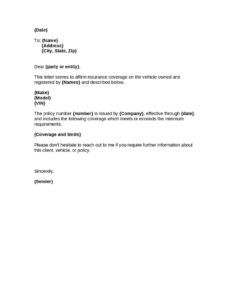
Auto Insurance Verification Letter
Download a free Auto Insurance Verification Letter template in PDF and DOCX to confirm a driver's active coverage quickly, with no signup required.
DOCX
2 downloads
0
likes
Download Files
- DOCX
An Auto Insurance Verification Letter is a written confirmation, usually issued by an insurance company or agent, that a specific person or vehicle is covered under an active auto insurance policy. People most often request one to prove coverage to an employer, lender, court, or dealership. You can download this template free in both PDF and DOCX formats, with no signup required.
What Is an Auto Insurance Verification Letter?
An Auto Insurance Verification Letter is a formal document that states a named policyholder holds a valid automobile insurance policy and summarizes its key details. It is typically prepared by the insurer, an authorized agent, or a broker on company letterhead, though it can also be drafted by the policyholder and signed by the insurer for confirmation. The letter documents the policy number, coverage types, coverage limits, effective dates, and the vehicles or drivers covered. Its purpose is to give a third party — such as a lender, employer, leasing office, or government agency — quick, trustworthy proof that the required coverage is in force without that party needing direct access to the policy itself.
When Do You Need an Auto Insurance Verification Letter?
This letter comes up in many everyday situations where a third party needs assurance that coverage exists. Common scenarios include:
- Vehicle purchases or leases: A dealership or leasing company often requires proof of insurance before releasing a vehicle.
- Auto loan financing: Lenders typically require comprehensive and collision coverage as a condition of financing and ask for written verification.
- Employment: Jobs that involve driving a personal or company vehicle may require employees to confirm active coverage.
- Court or legal matters: A judge or attorney may request proof of insurance in connection with an accident, traffic violation, or settlement.
- Registration or reinstatement: A motor vehicle department may require verification to register a vehicle or reinstate a suspended license.
- Rental or business agreements: A landlord with a parking facility or a business partner may ask for confirmation of coverage.
What an Auto Insurance Verification Letter Should Have
A complete and credible verification letter leaves no doubt about who is covered and for what. The strongest letters include the following elements:
- The insurance company’s name, address, and contact information, ideally on letterhead.
- The current date and a clear addressee (the person or organization requesting verification).
- The full name of the policyholder and any additional insured drivers.
- The policy number and the policy’s effective and expiration dates.
- A description of the covered vehicle, including year, make, model, and VIN where applicable.
- The types of coverage in force — liability, collision, comprehensive, uninsured motorist — and their limits.
- A signature, printed name, and title of the agent or company representative authorized to confirm the information.
How to Fill Out an Auto Insurance Verification Letter
Follow these steps to complete the template accurately:
- Add the insurer’s letterhead or type the company name, mailing address, and phone number at the top.
- Enter the current date directly below the letterhead.
- Write the recipient’s name and address — the employer, lender, dealership, or agency requesting proof.
- Open with a clear statement confirming that the named policyholder holds an active auto insurance policy with your company.
- Insert the policyholder’s full legal name and the names of any additional covered drivers.
- List the policy number along with the effective and expiration dates.
- Describe the insured vehicle by year, make, model, and VIN.
- Specify each coverage type and its dollar limits so the reader understands the scope of protection.
- Add an invitation to contact the agent with questions and the relevant phone or email.
- Close with the representative’s signature, printed name, title, and the date signed.
Who Should Sign and Issue the Letter
The most authoritative version of this letter is issued and signed by the insurance company or a licensed agent, because the recipient is relying on the insurer’s word that coverage is genuinely in force. If you are a policyholder drafting the letter yourself, present it to your agent for review and signature rather than submitting it unsigned. An unsigned or self-prepared letter may be accepted in informal situations, but lenders, courts, and government agencies almost always want confirmation that comes directly from the insurer or appears on company letterhead with an authorized signature.
How It Differs From an Insurance ID Card or Certificate
People sometimes confuse this letter with a wallet insurance card or a certificate of insurance. An insurance ID card is a compact proof carried in the vehicle for traffic stops and accidents, while a certificate of insurance is a standardized summary often used in commercial and contractor settings. An Auto Insurance Verification Letter is more flexible and personal: it is addressed to a specific recipient, can be tailored to answer a particular request, and can spell out exactly which coverages and limits apply. Use whichever document the requesting party specifies, and provide the letter when they want a narrative confirmation rather than a card.
Common Mistakes to Avoid
- Omitting the policy number or dates: Without these, the recipient cannot confirm the policy is active or current.
- Using an expired policy period: Always verify the effective and expiration dates reflect current coverage.
- Leaving out the VIN: A vehicle description without a VIN can be too vague for a lender or dealership.
- Forgetting an authorized signature: An unsigned letter carries little weight with most institutions.
- Vague coverage descriptions: State the coverage types and limits clearly rather than writing “fully covered.”
- Misaddressing the letter: Confirm the exact name and department of the requesting party so the letter reaches the right desk.
Frequently Asked Questions
What is an Auto Insurance Verification Letter used for? It is used to prove to a third party that a person or vehicle is covered by an active auto insurance policy. Common recipients include lenders, dealerships, employers, courts, and motor vehicle departments. The letter summarizes the policy details so the recipient can confirm coverage without seeing the full policy.
Who should write the letter? Ideally the insurance company or a licensed agent writes and signs it, because they can authoritatively confirm coverage. A policyholder can draft it using this template, but it is best to have the insurer review and sign before submitting it. Letters on company letterhead with an authorized signature carry the most credibility.
Does the letter need to be notarized? Notarization is not typically required for an insurance verification letter. Most recipients accept a letter signed by an authorized representative on company letterhead. If a court or specific agency requests notarization, follow that instruction, but it is uncommon.
What information must the letter include? At minimum it should include the policyholder’s name, the policy number, the effective and expiration dates, the covered vehicle, and the coverage types and limits. It should also identify the insurer and be signed by an authorized representative. Missing any of these can cause the recipient to reject the letter.
Is this letter legally binding? The letter itself is a confirmation of facts rather than a contract; the underlying insurance policy is the binding agreement. However, the insurer may be held to the accuracy of what it states, so the details must be correct. Always confirm the policy is genuinely in force before issuing it.
How much does this template cost? This Auto Insurance Verification Letter template is completely free to download from Business Forms Pro in both PDF and DOCX formats. There is no signup or payment required. You can customize it with your own details and reuse it whenever you need proof of coverage.
This template is a general example provided for informational purposes only and is not legal, financial, or insurance advice. Coverage requirements and documentation rules vary by insurer and jurisdiction. Consult your insurance provider or a qualified professional to confirm what your specific situation requires.
Related Forms
- Information Request
- Payment Location Change
- Offer to a Potential Client
- Landlord Eviction For Cause
- Request to Cancel Delayed Shipment
- Past-Due Account
Browse more in Business Letters.