
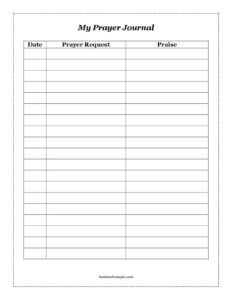
Prayer Journal
Download a free Prayer Journal template in PDF and DOCX to record your prayer requests, track answered prayers, and capture daily praise—no signup needed.
PDF
DOCX
4 downloads
0
likes
Download Files
- DOCX
A Prayer Journal is a simple, structured page for recording your prayer requests, capturing daily praises, and tracking how God answers over time. Most people use it to stay consistent in prayer and to remember the requests they want to keep lifting up. It’s free to download here in both PDF and DOCX formats, with no signup required.
What Is a Prayer Journal?
A Prayer Journal is a personal devotional tool used to write down the things you are praying about and the things you are thankful for. It is typically kept by individuals, families, prayer groups, or church members who want a faithful record of their spiritual life. With its three core columns—Date, Prayer Request, and Praise—this template documents both what you are asking and how those requests turn into reasons to rejoice. Rather than relying on memory, you create a written history of your conversations with God. Over weeks and months, that record becomes a powerful encouragement, showing patterns of growth, answered prayer, and faithfulness you might otherwise overlook.
When Do You Need a Prayer Journal?
A Prayer Journal fits naturally into many seasons of faith and ministry. Common reasons people start one include:
- Daily quiet time—anchoring your morning or evening devotions with a written record of what you bring before God each day.
- Tracking long-term requests—keeping ongoing concerns like a loved one’s health, a job search, or a difficult relationship visible so you don’t forget to keep praying.
- Small groups and Bible studies—collecting members’ requests each week and following up on how prayers were answered.
- Family prayer time—involving children in writing down requests and celebrating answered prayers together.
- Personal seasons of need—during grief, transition, illness, or big decisions, when writing helps you process and surrender what’s on your heart.
- Gratitude practice—using the Praise column to build a habit of thankfulness, noting blessings large and small.
What a Prayer Journal Should Have
An effective Prayer Journal stays simple so it’s easy to maintain. The essentials in this template are the three columns that make every entry meaningful. The Date ties each request to a moment in time, letting you measure how long you’ve been praying and when an answer came. The Prayer Request captures the specific need, person, or situation you’re lifting up. The Praise field gives you space to record thanksgiving—either a blessing you’re grateful for that day or the answer to a request you wrote earlier. Together these create a clear, scannable record. You may also leave room to mark a request as answered or to add a short verse or note alongside an entry.
How to Fill Out a Prayer Journal
- Write the Date. Begin each entry with the day’s date. This timestamp lets you look back later and see exactly when you started praying about something and how long it took before you saw movement.
- Record your Prayer Request. In the Prayer Request column, describe what you’re praying for as specifically as you can—name the person, the situation, or the decision. Being concrete (“strength for Mom’s surgery on Friday”) makes it easier to recognize the answer when it comes.
- Note your Praise. In the Praise column, write something you’re thankful for that day. Use it for general gratitude or to mark an earlier request that has been answered, drawing a line between the asking and the rejoicing.
- Repeat each day. Add new rows as you go, keeping requests and praises side by side so your journal grows into a continuous spiritual record.
- Review regularly. Revisit past entries weekly or monthly to update ongoing requests and to celebrate the answers you’ve received.
Tips for Building a Lasting Prayer Habit
The journal works best when it becomes part of a rhythm. Choose a consistent time and place—first thing in the morning, during lunch, or before bed—so journaling becomes second nature. Keep entries short; a single honest line is more sustainable than a long paragraph you dread writing. Consider color-coding or starring requests once they’re answered so the Praise column visibly fills up over time. If you pray in a group, designate a few minutes to share new requests and read aloud answered ones, which builds faith and accountability. Some people pair each entry with a brief Scripture reference, but the template stays flexible enough to use however your devotional life flows.
Prayer Journal vs. a Plain Diary
While a Prayer Journal looks like a diary, its focus is different. A diary records events and feelings broadly, whereas a Prayer Journal is intentionally organized around requests and gratitude. The Date–Request–Praise structure keeps your attention on petition and thanksgiving rather than general reflection, which makes it easier to track answered prayers. That said, the template is yours to adapt—you can add notes, verses, or reflections in the margins, and many people find that the discipline of recording requests naturally spills over into deeper journaling about their faith.
Common Mistakes to Avoid
- Being too vague. Writing “pray for everyone” makes it impossible to recognize answers later; name specifics instead.
- Skipping the date. Without dates you lose the timeline that shows how prayers were answered over weeks or months.
- Never revisiting past entries. The greatest value comes from looking back and noting answered requests—don’t just write and forget.
- Treating it like a chore. Long, pressured entries lead to burnout; keep it brief and authentic so you’ll actually continue.
- Ignoring the Praise column. Recording only requests turns the journal into a worry list; balance it with gratitude.
- Letting it gather dust. Keep the journal somewhere visible and tied to a daily routine so the habit sticks.
Frequently Asked Questions
What is a Prayer Journal used for? A Prayer Journal is used to write down prayer requests, record praises, and track how those requests are answered over time. It helps you stay consistent in prayer and gives you a written record of your spiritual journey that you can look back on for encouragement.
How do I fill out this Prayer Journal template? Start each entry with the date, write your specific prayer request in the Prayer Request column, and note what you’re thankful for in the Praise column. Add a new row each day and revisit older entries periodically to mark requests as answered.
Is the Prayer Journal free to download? Yes. You can download this Prayer Journal template completely free in both PDF and DOCX formats, with no signup or account required. Print it or edit it on your computer as often as you like.
Should I journal every day? Daily journaling builds the strongest habit, but there’s no rule—pray and write whenever it fits your life. Even a few entries a week create a meaningful record, and consistency matters more than length or frequency.
Can I use this for a group or family? Absolutely. The simple layout works well for small groups, Bible studies, and family devotions. Many groups collect each member’s requests and read aloud answered prayers to build encouragement and accountability together.
Can I edit the template to add more fields? Yes. Download the DOCX version to add columns for Scripture references, answered-prayer checkboxes, or extra notes. The PDF is ready to print as-is if you prefer to write by hand.
This Prayer Journal template is provided as a general example for informational and personal devotional purposes only. It is not professional, pastoral, or counseling advice. Use it in whatever way best supports your own faith practice, and seek a qualified spiritual or professional advisor for guidance on personal matters.
Related Forms
- Announcement Request
- Virgin Of Guadalupe Holy Card (2 per page)
- Ordination Anniversary Card 3 (2 per page)
- Your First Holy Communion (2 per page)
- Church Baptism Log
- Prayer To The Sacred Heart Funeral (4 per page)
Browse more in Church.