
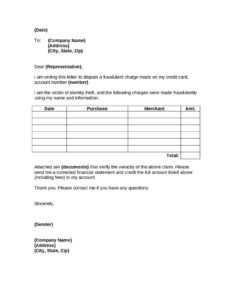
Credit Card Dispute Letter
Download a free Credit Card Dispute Letter template to formally challenge billing errors or unauthorized charges with your card issuer — free PDF and DOCX.
DOCX
2 downloads
0
likes
Download Files
- DOCX
A Credit Card Dispute Letter is a written notice you send to your credit card issuer to formally challenge a billing error, an unauthorized charge, or a transaction you believe is incorrect. People most often use it to create a documented paper trail when a phone call hasn’t resolved the problem, and it is free to download here in both PDF and DOCX formats with no signup required.
What Is a Credit Card Dispute Letter?
A Credit Card Dispute Letter is a formal communication from a cardholder to the bank or financial institution that issued their credit card. It identifies a specific charge on a statement, explains why the cardholder believes the charge is wrong, and requests that the issuer investigate and correct it. The letter is typically sent to the issuer’s billing inquiries or disputes address rather than the payment address. It documents the date you raised the issue, the exact amount in question, and the supporting facts, which can be important if the matter escalates. Cardholders use it for duplicate charges, charges for goods never delivered, incorrect amounts, and suspected fraud.
When Do You Need a Credit Card Dispute Letter?
This letter is useful any time something on your statement doesn’t add up and you want a formal, traceable record. Common situations include:
- You were charged twice for the same purchase, or billed an amount different from what you agreed to pay.
- You see a charge for goods or services you never received, or that arrived damaged or not as described.
- You spot an unfamiliar or unauthorized transaction that may be fraud or identity theft.
- A merchant promised a refund or canceled a subscription but the credit never appeared on your statement.
- A recurring charge continued after you canceled the service or membership.
- The statement reflects a math error, a misapplied payment, or a charge dated before your card was even activated.
In many of these cases, a phone call is a good first step, but a written dispute letter strengthens your position by putting your claim in writing and starting a clear timeline.
What a Credit Card Dispute Letter Should Have
A complete and effective dispute letter is specific, factual, and easy for the issuer to act on. It should clearly identify you and your account, pinpoint the exact transaction in question, and state plainly what you want the issuer to do. Strong letters include the following elements:
- Your full name, mailing address, and credit card account number (or the last four digits as instructed).
- The issuer’s name and correct billing-disputes mailing address.
- The date of the statement and the date the disputed charge appeared.
- The merchant name, transaction date, and exact dollar amount being disputed.
- A clear explanation of why the charge is incorrect.
- A specific request — correction, reversal, or removal of the charge.
- A list of any enclosed supporting documents and your signature.
How to Fill Out a Credit Card Dispute Letter
Follow these steps to complete the template accurately:
- Enter your full name and mailing address at the top, followed by today’s date.
- Add the issuer’s name and the dedicated billing-inquiries or disputes address — this is often different from the address where you mail payments and is printed on the back of your statement.
- Reference your account using your full card number or the last four digits, depending on the issuer’s instructions.
- Write a clear subject line such as “Dispute of Billing Error” with the disputed amount.
- In the body, identify the specific charge: the merchant, the transaction date, and the exact dollar amount.
- Explain in plain language why you are disputing it — for example, a duplicate charge, undelivered goods, or an unauthorized transaction.
- State exactly what you want the issuer to do, such as reverse the charge or correct the balance.
- List any enclosures, such as receipts, order confirmations, or prior correspondence.
- Close with your signature, printed name, and a daytime phone number or email for follow-up.
How to Send the Letter and Protect Your Rights
Send your dispute letter promptly, since billing-error protections often carry deadlines measured from the date the statement was sent. Mailing the letter by certified mail with a return receipt gives you proof of delivery and the date the issuer received it. Keep a copy of the signed letter and every enclosure for your own records. Many issuers also offer online dispute portals, but a written letter remains valuable when you want a formal record or when an online dispute stalls. After you send it, watch your statements for the issuer’s acknowledgment and the outcome of its investigation, and follow up in writing if you don’t hear back within a reasonable time.
Disputing a Charge vs. Reporting Fraud
A billing-error dispute and a fraud report overlap but aren’t identical. Use a dispute letter when you recognize the merchant but the amount, quantity, or quality is wrong, or when a promised refund never arrived. If you believe your card number was stolen and charges were made without your knowledge, report it to your issuer immediately by phone first, because the issuer may freeze the account and reissue a card — then follow up in writing using this letter to document the unauthorized transactions. Acting quickly on suspected fraud limits your potential exposure and speeds the investigation.
Common Mistakes to Avoid
- Sending the letter to the payment address instead of the issuer’s billing-disputes address, which can delay or void the request.
- Being vague — failing to list the exact merchant, date, and dollar amount makes the claim harder to investigate.
- Waiting too long, since billing-error protections are often time-sensitive.
- Forgetting to enclose supporting documents like receipts or cancellation confirmations.
- Withholding payment on undisputed parts of the balance, which can still trigger late fees.
- Not keeping a dated copy of the letter and proof of mailing for your records.
Frequently Asked Questions
What is a Credit Card Dispute Letter? It is a written notice to your credit card issuer that identifies a specific charge you believe is incorrect, explains why, and asks the issuer to investigate and correct it. It creates a documented record of your complaint and the date you raised it.
How do I fill out a Credit Card Dispute Letter? Add your name, address, and account number, then the issuer’s disputes address, and describe the charge by merchant, date, and exact amount. Explain why it’s wrong, state what you want done, list any enclosures, and sign and date the letter.
Does a dispute letter need to be notarized or witnessed? No. A Credit Card Dispute Letter does not require notarization or witnesses. Your signature and accurate account details are sufficient, though sending it by certified mail provides helpful proof of delivery.
Is a Credit Card Dispute Letter legally binding? The letter itself is not a contract, but it formally triggers your issuer’s obligation to investigate billing errors under consumer protection rules. It serves as evidence of when and how you raised the dispute if the matter escalates.
How much does this template cost? Nothing. You can download the Credit Card Dispute Letter template for free in PDF and DOCX formats from Business Forms Pro, with no signup or account required.
How long do I have to dispute a charge? Time limits vary, but billing-error protections are commonly tied to a window measured from when your statement was sent, so it’s best to act quickly. Check your cardholder agreement and statement for the exact deadline that applies to your account.
This template is a general example provided for informational purposes only and is not legal, financial, or tax advice. Consumer protection rules and issuer requirements vary by jurisdiction and by your cardholder agreement; consult a qualified professional or your card issuer for guidance on your specific situation.
Related Forms
- Delivery Demand
- Membership Cancellation Letter
- Cell Phone Service Issue Letter
- Mortgage Assumption Letter
- BBB Complaint Letter
- Loan Comparison Chart
Browse more in Customer Letters.