
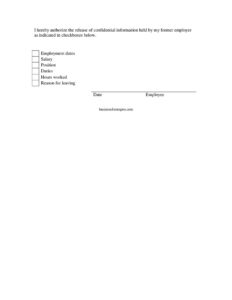
Consent to Release Personnel Information
Authorize the release of employee records with this free Consent to Release Personnel Information template, available as a free download in PDF and DOCX.
PDF
DOCX
3 downloads
0
likes
Download Files
- DOCX
A Consent to Release Personnel Information form is a signed authorization that allows an employer or former employer to disclose details from an employee’s personnel file to a named third party, such as a prospective employer, lender, or background-check agency. People most often use it during a reference or employment-verification check, and you can download this template free in both PDF and DOCX formats with no signup required.
What Is a Consent to Release Personnel Information Form?
A Consent to Release Personnel Information form is a written permission slip from an employee (or former employee) that authorizes a current or past employer to share specified records from their personnel file. Without this consent, many employers will release only limited “neutral reference” details—typically dates of employment and job title—because of privacy concerns and liability risk. The document identifies the person whose information is being shared, the party authorized to receive it, the categories of records covered (such as employment dates, salary history, or performance evaluations), and the employee’s dated signature granting permission. It protects the releasing employer by creating a clear record that disclosure was authorized.
When Do You Need a Consent to Release Personnel Information Form?
This authorization comes into play whenever someone other than the employee needs verified details from a personnel file. Common situations include:
- Employment verification: A prospective employer wants to confirm your job title, employment dates, and reason for leaving before extending an offer.
- Loan or mortgage applications: A lender needs proof of income and continuous employment to underwrite financing.
- Background screening: A third-party screening company requests authorization to gather work history as part of a pre-hire check.
- Rental applications: A landlord or property manager seeks confirmation of stable employment and income.
- Professional licensing or security clearances: A licensing board or government agency must verify prior employment and conduct.
- Litigation or benefits claims: An attorney, insurer, or benefits administrator needs documented work history to process a claim.
What a Consent to Release Personnel Information Form Should Have
A complete authorization makes it unmistakably clear who is consenting, what may be shared, and with whom. The key elements are:
- The full legal name of the employee whose records will be released.
- The name of the current or former employer holding the records.
- The name of the third party authorized to receive the information.
- The specific categories of information covered—for example, employment dates, position held, salary, or performance reviews.
- An effective date or expiration so the consent is not open-ended.
- A statement releasing the employer from liability for good-faith disclosure.
- The employee’s signature and the date signed.
How to Fill Out a Consent to Release Personnel Information Form
Work through the template section by section so the authorization is valid and limited to what you intend to share:
- Name the employee: Enter the full legal name of the person whose personnel records are being released, matching the name on file with the employer.
- Identify the employer: Write the name of the company or organization that holds the personnel file.
- Name the recipient: State who is authorized to receive the information—the prospective employer, lender, agency, or individual.
- Specify the records, including employment dates: The template provides an Employment dates line; fill in the start and end dates being confirmed, and check or list any other categories such as title, salary, or performance.
- Set the scope and time limit: Note how long the consent remains valid or the date it expires.
- Sign and date: The employee signs and dates the form to make the authorization effective.
Limiting What You Disclose
One of the most useful features of this form is that it lets the employee control the scope of disclosure. You do not have to authorize the release of your entire file. If a lender only needs to confirm employment dates and salary, you can limit the consent to exactly those items and leave out disciplinary records or performance reviews. Listing precise categories protects your privacy while still giving the recipient the verification they require. Employers should release only what the form authorizes—nothing more—and keep the signed consent with the corresponding request.
How This Differs From a General Background-Check Release
A Consent to Release Personnel Information form is narrower and employer-specific: it authorizes one organization to disclose its own records about you. A broad background-check authorization, by contrast, often grants a screening company permission to gather information from many sources, including criminal databases, credit bureaus, and multiple past employers. If a screening firm is involved, additional consumer-protection disclosures may apply. Keep this form focused on the personnel file at hand, and use a separate, dedicated authorization when a full background investigation is being conducted.
Common Mistakes to Avoid
- Leaving the recipient blank: An open-ended consent that does not name who can receive the records invites over-disclosure.
- Omitting an expiration date: A consent with no time limit may be used long after the original purpose has passed.
- Failing to specify categories: Vague language like “all records” can release sensitive details you never intended to share.
- Skipping the employee signature or date: An unsigned or undated form is generally unenforceable and may be ignored by the records holder.
- Using inconsistent names: A nickname or maiden name that does not match the personnel file can delay or block verification.
- Not keeping a copy: Both the employee and the employer should retain the signed authorization for their records.
Frequently Asked Questions
What is a Consent to Release Personnel Information form used for? It is used to give an employer written permission to share specified details from an employee’s personnel file with a named third party. The most common uses are employment verification for a new job, income confirmation for a loan or lease, and background screening. The form protects both the employee’s privacy and the employer’s liability.
How do I fill out the form? Enter the employee’s full legal name, the employer holding the records, and the third party authorized to receive them. Then specify the information to be released—using the employment dates line and any other categories—set an expiration, and sign and date the form. Keep the scope as narrow as the situation allows.
Does this form need to be notarized or witnessed? In most cases a notary or witness is not required; a dated signature from the employee is typically sufficient. Some recipients, agencies, or jurisdictions may request notarization or a witness signature, so confirm any specific requirements before submitting. Adding a witness line is optional and can add credibility.
Is the consent legally binding? When properly completed and signed by the employee, it is generally treated as a valid authorization that the records holder can rely on to make a good-faith disclosure. Its enforceability depends on clear scope, an effective date, and the signer’s voluntary agreement. Requirements can vary by state and by the type of record involved.
Can I limit what information is released? Yes. You can and should specify only the categories you want disclosed, such as employment dates and title, while excluding items like disciplinary history. Listing precise categories keeps sensitive information private and still satisfies the recipient’s verification needs.
How much does this template cost? Nothing—this Consent to Release Personnel Information template is completely free to download in PDF and DOCX, with no signup or subscription required. You can edit the DOCX version to fit your situation or print the PDF and complete it by hand.
This template is a general example provided for informational purposes only and is not legal, financial, or human-resources advice. Privacy and employment-records requirements vary by jurisdiction and by the type of information involved. Consult a qualified attorney or HR professional before relying on this form.
Official resource: for the rules that apply to your situation, see the U.S. Department of Labor.
Related Forms
- Employee Incident Report Form
- Job Offer Letter
- Applicant Interview Schedule
- Authorization To Travel
- Organizational Chart
- Check Driving Record
Browse more in Employment.