
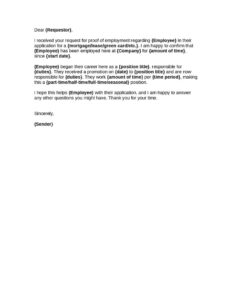
Proof Of Employment
Verify a worker's job status, title, and income with our free Proof of Employment letter template — download in PDF or DOCX, no signup required.
DOCX
1 downloads
0
likes
Download Files
- DOCX
A Proof of Employment letter is a written statement from an employer confirming that a person currently works (or previously worked) at a company, usually including their job title, start date, and salary. It is most commonly requested when an employee applies for a loan, rents an apartment, or needs to satisfy an immigration or background check. You can download our free Proof of Employment template in both PDF and DOCX formats, with no signup required.
What Is a Proof of Employment Letter?
A Proof of Employment letter — sometimes called an employment verification letter — is an official document issued by an employer, typically by a manager or the human resources department. It confirms an individual’s working relationship with the company and the basic facts of their employment. Third parties such as banks, landlords, government agencies, and prospective employers rely on it to verify that the person earns a stated income and holds a stated position. Because it carries the company’s name and an authorized signature, the letter acts as a trusted, on-the-record statement. It does not need to be long; what matters is that the facts it presents are accurate and that the signer has the authority to confirm them.
When Do You Need a Proof of Employment Letter?
People request this letter whenever an outside party needs official confirmation of employment and income. Common scenarios include:
- Applying for a mortgage or auto loan, where the lender must verify steady income before approving financing.
- Renting an apartment or home, when a landlord or property manager wants to confirm the applicant can afford the rent.
- Immigration and visa applications, which often require proof of stable employment in the host country.
- Background and reference checks by a new employer verifying past or current work history.
- Government benefits or assistance programs that base eligibility on income and employment status.
- Obtaining a credit card or refinancing debt, where the issuer assesses repayment capacity.
In each case the requesting party usually specifies what details they need — some only want confirmation of employment dates, while others require exact salary figures. Reading the request carefully before writing the letter saves a second round of revisions.
What a Proof of Employment Letter Should Have
A complete and credible letter includes a few essential elements. It should be printed on company letterhead or clearly display the employer’s name and contact details. It should name the employee and confirm their job title, employment status (full-time, part-time, or contract), and dates of employment. Where the recipient requests it, the letter states the employee’s salary or wage and pay frequency. Finally, it must include the date written, the name and title of the person verifying the information, that person’s signature, and a contact number or email so the recipient can follow up. Keeping the language factual and free of opinion or performance commentary keeps the document professional and reusable.
How to Fill Out a Proof of Employment Letter
- Add the company details. Place the employer’s name, address, and phone number at the top, ideally on letterhead.
- Enter the date. Write the date the letter is issued so the recipient knows the information is current.
- Address the recipient. If you know who requested it (a bank officer, landlord, or agency), name them; otherwise use “To Whom It May Concern.”
- State the employee’s name and position. Confirm the full legal name and current job title.
- Confirm employment status and dates. Indicate whether the role is full-time, part-time, or contract, and give the start date (and end date if applicable).
- Include compensation, if requested. State the annual salary or hourly wage and how often the employee is paid.
- Add any required extra details. Some recipients ask for hours worked per week or likelihood of continued employment.
- Sign and provide contact information. The authorized signer adds their name, title, signature, and a phone number or email for verification.
Who Should Write and Sign the Letter
The letter should come from someone with the authority to confirm the facts — typically a direct supervisor, an HR representative, a payroll administrator, or a company owner. The signer is vouching for the accuracy of the statements, so it is important they have access to the correct records before signing. Employees usually cannot write their own proof of employment letter and have it accepted; the value of the document lies in its coming from the employer. If you are an employee requesting one, give your HR department the recipient’s name, the details they need, and any deadline so they can produce the letter promptly.
Tips for a Smooth Verification
Keep the letter concise and limited to verifiable facts. Avoid editorializing about the employee’s character or future plans unless the recipient specifically asks. Double-check spellings, dates, and salary figures against payroll records, because a single wrong number can derail a loan or rental approval. Send the letter in a format the recipient accepts — many will take a scanned PDF by email, while some lenders require a mailed original. Finally, consider privacy: share salary only when the employee has consented or the request clearly requires it.
Common Mistakes to Avoid
- Omitting the issue date, which leaves recipients unsure whether the information is still current.
- Stating an incorrect job title or salary that does not match official payroll records.
- Having an unauthorized person sign the letter, which can cause the recipient to reject it.
- Leaving out contact information, so the recipient cannot call to verify the details.
- Including unnecessary personal opinions or performance reviews that the request did not ask for.
- Forgetting to use letterhead or identify the company clearly, which weakens the letter’s credibility.
Frequently Asked Questions
What is a Proof of Employment letter used for? It is used to officially confirm that a person works (or worked) at a company, along with their job title, employment dates, and often their income. Banks, landlords, immigration agencies, and new employers commonly request it to verify the facts before approving a loan, lease, application, or hire.
Who should write a Proof of Employment letter? An authorized representative of the employer should write and sign it — usually a manager, HR staff member, payroll administrator, or business owner. Employees generally cannot write their own letter and have it accepted, because the document’s value comes from the employer confirming the information.
Does a Proof of Employment letter need to be notarized? In most cases no, since the employer’s signature and contact information are enough to verify it. However, some recipients — particularly for certain immigration or legal matters — may request notarization, so check the requirements of the party asking for the letter before sending it.
Should the letter include salary information? Only if the recipient requests it and the employee consents. Lenders and landlords often require salary details to assess affordability, while a simple employment confirmation for a background check may not need any figures at all.
Is this Proof of Employment template legally binding? The letter is a factual statement rather than a contract, so it does not create binding obligations the way an agreement would. It does, however, carry the employer’s representation that the information is accurate, so the signer should ensure every detail is correct.
How much does this template cost? Nothing — our Proof of Employment template is completely free to download in both PDF and DOCX formats, with no signup or payment required. You can edit it to match your company’s letterhead and the recipient’s specific requests.
This template is a general example provided for informational purposes only and is not legal, financial, or tax advice. Employment verification and disclosure requirements vary by jurisdiction and by the requesting party; consult a qualified professional or your HR department to ensure your letter meets the applicable requirements.
Official resource: for the rules that apply to your situation, see the U.S. Department of Labor.
Related Forms
- Education Verification
- Check Driving Record
- Employee Pay Rate and Title History Change
- Employee Orientation Checklist
- Salary Review Request
- Job Acceptance Letter
Browse more in Employment.