
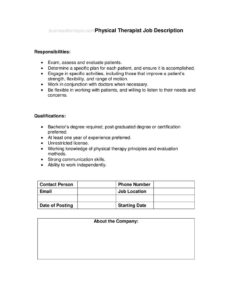
Physical Therapist Job Description
Download a free Physical Therapist job description template in PDF and DOCX to attract qualified PTs faster with clear responsibilities and qualifications.
PDF
DOCX
0
likes
Download Files
- DOCX
A Physical Therapist job description is a structured document that outlines the duties, qualifications, and expectations for a licensed PT role within a clinic, hospital, or rehabilitation setting. Most employers use it to attract qualified candidates and set clear performance standards before posting a job opening. You can download this template free in both PDF and DOCX formats, with no signup required.
What Is a Physical Therapist Job Description?
A Physical Therapist job description is a written summary of the role a licensed PT will perform, typically created by a hiring manager, clinic director, or HR team. It documents the core responsibilities the therapist will carry out — such as evaluating patients, designing treatment plans, and tracking recovery — alongside the qualifications required to be considered, including education, licensure, and experience. The document serves as the foundation for a job posting, an interview rubric, and an onboarding reference. By spelling out expectations in plain language, it helps employers compare candidates fairly and gives applicants a realistic picture of the day-to-day work before they apply.
When Do You Need a Physical Therapist Job Description?
This template is useful any time you need to define or advertise a PT role. Common scenarios include:
- Hiring a new physical therapist for an outpatient clinic, hospital, or private practice and needing a job posting that draws qualified applicants.
- Replacing a departing PT and wanting to update the role’s duties to reflect current caseload and specialties.
- Expanding a rehabilitation department where you are adding multiple positions and need consistent, comparable descriptions.
- Standardizing HR documentation so every clinical role has a formal description on file for performance reviews and audits.
- Defining a specialized role such as a pediatric, orthopedic, geriatric, or sports physical therapist with distinct duties.
- Setting expectations with a new hire during onboarding so responsibilities and accountability are clear from day one.
What a Physical Therapist Job Description Should Have
A complete description balances duties with credentials so candidates can self-screen accurately. The strongest versions include a short role summary, a detailed list of clinical and administrative responsibilities, the required licensure and education, preferred experience or certifications, and the physical or scheduling demands of the position. Many employers also add reporting structure, the practice setting, and any patient population specialties. Clear, measurable language — for example, “complete patient evaluations and documentation within established timeframes” — works far better than vague phrasing. The goal is a description that is specific enough to attract the right PT yet flexible enough to remain accurate as caseloads shift.
How to Fill Out a Physical Therapist Job Description
This template centers on two core sections — Responsibilities and Qualifications. Work through them in order:
- Add a role title and summary line. State the position name and a one-sentence overview of the practice setting and patient focus.
- List the Responsibilities. Under this heading, write each duty as a clear bullet: evaluating patients and movement function, developing individualized treatment plans, administering therapeutic exercises and manual techniques, educating patients and families on recovery, documenting progress in the EMR, and collaborating with physicians and care teams.
- Detail the Qualifications. Under this heading, specify the Doctor of Physical Therapy (DPT) degree or equivalent, an active state PT license, CPR/BLS certification, and any required years of clinical experience.
- Note preferred extras. Add specialty certifications, EMR familiarity, or experience with a specific patient population if relevant.
- Describe demands and logistics. Include schedule, physical requirements, and reporting line.
- Review and finalize for accuracy before posting or filing.
Tailoring the Description to Your Setting
The same role looks very different across practice environments, so adapt the responsibilities accordingly. An outpatient orthopedic clinic may emphasize manual therapy, post-surgical rehabilitation, and high patient throughput, while an inpatient hospital role might prioritize acute care, bedside mobility work, and discharge planning. A pediatric position should reference developmental milestones and family coaching, whereas a geriatric or skilled-nursing role often focuses on fall prevention and functional independence. Adjust the qualifications too: a sports rehabilitation role may value athletic experience, while a neurological setting may prefer specialty certification. The clearer you are about the specialty, the fewer mismatched applications you will receive.
Job Description vs. Job Posting
It helps to distinguish the internal job description from the public job ad. The description is the comprehensive reference document — duties, qualifications, demands, and reporting structure — kept on file by HR and used for reviews and compliance. A job posting is the marketing-oriented version drawn from it, often shorter, with a compelling intro, salary range, benefits, and a call to apply. Start with a strong description, then pull the highlights into your posting. Keeping both consistent prevents confusion when a candidate compares the ad to what they were told in the interview.
Common Mistakes to Avoid
- Listing duties without licensure requirements — always state the DPT and active state license, since these are non-negotiable for a PT role.
- Using vague responsibilities like “treat patients” instead of specific, measurable tasks.
- Overloading the qualifications with too many “required” certifications that shrink your candidate pool unnecessarily.
- Ignoring physical and scheduling demands that candidates need to know upfront, such as standing for long periods or weekend coverage.
- Copying a generic template verbatim without adapting it to your specialty or setting.
- Forgetting to update the description when the role’s actual duties change over time.
Frequently Asked Questions
What is a Physical Therapist job description used for? It defines the responsibilities and qualifications of a PT role so employers can advertise the position, screen candidates, and set clear expectations. It also serves as an internal HR reference for performance reviews and onboarding. The same document can be adapted into a public job posting.
What should the Responsibilities section include? It should list the clinical and administrative duties the therapist performs, such as evaluating patients, designing and adjusting treatment plans, administering therapeutic interventions, documenting progress, and coordinating with the broader care team. Write each as a clear, specific bullet. Tailor the list to your practice setting and patient population.
What qualifications should I list for a physical therapist? Standard qualifications include a Doctor of Physical Therapy (DPT) degree, an active state physical therapy license, and current CPR/BLS certification. You may add preferred years of experience and any specialty certifications relevant to the role. Keep required items separate from preferred ones to widen your candidate pool.
Is this job description template legally binding? A job description is generally not a contract by itself; it is a descriptive document outlining expectations. Employment terms, at-will status, and compensation are typically governed by a separate offer letter or employment agreement. Have your HR or legal team review final language for compliance with applicable employment laws.
How much does this template cost? It is completely free to download from Business Forms Pro in both PDF and DOCX formats, with no signup or payment required. You can edit the DOCX version to match your clinic’s needs. Use it as many times as you like for different roles.
Can I customize it for a specialty PT role? Yes. The template is built to be adapted, so you can rewrite the responsibilities for pediatric, orthopedic, geriatric, neurological, or sports settings and adjust the qualifications to match. Add specialty certifications or experience requirements as needed. Tailoring the description improves the quality of applicants you attract.
This template is a general example provided for informational purposes only and is not legal, HR, or employment advice. Employment requirements and licensure rules vary by jurisdiction and by employer. Consult a qualified HR or legal professional before finalizing or posting any job description.
Official resource: for the rules that apply to your situation, see the U.S. Department of Labor.
Related Forms
- Sales Manager Job Description
- Business Development Manager Job Description
- Store Manager Job Description
- Teacher Job Description
- Website Designer Job Description
- Project Manager Job Description
Browse more in Job Descriptions.