
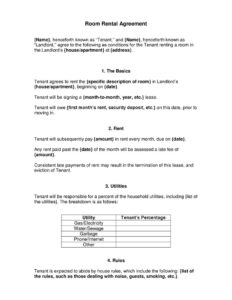
Room Rental Agreement
Download a free Room Rental Agreement template in PDF and DOCX to set clear terms between a landlord and a tenant renting a single room.
PDF
DOCX
0
likes
Download Files
- DOCX
A Room Rental Agreement is a written contract that sets the terms for renting out a single room within a larger property, such as a house or apartment. People most commonly use it when a homeowner or primary tenant wants to rent a spare bedroom and needs clear rules on rent, shared spaces, and house policies. You can download this Room Rental Agreement for free in both PDF and DOCX formats — no signup required.
What Is a Room Rental Agreement?
A Room Rental Agreement is a legal document used when someone rents out one room in a shared living space rather than an entire unit. It is typically issued by the property owner or by a head tenant who sublets a room to a roommate. The agreement documents how much rent is due, which areas of the home are private versus shared, the deposit amount, and the rules that keep a shared household running smoothly. Unlike a standard lease that covers an entire property, this form focuses on a single occupant and the common areas they may use, such as the kitchen, bathroom, and living room. It protects both parties by putting expectations in writing.
When Do You Need a Room Rental Agreement?
This form is useful any time one room changes hands in a shared home. Common situations include:
- A homeowner renting a spare bedroom to a tenant to help cover the mortgage.
- A primary tenant subletting one room of their apartment to a roommate to split costs.
- A landlord renting individual rooms in a multi-bedroom house to separate tenants.
- A family member or friend moving in and paying rent, where clear written terms prevent future misunderstandings.
- Renting a room short-term to a traveling worker, student, or intern for a fixed period.
- Converting an informal verbal arrangement into a formal, enforceable document.
In each case, the agreement clarifies who pays what, what the tenant can access, and how disputes or move-outs are handled — reducing friction in a living space where people share daily routines.
What a Room Rental Agreement Should Have
A complete Room Rental Agreement covers more than just rent. To be useful and enforceable, it should include the following elements:
- Full names of the landlord (or head tenant) and the renting tenant.
- The property address and a clear description of the specific room being rented.
- The monthly rent amount, due date, and accepted payment methods.
- The security deposit amount and the conditions for its return.
- The term of the rental — month-to-month or a fixed start and end date.
- A list of shared areas the tenant may use and any private or off-limits spaces.
- House rules covering guests, quiet hours, smoking, pets, and cleaning duties.
- How utilities and shared costs are split between occupants.
- Signature lines and dates for all parties.
How to Fill Out a Room Rental Agreement
Follow these steps to complete the form accurately:
- Enter the date the agreement is being signed at the top of the form.
- Write the full legal name of the landlord or head tenant, then the full name of the tenant renting the room.
- Fill in the complete property address, including unit number, city, state, and ZIP code.
- Describe the specific room being rented — for example, “the front bedroom on the second floor.”
- State the monthly rent amount, the day of the month it is due, and the accepted payment method.
- Enter the security deposit amount and note when and how it will be refunded.
- Specify the rental term: either a month-to-month arrangement or fixed move-in and move-out dates.
- List the shared areas the tenant may use and note any private or restricted spaces.
- Record how utilities, internet, and other shared expenses are divided.
- Write in any house rules covering guests, noise, smoking, pets, and chores.
- Have both the landlord and tenant sign and date the agreement, and give each party a copy.
House Rules and Shared-Space Expectations
Because a room rental involves living alongside other people, the house rules section often matters as much as the rent. Spell out quiet hours so everyone can sleep and work in peace, and clarify whether overnight guests are allowed and for how long. Decide in advance whether the tenant may keep pets or smoke on the property, and assign responsibility for shared cleaning tasks like dishes, trash, and bathroom upkeep. Clear rules reduce daily tension and give you a documented basis for addressing problems if they arise.
Room Rental Agreement vs. Standard Lease
A standard lease grants a tenant exclusive use of an entire property, while a Room Rental Agreement grants use of one room plus shared common areas. Because occupants share kitchens, bathrooms, and living rooms, this agreement places more emphasis on house rules and cost-splitting. If you are the head tenant subletting a room, check your own lease first — many leases require the landlord’s written permission before you may sublet to a roommate.
Common Mistakes to Avoid
- Leaving the room description vague, which can lead to disputes over which space the tenant rented.
- Forgetting to specify how utilities and shared costs are divided.
- Skipping house rules, then having no written basis to address guest or noise problems.
- Not stating the security deposit terms or conditions for its return.
- Using a verbal agreement instead of a signed document — making terms hard to prove later.
- Failing to confirm whether subletting is permitted under an existing master lease.
Frequently Asked Questions
What is a Room Rental Agreement used for? It is used to set clear, written terms when one room in a shared home is rented to a tenant. It covers rent, deposit, shared spaces, and house rules so both the landlord and tenant know their rights and responsibilities. This prevents misunderstandings in a shared living arrangement.
Is a Room Rental Agreement legally binding? Yes — once both parties sign and date it, a Room Rental Agreement is generally an enforceable contract. To hold up, its terms must be lawful and clearly stated. Keep a signed copy for your records, as it serves as proof of the agreed terms.
Does a Room Rental Agreement need to be notarized? Notarization is usually not required for a room rental, but it is never harmful. A signature from both parties is typically enough to make the agreement valid. Some people choose to have a witness sign for added assurance.
How much does this Room Rental Agreement cost? The template on Business Forms Pro is completely free to download in PDF and DOCX formats. There is no signup, subscription, or hidden fee. You can edit the DOCX version to fit your specific situation.
Can I rent a room if I am only a tenant, not the owner? You can sublet a room to a roommate, but first check your own lease and get written permission from your landlord if required. Many leases prohibit subletting without consent. Failing to get approval could put your own tenancy at risk.
How do I handle the security deposit? State the deposit amount in the agreement along with the conditions for its return, such as no damage beyond normal wear. Document the room’s condition at move-in with photos to avoid disputes. Local rules may govern how and when deposits must be returned.
This Room Rental Agreement template is a general example provided for informational purposes only and is not legal advice. Landlord-tenant laws and deposit rules vary by state and locality, so consult a qualified attorney or local housing authority to ensure your agreement complies with the rules that apply to you.
Official resource: for the rules that apply to your situation, see HUD.
Related Forms
- Receipt And Holding Deposit Agreement
- Rental Unit Smoke Detector CO2 Log
- Unauthorized Pet Notice
- Tenant Vehicle Log
- Covid Rent Extension Landlord
- Notice of Lease Termination
Browse more in Landlord Documents.