
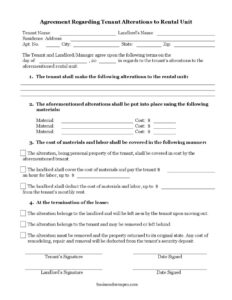
Agreement On Tenant Alterations To Rental Unit
Use our free Agreement on Tenant Alterations to Rental Unit template to document approved changes, costs, and ownership — free download in PDF and DOCX.
PDF
DOCX
7 downloads
0
likes
Download Files
- DOCX
An Agreement on Tenant Alterations to Rental Unit is a written contract between a tenant and a landlord that authorizes a renter to make physical changes to a rental property and spells out who pays for the work and what happens to it when the lease ends. People most often use it when a tenant wants to install fixtures, paint, build shelving, or otherwise modify a unit and both parties want the terms in writing. You can download this template free in PDF and DOCX, with no signup required.
What Is an Agreement on Tenant Alterations to Rental Unit?
This document is a landlord-tenant addendum that records permission for a tenant to alter a rented home or apartment. Standard leases usually prohibit modifications, so when a tenant wants to make changes, a separate agreement is needed to grant consent and define the conditions. The form identifies the parties and the property, describes the specific alterations, lists the materials and their costs, states how the cost will be split, and clarifies who owns the improvement when the tenancy ends. Signed by both the tenant and the landlord or manager, it protects both sides by preventing disputes over unauthorized changes, unexpected expenses, or damage deductions from the security deposit later on.
When Do You Need an Agreement on Tenant Alterations to Rental Unit?
- A tenant wants to paint walls, install shelving, or change light fixtures and the landlord agrees to allow it.
- A renter plans to add accessibility features such as grab bars or a ramp and needs documented approval.
- The landlord agrees to fund or partly fund an upgrade — for example, paying for materials while the tenant supplies labor.
- A tenant wants to build something semi-permanent, like a garden bed, fence, or built-in storage, that the landlord may want to keep afterward.
- Both parties want to agree in advance whether the alteration must be removed and the unit restored before move-out.
- A landlord wants a clear record before deducting any remodeling, repair, or removal costs from a security deposit.
What the Agreement Should Have
A complete tenant alterations agreement leaves nothing to memory. It should clearly identify the tenant, the landlord or manager, and the full address of the rental unit including apartment number. It must describe the alterations in plain, specific language so there is no ambiguity about scope. It should itemize each material and its cost, state exactly how labor and materials are paid for, and define the ownership and removal terms at the end of the lease. Finally, both parties must date and sign the document so it becomes a binding addendum to the existing lease.
How to Fill Out an Agreement on Tenant Alterations to Rental Unit
- Enter the Tenant Name and the Landlord’s Name at the top of the form.
- Complete the Residence Address, including Apt. No., City, State, and Zip so the unit is precisely identified.
- Fill in the day, month, and year the agreement is being made.
- In the alterations section, describe in detail the alterations the tenant shall make — be as specific as possible.
- List each Material and its Cost on the lines provided to document the budget.
- Select how the cost of materials and labor is handled: the tenant covers it as personal property; the landlord pays for materials plus an hourly labor rate up to a cap; or the landlord deducts materials and labor up to a stated amount from rent. Fill in the dollar figures.
- Choose the end-of-lease term: the alteration belongs to the landlord and stays, belongs to the tenant who may remove or leave it, or must be removed with the property restored.
- Both the tenant and landlord sign and enter the Date Signed.
Understanding the Cost and Ownership Options
The most negotiated part of this agreement is money and ownership. The cost section offers three common arrangements: the tenant pays entirely because the improvement is their personal property; the landlord covers materials and reimburses the tenant for labor at an hourly rate up to a maximum; or the landlord allows the tenant to deduct verified material and labor costs from monthly rent up to a cap. Pair the payment choice with the matching end-of-lease term. If the landlord funds the work, it usually makes sense for the alteration to belong to the landlord and stay. If the tenant pays, they may be allowed to remove or keep the improvement. Spelling these out together prevents one party from claiming an asset the other paid for.
Protecting the Security Deposit
The agreement notes that any cost of remodeling, repair, and removal can be deducted from the tenant’s security deposit. To avoid surprises, both parties should agree up front on what “original state” means and document the unit’s condition with dated photos before work begins and after it is undone. Keep receipts for all materials and labor. This record helps a tenant recover their deposit and gives a landlord a defensible basis for any legitimate deduction.
Common Mistakes to Avoid
- Describing the alterations too vaguely — “fix up the kitchen” invites disputes, so specify exactly what will change.
- Leaving the dollar caps blank when the landlord is contributing to materials or labor.
- Failing to choose an end-of-lease ownership and removal option, leaving move-out terms undefined.
- Skipping receipts and before-and-after photos that justify any deposit deductions.
- Forgetting that both the tenant and landlord must sign and date the form for it to be effective.
- Starting work before the agreement is signed, which can still count as an unauthorized alteration under the lease.
Frequently Asked Questions
What is an Agreement on Tenant Alterations to Rental Unit? It is a written addendum in which a landlord permits a tenant to make specific physical changes to a rented property. It documents the work, the materials and costs, who pays, and what happens to the alteration when the lease ends.
Do I need this if my lease already mentions alterations? Most leases prohibit alterations without written consent, so this agreement provides that consent and adds detail the lease lacks. Even if your lease addresses changes generally, a signed alteration agreement records the exact scope, cost split, and end-of-lease terms for this specific project.
Does this agreement need to be notarized or witnessed? Notarization is generally not required for a lease addendum like this, and the template only provides signature lines for the tenant and landlord. Some parties choose to have it witnessed or notarized for added assurance, and requirements can vary by location, so check your local rules.
Who owns the alteration after I move out? That depends on the option you select in the agreement. The improvement can belong to the landlord and stay, belong to the tenant to remove or leave behind, or be removed entirely with the property restored — whichever box both parties sign off on.
Can the landlord deduct alteration costs from my security deposit? Yes, the form states that remodeling, repair, and removal costs may be deducted from the deposit if the unit must be restored. Keeping receipts and dated photos helps ensure any deduction is fair and limited to what the agreement allows.
Is this template free to download? Yes. You can download the Agreement on Tenant Alterations to Rental Unit free in PDF and DOCX formats with no signup required, then customize it for your situation.
This template is a general example provided for informational purposes only and is not legal, financial, or tax advice. Landlord-tenant laws and security deposit rules vary by jurisdiction. Consult a qualified attorney or housing professional before signing or relying on this agreement.
Official resource: for the rules that apply to your situation, see HUD.
Related Forms
- Apartment Manager Individual Ledger
- Landlord Checklist
- Landlord Change of Ownership
- Move-In Letter
- Notice of Lease Termination
- Notice of Overdue Rent
Browse more in Landlord Documents.