
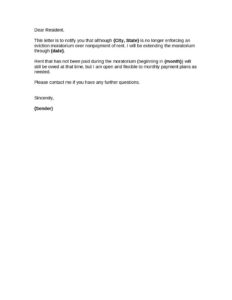
Covid Eviction Moratorium Landlord
Download a free COVID eviction moratorium landlord form template to document tenant notices and compliance, available as a free PDF and DOCX download.
DOCX
0
likes
Download Files
- DOCX
The COVID eviction moratorium landlord form is a written notice and documentation tool landlords use to communicate with tenants about rent obligations, payment arrangements, and protections that applied during pandemic-related eviction moratoriums. The single most common reason people use it is to create a clear paper trail showing a tenant was informed of their rights and the status of unpaid rent. It is free to download in both PDF and DOCX formats with no signup required.
What Is a COVID Eviction Moratorium Landlord Form?
A COVID eviction moratorium landlord form is a document a property owner or property manager issues to a tenant to address rent that came due during a period when emergency eviction protections were in effect. It records the dates involved, the amount of rent owed, any moratorium or hardship declaration the tenant submitted, and the proposed path forward — such as a repayment plan or notice that the moratorium has lapsed. The form documents communication rather than serving as a court filing. Landlords use it to demonstrate good-faith compliance with applicable rules and to keep an organized record of which tenants claimed protection, what was owed, and how each balance was being resolved.
When Do You Need a COVID Eviction Moratorium Landlord Form?
This form fits a range of situations where a landlord must address pandemic-era rent and tenant protections in writing. Common scenarios include:
- Acknowledging a hardship declaration — a tenant submits a COVID-related financial hardship statement and you want to confirm receipt and note its effect on the account.
- Notifying a tenant of accrued back rent — documenting unpaid amounts that built up while eviction enforcement was paused.
- Proposing a repayment plan — offering a structured schedule for the tenant to catch up on deferred rent over several months.
- Informing tenants a moratorium has ended — letting renters know that protections have lapsed and explaining next steps.
- Coordinating rental assistance — recording that an application for emergency rental assistance has been filed or is pending.
- Preserving records for a future dispute — keeping a dated account in case a balance later needs to be resolved through proper channels.
What the Form Should Have
A complete COVID eviction moratorium landlord form should clearly identify the parties and the property, then lay out the financial and procedural facts. Essential elements include the landlord or property manager name and contact information, the tenant name and the rental unit address, and the lease start date or reference. It should state the rental period covered, the monthly rent amount, the total balance owed, and any partial payments received. It should reference the applicable moratorium or hardship declaration, the proposed repayment terms or deadline, and a space for both parties to sign and date. A clear, professional tone keeps the document useful as an objective record.
How to Fill Out a COVID Eviction Moratorium Landlord Form
- Enter the landlord details. Write your full name or your management company name, mailing address, phone number, and email so the tenant can respond.
- Identify the tenant and property. List the tenant’s full name and the complete rental address, including unit number, plus the lease reference or start date.
- Specify the period covered. State the months or date range for which rent is being addressed under the moratorium.
- Record the financial figures. Enter the monthly rent, any payments received, and the total outstanding balance.
- Note the protection claimed. Indicate whether the tenant submitted a hardship declaration or qualifies under a specific moratorium, and the date it was received.
- Describe the resolution. Lay out the proposed repayment plan, any deadline, or notice that the moratorium has ended.
- Add the date. Date the notice when you deliver it.
- Sign and request acknowledgment. Sign as the landlord and provide a line for the tenant to sign acknowledging receipt.
Delivery and Recordkeeping Tips
How you deliver this form matters as much as what it says. Use a method that creates proof of delivery — certified mail, a dated email, or hand delivery with a witness or signed acknowledgment. Keep a copy of every version you send, along with any tenant responses, hardship declarations, and rental assistance correspondence. Many landlords maintain a simple log noting the date each notice was sent, the method used, and the tenant’s reply. Because rules around required notice periods and acceptable delivery methods differed widely by city and state, confirm the current local requirements before relying on any single document. A consistent, well-dated file protects both parties and makes any later resolution far smoother.
How It Differs From a Standard Eviction Notice
It is important not to confuse this form with a formal eviction or pay-or-quit notice. A standard eviction notice begins a legal process to recover possession of a unit and typically follows strict statutory wording and timelines. The COVID eviction moratorium landlord form, by contrast, is primarily a communication and documentation tool meant to acknowledge pandemic-era protections and arrange repayment. It is not a substitute for court filings or legally mandated notices. When protections have ended and a landlord intends to pursue formal action, the proper jurisdiction-specific notice and process must be followed, often with guidance from an attorney.
Common Mistakes to Avoid
- Treating it as a legal eviction notice — this form documents communication, not a court action.
- Leaving the balance vague — always itemize months, rent amounts, and payments so the total is verifiable.
- Ignoring local rules — moratorium terms, notice periods, and tenant rights varied dramatically by jurisdiction.
- Failing to keep delivery proof — undated, untracked notices are hard to rely on later.
- Using an aggressive tone — keep the language factual and professional to preserve the document’s credibility.
- Not offering or documenting a repayment option — many programs and rules favored good-faith repayment arrangements.
Frequently Asked Questions
What is a COVID eviction moratorium landlord form? It is a document landlords use to notify tenants about rent owed during pandemic eviction protections and to record any hardship declaration or repayment arrangement. It serves as an organized communication record rather than a court filing. It helps both sides keep track of balances and next steps.
Is this form legally binding? The form itself is mainly a documentation and notice tool, though a repayment plan both parties sign can carry weight as a written agreement. Whether any portion is enforceable depends on your jurisdiction and how it is used. For binding legal action, follow the formal process required in your area.
Does the form need to be notarized or witnessed? Notarization is generally not required for this kind of notice, but having the tenant sign to acknowledge receipt is strongly recommended. A witness or a tracked delivery method adds further proof. Check whether your local rules impose any specific signing or delivery requirements.
Are COVID eviction moratoriums still in effect? Most emergency moratoriums have expired, but some areas retained related protections or rental assistance programs longer than others. Always verify the current status of any local ordinance before relying on it. This template can still serve as a record for back rent that accrued during a moratorium period.
How much does this form cost? Nothing — you can download it free from Business Forms Pro in both PDF and DOCX formats with no signup. The DOCX version is editable so you can tailor the fields to your situation. There are no hidden charges or account requirements.
Can I use this form to start an eviction? No, this form does not begin an eviction. If protections have ended and you intend to pursue possession, you must use the formal, jurisdiction-specific notice and court process. Consult a qualified attorney before taking any legal action.
This template is provided as a general example for informational purposes only and is not legal, financial, or tax advice. Eviction rules, moratorium terms, notice requirements, and tenant protections vary by jurisdiction and change over time. Consult a qualified attorney or housing professional before acting on any document.
Official resource: for the rules that apply to your situation, see HUD.
Related Forms
- Landlord Rent Increase
- Notice of Overdue Rent
- Consent To Assignment Of Lease
- Receipt And Holding Deposit Agreement
- Eviction Notice
- Covid Rent Extension Landlord
Browse more in Landlord Documents.