
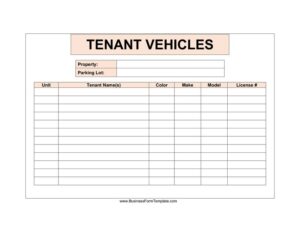
Tenant Vehicle Log
Download a free Tenant Vehicle Log template to record resident cars, plates, and parking spots — available as a free PDF and DOCX download.
PDF
2 downloads
0
likes
Download Files
A Tenant Vehicle Log is a simple record landlords and property managers use to track every vehicle that residents keep on the property — make, model, plate, and assigned parking space. The most common reason people use one is to enforce parking rules and quickly identify abandoned or unauthorized cars in shared lots. You can download this template free in both PDF and DOCX, with no signup required.
What Is a Tenant Vehicle Log?
A Tenant Vehicle Log is a property management document that lists the vehicles each tenant is permitted to park at a rental property. It is typically maintained by a landlord, property manager, or HOA and ties a registered vehicle to a specific unit and resident. The log documents identifying details such as the driver’s name, unit number, vehicle description, license plate, and assigned parking spot. Beyond simple recordkeeping, it serves as a reference when towing unauthorized cars, resolving parking disputes between neighbors, and confirming who a vehicle belongs to in case of damage, leaks, or emergencies. A current, accurate log makes lot management far easier as residents move in and out.
When Do You Need a Tenant Vehicle Log?
A vehicle log becomes valuable any time more than one household shares parking. Common situations include:
- Assigned parking enforcement — confirming that the car in space 14 actually belongs to the tenant assigned to it.
- Identifying abandoned vehicles — matching a long-parked car against the log before arranging removal.
- Towing unauthorized cars — verifying a vehicle is not registered to any resident before calling a tow company.
- Move-in onboarding — collecting vehicle details from new tenants alongside the lease.
- Guest and overflow parking — distinguishing resident vehicles from temporary visitor cars.
- Emergencies and notices — quickly contacting the owner of a car that’s blocking a driveway, leaking fluid, or parked during snow removal.
Who Uses This Log
Independent landlords with a few units, professional property managers overseeing apartment complexes, condo and HOA boards, and even commercial property owners with tenant parking all rely on a vehicle log. The same template scales from a single duplex to a large building.
What a Tenant Vehicle Log Should Have
An effective log captures enough detail to identify a vehicle at a glance without overwhelming tenants. Core elements include the property name or address, the date the entry was added, the tenant’s name and unit number, and a clear vehicle description (year, make, model, and color). Critically, it should record the license plate number and issuing state, since that is the single most reliable identifier. Many landlords also add an assigned parking space number, a parking permit or decal number, the tenant’s phone number for quick contact, and a notes column for details like “visitor vehicle” or “expired registration.” Leaving room for a date the vehicle was removed keeps the log current as residents change cars.
How to Fill Out a Tenant Vehicle Log
Because this is a flexible log, complete one row per vehicle and keep the sheet updated over time:
- Property details: Write the property name or address at the top so the log is clearly tied to one location.
- Date: Enter the date you’re adding the vehicle, which helps track how long a car has been on the property.
- Tenant name: Record the resident the vehicle belongs to.
- Unit number: Note the apartment, suite, or unit so each car maps to a household.
- Vehicle description: Fill in year, make, model, and color for visual identification.
- License plate & state: Enter the plate number and issuing state exactly as shown.
- Parking space: Add the assigned spot or permit/decal number if applicable.
- Contact info: Include a phone number to reach the owner quickly.
- Notes: Use this column for visitor status, registration concerns, or a removal date when the vehicle leaves.
Tips for Keeping the Log Accurate
A vehicle log is only useful if it stays current. Update it at every move-in and move-out, and ask tenants to report when they buy a new car or replace a plate. Walking the lot periodically and comparing parked cars against the log helps surface vehicles that were never registered. Store the master copy somewhere the manager and any on-site staff can access it, whether a binder in the office or a shared digital file. If you use parking decals, note the decal number in the log so a permit can be matched to a vehicle and tenant in seconds.
How It Fits With Your Lease and Parking Policy
The log works best alongside a written parking policy in the lease that explains how many vehicles each unit may register, where guests park, and the consequences of parking violations. When tenants sign a lease that requires registering their vehicles, the log becomes the practical tool that puts that policy into action. Keep in mind that towing rules — including signage and notice requirements — vary widely by city and state, so confirm local regulations before removing any car.
Common Mistakes to Avoid
- Recording an incomplete plate — a partial or guessed license number defeats the log’s main purpose.
- Never updating it — an outdated log can wrongly flag a current tenant’s car or miss a new one.
- Skipping the contact number — without it, you can’t reach the owner of a blocking or leaking vehicle.
- Mixing up units — assigning a car to the wrong unit creates disputes between neighbors.
- Failing to note removals — leaving sold or moved-out vehicles on the log clutters it and causes confusion.
- Towing without verifying — never arrange removal before confirming the vehicle isn’t in the log and checking local towing rules.
Frequently Asked Questions
What is a Tenant Vehicle Log used for? It is used to track every vehicle that residents keep at a rental property, linking each car to a tenant and unit. Landlords use it to enforce assigned parking, identify unauthorized or abandoned cars, and reach vehicle owners quickly when needed.
How do I fill out a Tenant Vehicle Log? Add one row per vehicle, recording the date, tenant name, unit number, vehicle description, license plate and state, assigned parking space, and a contact number. Update the log whenever a tenant changes cars or moves out so it always reflects the lot.
Is a Tenant Vehicle Log legally binding? The log itself is a recordkeeping tool, not a contract. The binding rules about parking should appear in the lease or a written parking policy; the log simply documents which vehicles are registered under those rules.
Can I use this log to tow a vehicle? The log helps you confirm whether a car belongs to a resident before taking action. However, towing requirements such as signage, notice periods, and authorized companies vary by location, so always check your local and state rules first.
Should tenants sign the vehicle log? A signature is optional, but having tenants confirm their registered vehicles in writing can reduce disputes later. Many landlords collect vehicle details on a move-in form and transfer them into the master log.
How much does this template cost? Nothing — the Tenant Vehicle Log is completely free to download here in both PDF and DOCX formats, with no signup required. You can print it as-is or edit the columns to fit your property.
This template is a general example provided for informational purposes only and is not legal advice. Landlord-tenant, parking, and towing requirements vary by jurisdiction, so consult a qualified attorney or local authority before relying on this document for your property.
Official resource: for the rules that apply to your situation, see HUD.
Related Forms
- Landlord Warning
- Landlord Welcome
- Unauthorized Pet Notice
- Rental Appliance Condition Record
- Notice Of Denial To Rent Apartment
- Rental Agreement Violation
Browse more in Landlord Documents.