
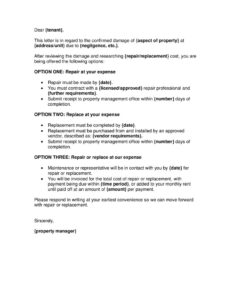
Tenant Property Damage Letter
Download a free Tenant Property Damage Letter template to formally notify a tenant of damages, costs, and repair deadlines — free PDF and DOCX download.
PDF
DOCX
11 downloads
0
likes
Download Files
- DOCX
A Tenant Property Damage Letter is a written notice a landlord or property manager sends to a tenant to document damage to a rental unit, state the cost of repairs, and request payment or corrective action. People most often use it when an inspection reveals damage beyond normal wear and tear and they need a clear paper trail. You can download it free here in both PDF and DOCX formats — no signup required.
What Is a Tenant Property Damage Letter?
A Tenant Property Damage Letter is a formal communication issued by a landlord, property owner, or management company to a tenant who has caused damage to a leased property. It documents what was damaged, when it was discovered, the estimated or actual cost of repair, and what the landlord expects the tenant to do next. The letter serves as both a courtesy notice and an official record, creating evidence that the tenant was informed of the issue. It is commonly referenced during deposit deductions, lease disputes, or small claims proceedings. Because it puts everything in writing, it reduces misunderstandings and protects both parties by clearly establishing the facts of the situation.
When Do You Need a Tenant Property Damage Letter?
This letter is useful any time damage exceeds ordinary wear and tear and you need to notify the tenant formally. Common situations include:
- A move-out inspection reveals holes in walls, broken fixtures, or stained carpets that require repair.
- A burst pipe, overflowing bathtub, or unattended leak causes water damage traced to tenant negligence.
- Pets have scratched flooring, chewed trim, or soiled carpeting beyond what a deposit cleaning covers.
- Appliances, doors, windows, or countertops are broken or removed during the tenancy.
- You need to itemize charges before deducting from a security deposit and want documented notice on file.
- A tenant is still occupying the unit and you want repairs made or reimbursed before the situation worsens.
What a Tenant Property Damage Letter Should Have
A complete and credible letter clearly identifies the parties and the property, describes the damage in specific detail, and states a dollar amount along with a deadline. It should include the date, the tenant’s name and address, the rental property address, a factual description of each item damaged, the cost of repair or replacement, and instructions for how and when the tenant should respond or pay. References to supporting evidence — such as photos, inspection reports, or repair estimates — strengthen the letter. A professional, neutral tone is essential: stick to facts rather than accusations, and close with a signature and contact information so the tenant can reach you with questions.
How to Fill Out a Tenant Property Damage Letter
Follow these steps to complete the template accurately:
- Enter the date you are sending the letter at the top.
- Add your landlord or property manager details — full name, company name if applicable, mailing address, phone, and email.
- Fill in the tenant’s name and their current mailing address.
- Identify the rental property address, including unit number, where the damage occurred.
- Describe each item of damage specifically — for example, “large hole in living room drywall” or “deep scratches on kitchen laminate flooring.”
- State the date the damage was discovered and how it was identified, such as during a routine or move-out inspection.
- List the cost of repair or replacement for each item, citing estimates or invoices where possible.
- Specify the action requested — payment amount, repair deadline, or deduction from the security deposit.
- Note any attachments such as photos or estimates, then sign and print your name.
Wear and Tear vs. Tenant Damage
One of the most important distinctions in any property damage letter is the difference between normal wear and tear and actual damage. Normal wear and tear refers to the gradual, expected deterioration that occurs simply from living in a space — minor scuffs on walls, lightly worn carpet in walkways, or faded paint. Landlords generally cannot charge tenants for these. Damage, by contrast, results from negligence, accident, abuse, or misuse — broken windows, large holes, pet stains, or unauthorized alterations. When drafting your letter, frame each charged item clearly as damage, not routine aging, since that distinction often determines whether a charge holds up if the tenant disputes it or the matter goes to small claims court.
Documentation and Next Steps
The strength of a Tenant Property Damage Letter lies in the evidence behind it. Before sending, gather dated photographs of each damaged area, written repair estimates or paid invoices, and your move-in inspection report for comparison. Send the letter using a method that proves delivery, such as certified mail with return receipt, or follow up an email with a mailed copy. Keep a copy for your records. If the damage relates to a security deposit, be aware that most jurisdictions set strict deadlines for returning deposits and providing itemized deductions — check your local rules and send the letter within that window. If the tenant disputes the charges, the documented letter becomes part of your case file.
Common Mistakes to Avoid
- Using vague descriptions like “messy unit” instead of specific, itemized damage.
- Charging for normal wear and tear, which most jurisdictions do not allow.
- Failing to include repair costs, estimates, or supporting photos that justify the amounts.
- Writing in an accusatory or hostile tone rather than sticking to documented facts.
- Missing the legal deadline for deposit deductions or notice required in your area.
- Sending the letter without proof of delivery, leaving no record the tenant was notified.
Frequently Asked Questions
What is a Tenant Property Damage Letter? It is a formal written notice from a landlord to a tenant documenting damage to a rental property, the cost to repair it, and what the landlord expects in response. It creates an official record and is often used to support security deposit deductions or disputes.
How do I fill out a Tenant Property Damage Letter? Add the date, your contact details, and the tenant’s information, then describe each damaged item, the discovery date, and the repair cost. Finish by stating the requested payment or action, listing any attached evidence, and signing the letter.
Does a Tenant Property Damage Letter need to be notarized? No, notarization is generally not required for this type of letter. What matters most is that it is detailed, factual, properly delivered, and backed by supporting documentation like photos and estimates.
Is a Tenant Property Damage Letter legally binding? The letter itself is a notice rather than a contract, but it can serve as important evidence in deposit disputes or small claims court. Its weight depends on the supporting documentation and whether the charges comply with your local landlord-tenant laws.
Can I deduct the damage cost from the security deposit? In most jurisdictions you may deduct legitimate repair costs for damage beyond normal wear and tear, but you must provide an itemized statement within a set deadline. Rules vary widely, so check your state or local requirements before deducting.
How much does this template cost? This Tenant Property Damage Letter template is completely free to download from Business Forms Pro in both PDF and DOCX formats. There is no signup or payment required, and you can edit it to fit your specific situation.
This template is a general example provided for informational purposes only and is not legal, financial, or tax advice. Landlord-tenant requirements, deposit deadlines, and notice rules vary by jurisdiction. Consult a qualified attorney or professional to ensure your letter complies with the laws that apply to your situation.
Official resource: for the rules that apply to your situation, see HUD.
Related Forms
- Room Rental Agreement
- Noise Complaint Letter
- Rent Demand Letter
- Move-In Letter
- Eviction Notice
- Landlord Lease Renewal
Browse more in Landlord Documents.